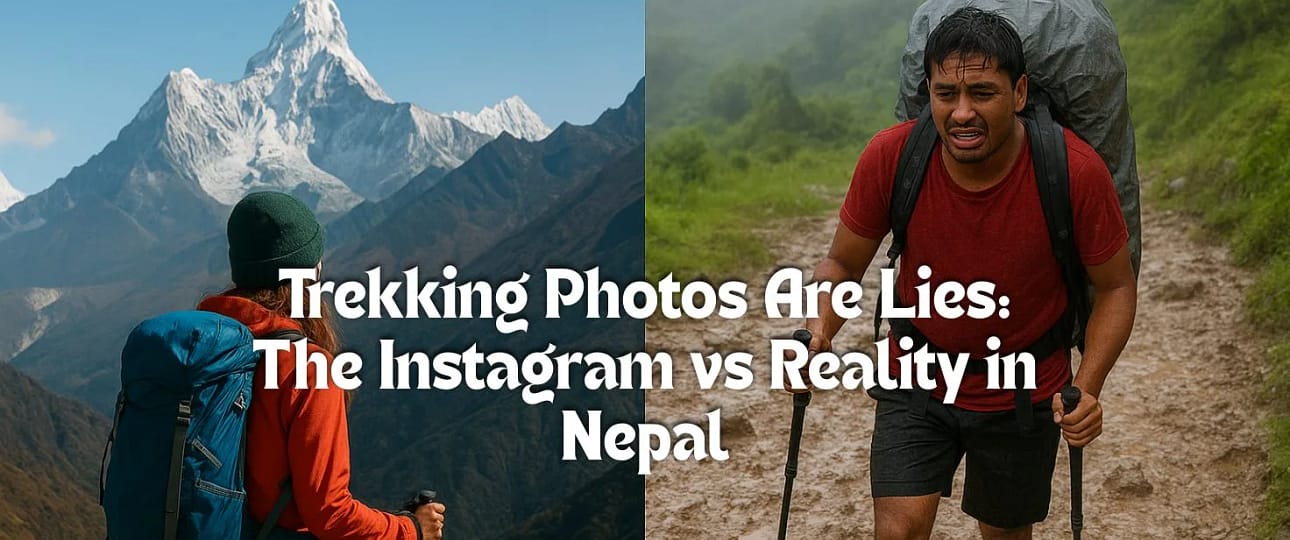
Your Trekking Photos Are Lies. So let’s get real for a second about those stunning Everest Base Camp photos flooding your Instagram feed. You know the ones perfectly posed trekker at sunrise, prayer flags fluttering dramatically. Mount Everest looking impossibly majestic in the background, caption something about “finding yourself” or “pushing limits.” Yeah, those are bullshit. Not completely, but enough that the gap between those photos and actual Himalayan trekking. And reality could fit an entire yak caravan.
Social media trekking has created this weird alternate universe where everyone’s Nepal adventure looks like a National Geographic. When actual mountain trekking involves way more suffering, way less glamour, and definitely doesn’t smell like those photos suggest. Instagram reality vs actual reality in the Himalayas? It’s not even close.
The altitude headache that makes you want to die, the tea house toilet that haunts your nightmares, the fact that you haven’t showered in eight days and smell like a yak’s armpit. But let’s dive deep into this photography fakery and talk about what’s really happening behind those perfect mountain photos.
The Golden Hour Lie: When That Sunrise Cost You Everything
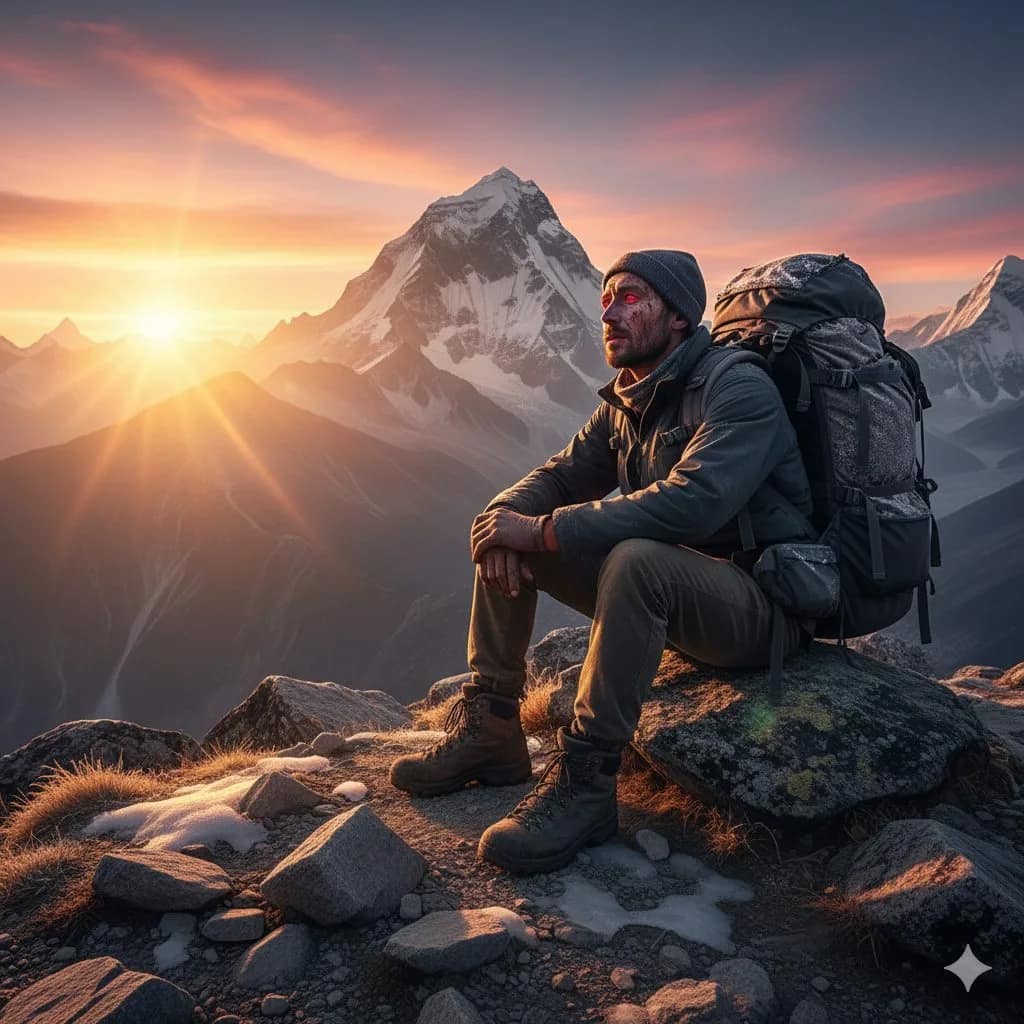
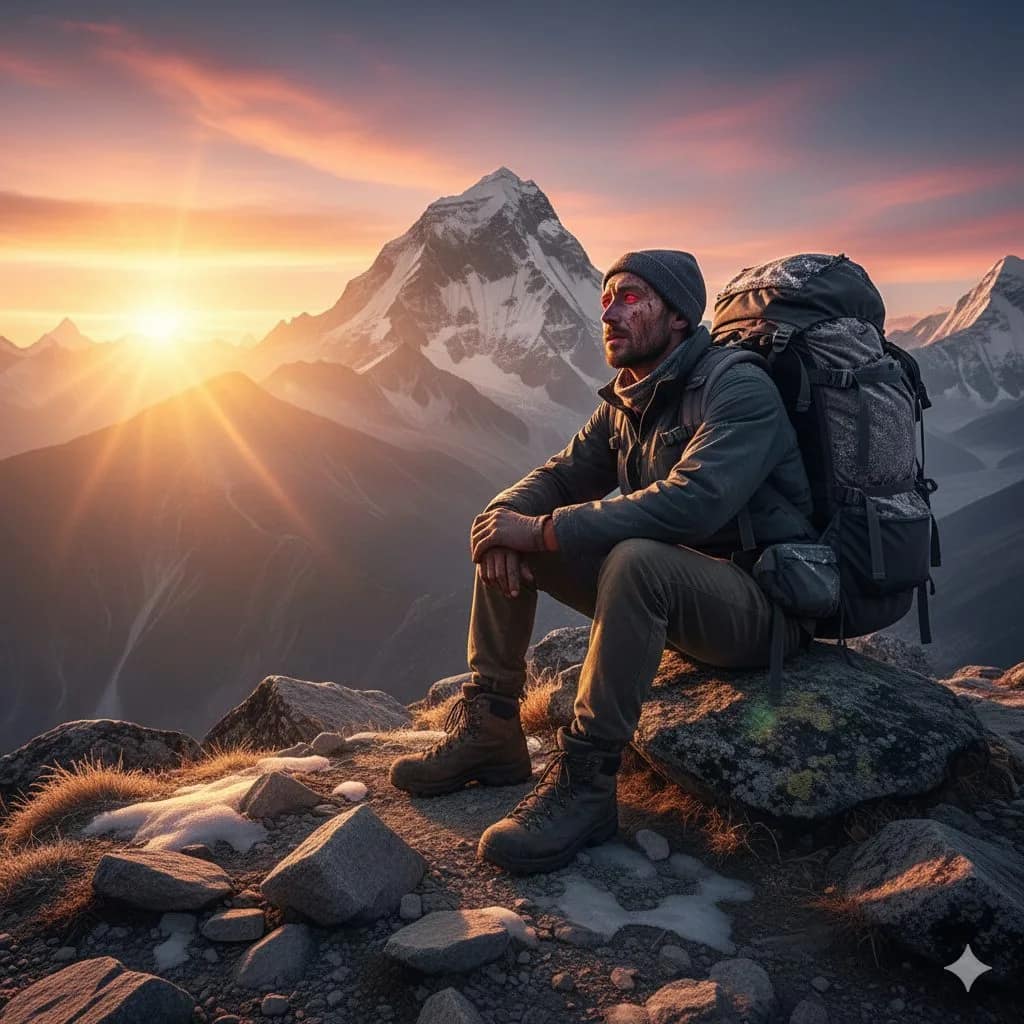
Every Himalayan sunrise photo looks absolutely magical on Instagram golden light painting the peaks. Prayer flags glowing, maybe some lens flare for extra drama. What they don’t show you is the 3 AM wake-up call, stumbling around in the freezing dark, and the altitude-induced nausea that makes you question all your life choices.
Sunrise photography at high altitude means waking up when your body is screaming for sleep, climbing to a viewpoint when you can barely breathe, and standing in sub-zero temperatures waiting for that perfect light. Your camera battery dies in the cold. Your fingers go numb trying to adjust settings. Half the time there’s cloud cover anyway and you get nothing.
But here’s the real kicker – that “spontaneous” sunrise moment on Kala Patthar or Poon Hill? There are 200 other trekkers there with you, all jostling for position, all trying to get the exact same shot. The Annapurna sunrise photos look peaceful and solitary until you realize it’s basically a tourist crowd at a viewpoint designed for exactly this Instagram moment.
The Smiling Trekker: Performance Art at 5000 Meters
Those beaming smiles in trekking photos at Everest Base Camp or Thorong La Pass? Acting. Pure performance art. Because at 5000+ meters, what you’re actually feeling is somewhere between “mildly dying” and “seriously considering helicopter evacuation.”
Altitude sickness doesn’t photograph well, so nobody posts about it. Exhaustion isn’t aesthetic, so it gets edited out of the story. That photo of someone looking triumphant at Annapurna Base Camp? They probably took 47 versions to get one where they don’t look like they’re about to vomit or cry.
High altitude trekking makes everyone look rough. Your face is puffy from altitude, your lips are cracked, your hair hasn’t been washed in a week, you’re wearing the same clothes you’ve been sweating in for days. But after filters, selective cropping, and choosing the one good photo out of hundreds, suddenly you look like an adventure model instead of someone barely surviving.
The “Empty Trail” Illusion: You and 500 of Your Closest Friends
Instagram trekking photos make it look like you’re alone in the wilderness, communing with nature, finding solitude in the mountains. Reality? The popular Nepal trekking routes are basically highways during peak season. Everest Base Camp trek in autumn or spring is like a slow-moving parade of international trekkers.
That “alone in nature” shot required waiting 20 minutes for other trekking groups to clear out of frame. Annapurna Circuit photos that look remote and peaceful were taken in the 30-second window between porter trains and mule caravans. Namche Bazaar looks quaint in photos until you realize it’s basically a trekking mall stuffed with tourists.
Off-season trekking actually delivers on the solitude promise, but then you’re dealing with closed tea houses, extreme weather, and dangerous conditions. So the choice is crowds or potentially dying which one makes for better Instagram content? trekking photos are lies.
Weather Manipulation: When Reality Needs Photoshop
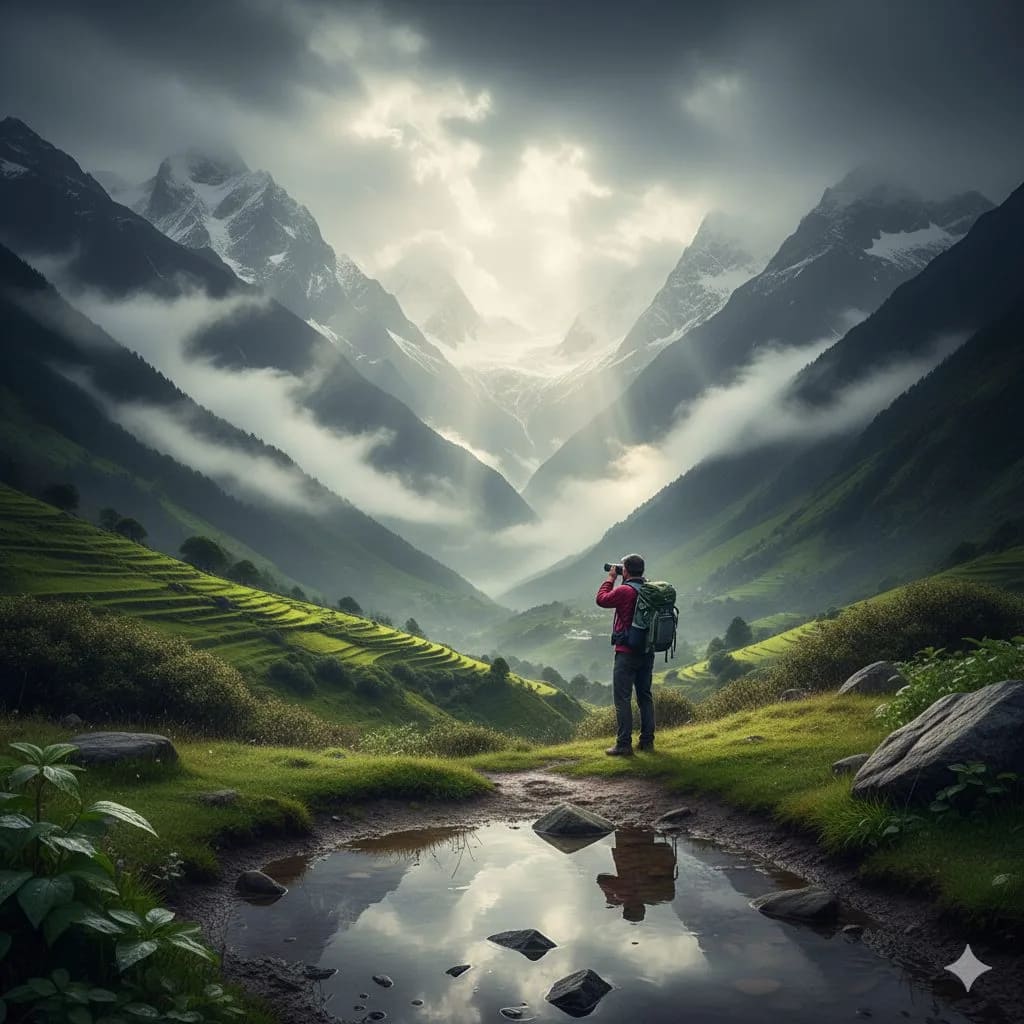
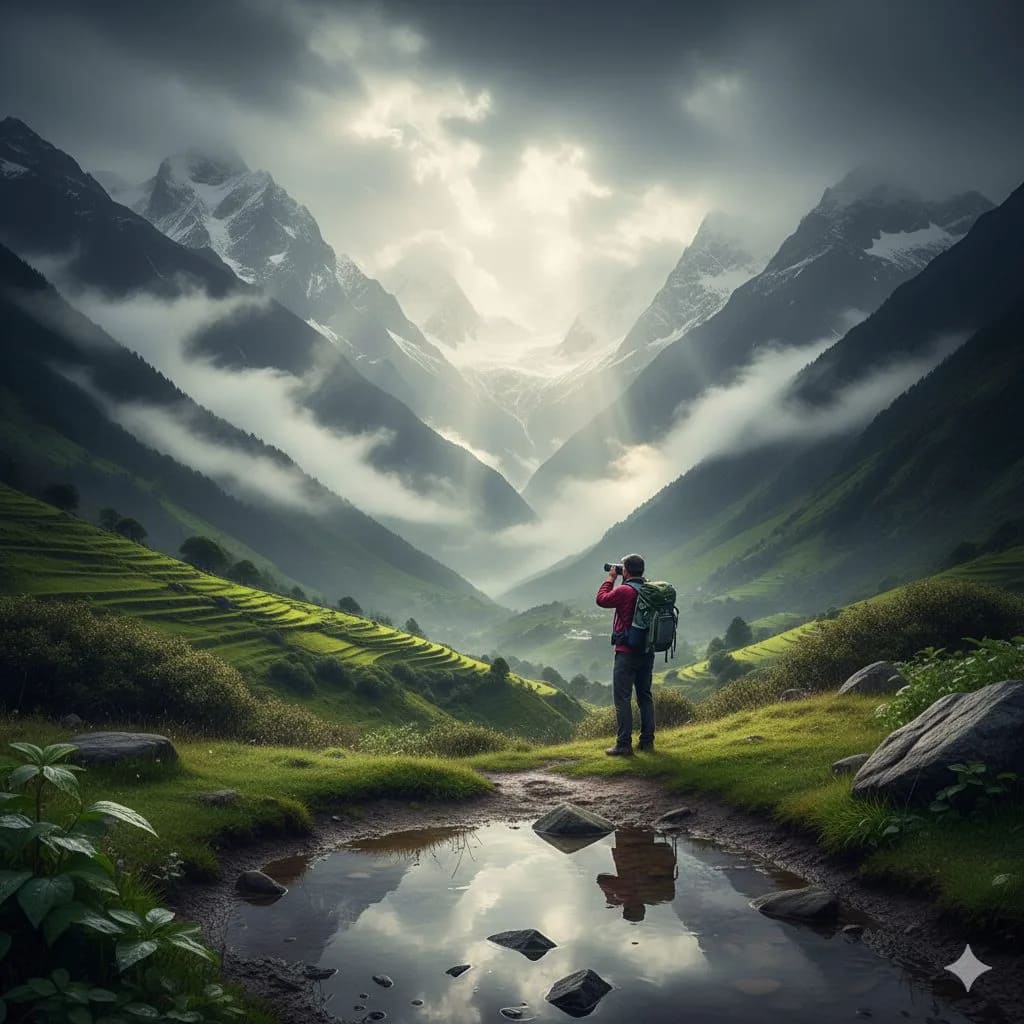
Mountain weather in the Himalayas is notoriously unpredictable, which means most of your trekking days involve clouds, rain, snow, or that flat gray light that makes everything look miserable. But look at trekking Instagram – every day is clear blue skies and perfect mountain views trekking photos are lies..
Photo editing has gotten so good that people can literally add blue skies to overcast days, enhance mountain peaks that were barely visible, and make their trekking experience look like permanent perfect weather. Lightroom and Photoshop do more heavy lifting than most porters.
The reality is that on a typical two-week trek, you might get 3-4 days of genuinely good weather for photos. The rest is clouds, precipitation, or monsoon conditions. But nobody posts those days, so the collective social media impression of Nepal trekking is weather perfection that doesn’t actually exist.
The Gear Porn Delusion: Looking Pro vs Being Pro
Trekking gear photos are their own special category of Instagram lies. Everyone looks like a professional mountaineer with perfectly coordinated technical clothing, pristine trekking boots, and gear that suggests serious expedition experience.
Reality? Most people’s gear is mismatched, some of it is borrowed, half of it is the wrong choice for the conditions, and by day three everything is covered in dirt and yak poop. That pristine North Face jacket in the posed photo? trekking photos are lies, It’s now stained, smells terrible, and you’re wearing it for the fifth day straight.
Gear sponsorships and brand partnerships mean some trekking influencers are literally being paid to make specific products look good on Instagram, regardless of whether they’re actually the best choice for Himalayan conditions. The gear that looks best on camera is often not the gear that performs best on the mountain, trekking photos are lies.
Cultural Tourism Theater: When Authenticity Becomes Performance
Those “authentic cultural moments” with Sherpa families or Buddhist monks in Himalayan monasteries? A lot of that is staged or at least heavily curated for social media. Local communities in popular trekking regions have figured out what foreign tourists want to photograph and they deliver it.
Prayer flags get hung in photogenic locations specifically for trekkers. Cultural performances happen on demand for trekking groups. That “spontaneous” interaction with local children happens in every village along the Everest trek route because kids have learned that smiling for photos sometimes means candy or money.
Authentic cultural experiences in Nepal definitely exist, but the ones that make it to Instagram are usually the most photogenic versions, which often means the least authentic. Real mountain culture is harder, dirtier, and doesn’t photograph as well as the tourist-friendly version trekking photos are lies..
The Fitness Flex: Hiding the Struggle
Trekking influencers love to post photos that make them look effortlessly athletic – mid-stride on a mountain trail, trekking photos are lies. perfectly composed, not even breathing hard. What they don’t show is the 20 minutes of gasping for air before they could pose for that shot, or the fact that they stopped every 50 meters on the actual climb.
High altitude fitness is brutal, and everyone struggles. But social media creates this impression that fit people just cruise through Himalayan treks while everyone else suffers. The truth is altitude doesn’t care about your gym routine – it humbles everyone.
Those action shots of people practically running up mountain trails? Usually taken on acclimatization days on easy sections after they’ve adapted to the altitude, not during the actual hard climbing. Photography happens during the easy moments, not the genuine suffering.
Food Photography: The Dal Bhat Isn’t That Photogenic
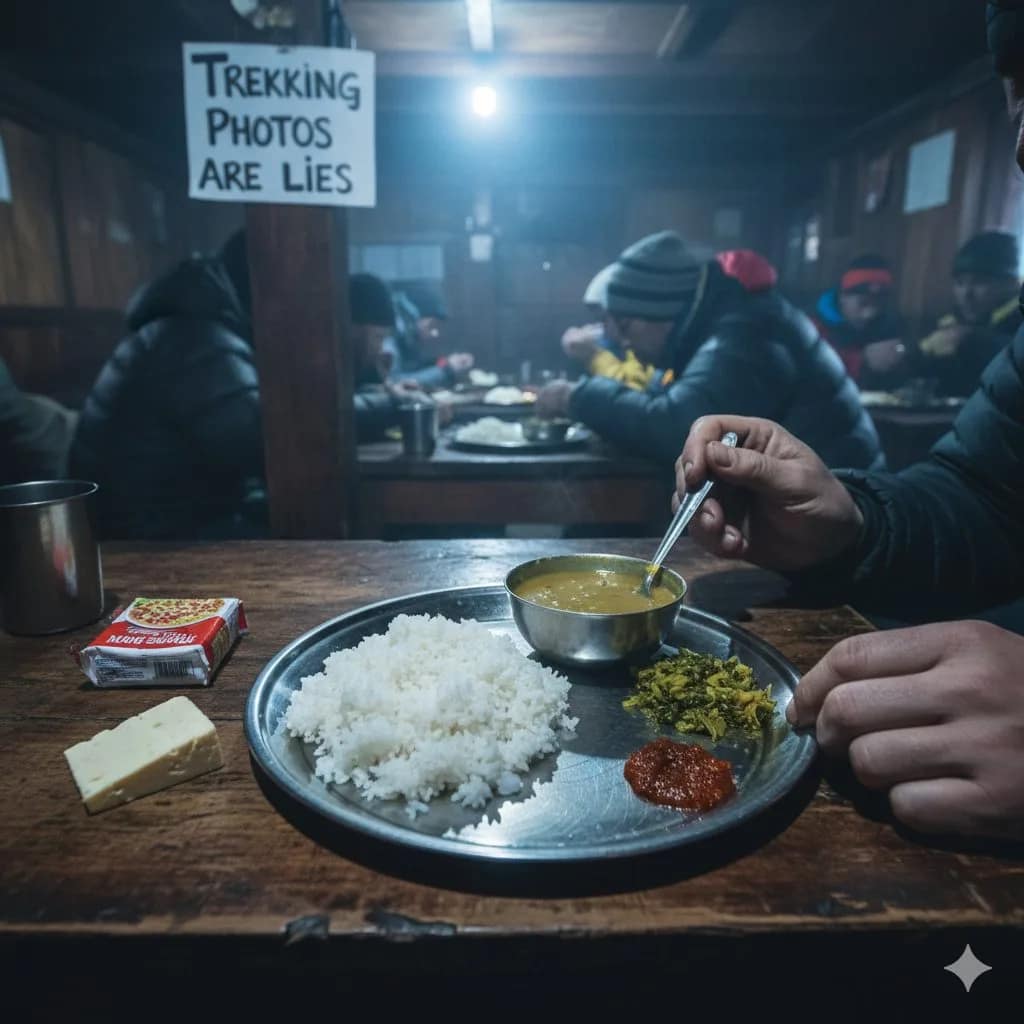
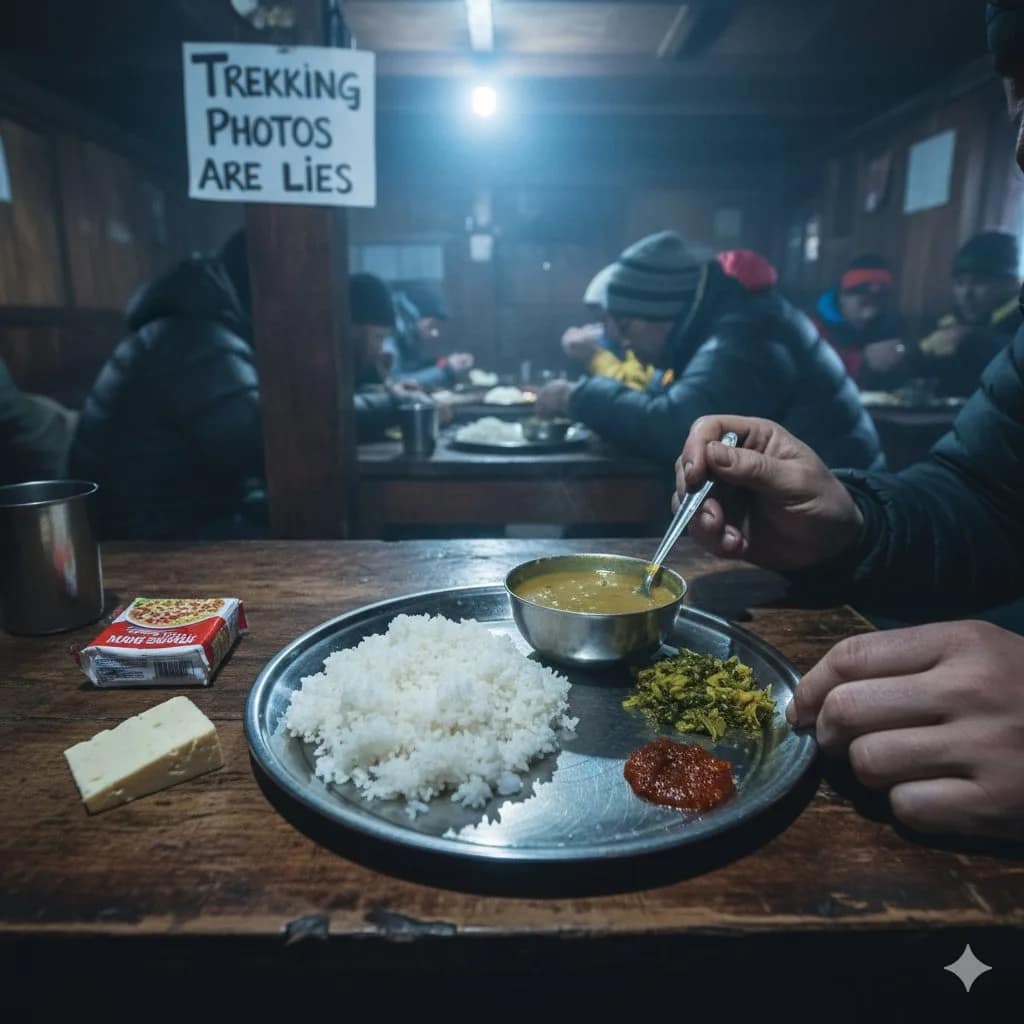
Mountain food in Nepal tea houses is functional fuel, not Instagram-worthy cuisine. But look at trekking social media and you’d think every meal is some gourmet Himalayan feast. Reality is you’re eating dal bhat (rice and lentils) twice a day for two weeks, and by day four you’re sick of looking at it trekking photos are lies..
Food photography at high altitude requires serious effort because tea house lighting is terrible, your food is lukewarm by the time you photograph it, and honestly dal bhat looks like what it is simple mountain food. But filters, strategic angles, and selective posting make it look like some exotic culinary adventure trekking photos are lies.
The really honest food photos would show instant noodles eaten in a freezing dining room, yak cheese that tastes like rubber, and that moment when you realize you’ve eaten the exact same meal seven days in a row. Trekking photos are lies.
The “Digital Detox” Pretense: WiFi Hunger in the Mountains
Instagram trekkers love to talk about “disconnecting” and “digital detox” in the Himalayas, but then they’re posting daily updates from mountain wifi. The contradiction is hilarious – celebrating disconnection while desperately hunting for internet connection at every tea house.
Mountain wifi is expensive, slow, and unreliable, but people pay for it anyway because their social media presence matters more than their present-moment experience. That “living in the moment” caption was probably posted from Namche Bazaar where they spent an hour uploading photos instead of actually experiencing the mountains.
Real digital detox means actually leaving your devices behind, but then how would anyone know you did an epic trek if you can’t post about it? The whole thing becomes this weird performance where the Instagram documentation becomes more important than the actual trekking experience.
Fitness Transformation Lies: Two Weeks Doesn’t Change Your Body
The before/after trekking transformation photos are mostly garbage. Two weeks of high altitude trekking will make you lose weight, sure, but it’s mostly water weight, muscle loss, and dehydration, not some magical fitness transformation.
Those “I’m so much stronger now” posts ignore the fact that altitude was literally destroying muscle tissue while you were up there. You’re actually weaker when you come down, not stronger. The weight loss is temporary trekking photos are lies. and mostly unhealthy. But it photographs well so people spin it as some kind of fitness achievement.
Physical transformation from trekking is real over time, but the dramatic before/after shots after one Himalayan adventure? Mostly angles, lighting, and deliberate posing to exaggerate changes that are actually pretty minimal.
The Romance of Suffering: Glamorizing Misery
Instagram trekking culture has this weird thing where people glamorize suffering – “embrace the pain,” “growth happens outside your comfort zone,” all that motivational poster bullshit. But they only glamorize photogenic suffering, not actual misery trekking photos are lies..
Altitude headaches, stomach issues, freezing nights in mountain lodges, blisters that make walking agony – this is real suffering, but it doesn’t get posted because it’s not inspirational, it’s just miserable. The “suffering” that makes it to social media is always the aesthetic kind – tired but noble-looking, dirty but in a rugged attractive way.
Real trekking misery involves diarrhea at high altitude, crying from exhaustion, seriously considering evacuation, and wondering why you paid money to feel this terrible. That’s not Instagram content, so it gets edited out of the narrative completely.
Group Trek Reality: When Your Team Ruins Your Photos
Solo trekking photos look independent and adventurous, but most people are actually with guided groups or other trekkers. Those “alone on the mountain” shots required your entire trekking team to hide off-camera or wait while you got your photos.
Group dynamics on treks are complicated – personality conflicts, different fitness levels, varying altitude adaptation, arguments about pace and rest days. But Instagram shows only the happy group shots at major landmarks, not the tensions and frustrations that are part of any group adventure.
Trekking guides and porters become invisible in most social media posts unless they’re being used as props for “authentic local interaction” photos. The entire support system that makes your trek possible gets edited out of the Instagram story.
Summit Fever Photography: The Dangerous Photo Hunt
The pressure to get that perfect summit photo or iconic mountain viewpoint shot has led to genuinely dangerous behavior. People push beyond their limits, ignore altitude sickness symptoms, and take unnecessary risks because they need that Instagram validation.
Mountain photography at extreme altitude requires extended time in dangerous conditions. People get altitude sickness or frostbite because they insisted on perfect photo conditions instead of descending when they should. Summit success on Instagram matters more than actual safety for some people.
Rescue statistics in Nepal have increased partially because of people prioritizing photos over prudent mountaineering decisions. The helicopter evacuation that costs $15,000 started because someone needed one more angle of the sunrise over Everest.
The Equipment Lie: Professional Photos from Smartphones
Those “shot on iPhone” captions on absolutely stunning mountain photography? Mostly bullshit. Or at least misleading. Yeah, the smartphone technically took the photo, but only after extensive editing on professional software, possible HDR processing, and maybe combining multiple exposures.Trekking Photos Are Lies.
Professional photography equipment shows up in the Himalayas more than people admit. Those impossibly sharp, perfectly exposed mountain panoramas often came from DSLR cameras with expensive lenses, not a phone camera. But saying you got that shot with your phone sounds more impressive and accessible.
Drone photography in Nepal is technically illegal without permits, but Instagram is full of drone shots from trekking routes. People risk fines and equipment confiscation for aerial photos that are literally illegal, but they don’t mention that part in the caption.
The Timeline Manipulation: When “Day 1” Was Actually Day 8
Instagram storytelling around treks involves major timeline manipulation. That “first day on the trail” photo might actually be from an acclimatization day after a week of trekking. The “exhausted but happy” shot was carefully staged during a good weather window, not during actual exhaustion.
Story arcs on social media get restructured to create better narrative flow. The terrible days get minimized or deleted, the great days get expanded and celebrated. Chronological reality becomes irrelevant when you’re crafting an Instagram story that needs dramatic structure.
Post-trek editing means the entire trekking experience gets rewritten with better photos, improved captions, and strategic omissions. The Instagram version of your trek becomes more real in memory than what actually happened.
The “Life-Changing” Cliché: Profound Insights for the Algorithm
Every Instagram trekker had some profound revelation in the Himalayas – found themselves, discovered their true purpose, achieved enlightenment, learned what really matters. It’s like there’s a requirement that your Nepal trek must fundamentally transform you as a person.
Maybe some people genuinely have life-changing experiences, but the frequency of profound personal transformation on Instagram is statistically impossible. Most people just had a cool hiking vacation, maybe pushed their limits a bit, saw pretty mountains, and went home. That’s fine! But it doesn’t generate engagement like claiming you “found yourself in the Himalayas.”
Spiritual tourism in Nepal has become its own Instagram genre, where Buddhist philosophy, mindfulness, and meditation get commodified into caption fodder. People spent two weeks walking and now they’re posting like they achieved enlightenment at Everest Base Camp.
Local Communities as Instagram Props
Sherpa communities, mountain villages, and local people become backdrops for trekker selfies without consideration for consent or dignity. That cute photo with Sherpa kids was probably taken without asking parents. That shot inside a monastery might have been explicitly forbidden but people sneak them anyway for content.
Cultural exploitation for Instagram content is real and problematic. Local communities in popular trekking areas have become accustomed to being photographed constantly, but that doesn’t make it less intrusive or more ethical. But those photos get likes, so people keep taking them trekking photos are lies.
Porter faces show up in Instagram posts without their permission, often in shots that emphasize the “hardworking local” narrative that makes trekkers feel good about themselves. The power dynamics of who gets to photograph whom and for what purpose never get examined.
The Comparison Trap: When Everyone’s Trek is Better Than Yours
Instagram creates this toxic comparison culture where everyone’s Himalayan adventure looks more epic than yours felt. You struggled through Everest Base Camp and felt proud, then you see someone who ran it, or did it without guides, or looked better in their photos, and suddenly your accomplishment feels diminished.
Trekking achievements become competitive when filtered through social media. Did you really experience the Himalayas if your photos don’t get enough likes? Did your trek even count if someone else’s Instagram story was more dramatic? The external validation seeking ruins the internal satisfaction of actual accomplishment trekking photos are lies.
Mountain experiences become about the social media performance rather than the personal experience. You’re so busy thinking about how to document and share your trek that you’re not actually present for the trek itself.
The Bottom Line: Real Trekking vs Instagram Trekking
Here’s the truth: Himalayan trekking in Nepal is genuinely amazing, but it’s not the edited, filtered, carefully curated version that dominates Instagram. Real mountain adventures involve suffering, boredom, discomfort, ugliness, and mundane moments that never make it to social media.
The Instagram version of Nepal trekking is aspirational fiction – beautiful but fundamentally dishonest about what the experience actually entails. Social media has created a parallel universe where every mountain trek is perfect weather, profound insights, effortless athleticism, and photogenic beauty. Reality is messier, harder, less attractive, and honestly more interesting.
Maybe it’s time to care less about how your trek looks on Instagram and more about how it actually feels to be in the Himalayas. Put the camera down sometimes. Don’t stage every moment for content. Let yourself look ugly and tired and real. The mountains don’t care about your follower count, and the experience doesn’t require documentation to be valid trekking photos are lies..
The best moments on mountain treks are usually the ones that can’t be photographed – the conversation with a trekking guide, the relief of reaching camp, the quiet morning before anyone else wakes up, the exhausted laughter with trekking partners. Those don’t make it to Instagram, but they’re the parts you’ll actually remember years later.
Your trek doesn’t need to be Instagram perfect to be personally meaningful. The reality gap between social media trekking and actual mountain experience is huge, and maybe that’s okay. Let the influencers chase the perfect shot while you actually experience the Himalayas. Your trek, your rules, your reality no filters required.