
Manaslu Base Camp Trek - 12 Days
General Info
Group Size
2-12 Persons
Max Altitude
4800M
Trip Duration
12 Days
Accommodation
4 Start Hotel and Teahouse/Lodges
Trip Difficult
Hard
Trek Route
Kathmandu - Manaslu Base Camp
Meals
BLD
Country
Nepal
Trip Overview
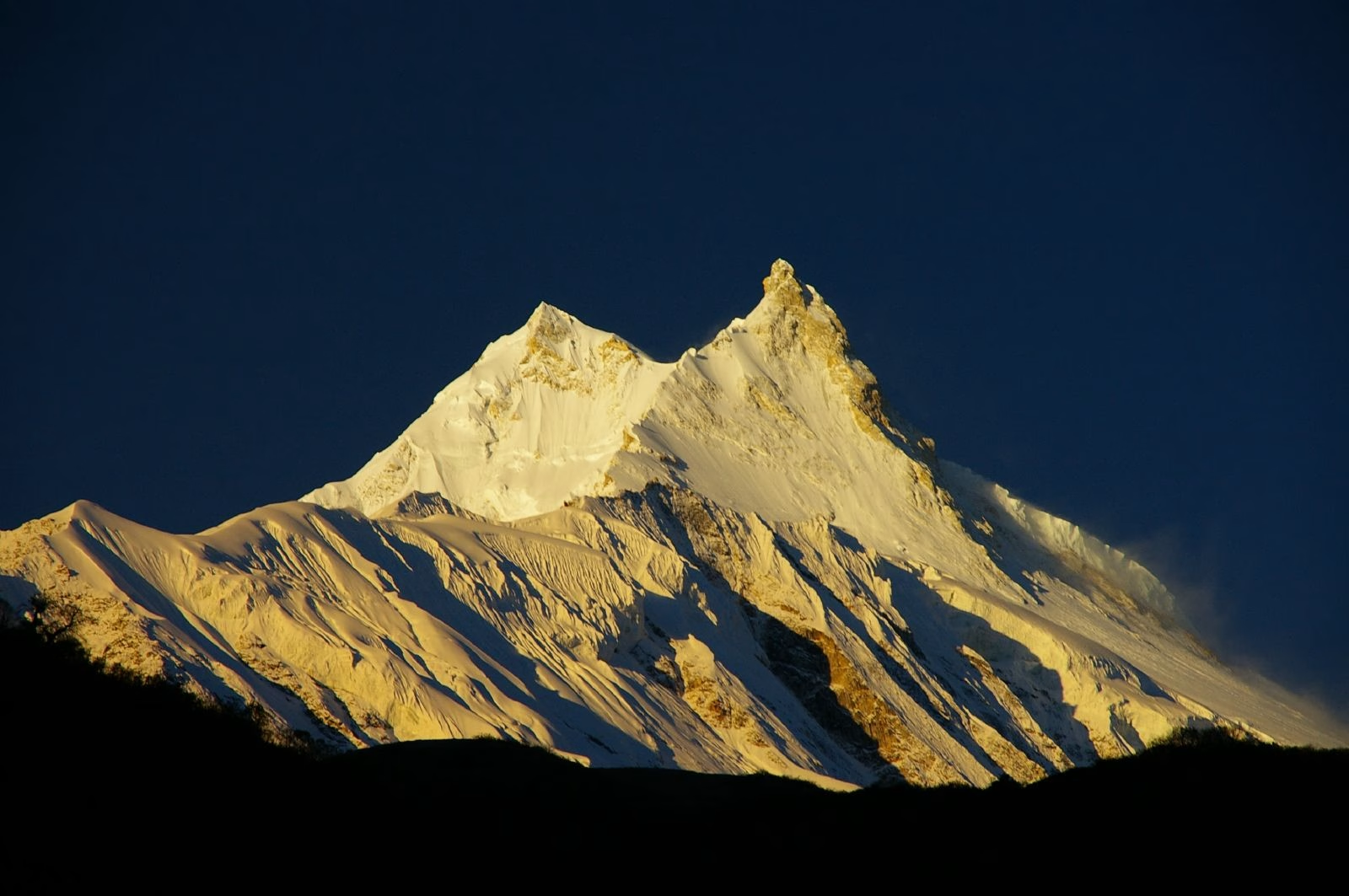
The Manaslu Base Camp Trek is a top journey to the foothills of Mount Manaslu. The eighth-highest peak in the world at 8,163 meters. This is also one of those ideal treks offering the best balance of adventure and wilderness along with cultural input; hence, this is one of the most fantastic alternatives to other well-known Everest and Annapurna treks. Actually diversified by its wildlife, affluent forests, and dramatic landscapes, the itinerary goes through Manaslu Conservation Area.
Traditional villages of Tibetan-influenced people showcase their lifestyle, customs, and hospitality, packed in this circuit. Stunning Himalayan peak vistas also await trekkers around every bend: Manaslu, Himalchuli, Ngadi Chuli, and Ganesh Himal. Starting from Soti Khola or Machha Khola, the journey follows the valley of the Budhi Gandaki River. The trail ascends through dense forests, terraced fields, and multiple suspension bridges. As you climb higher, the path passes through traditional villages, offering a glimpse into local cultures. The final push to Manaslu Base Camp at 4,800 meters is tough but rewarding. The stunning views of surrounding glaciers and towering peaks make the effort worthwhile.
This route is perfect for advanced trekkers in pursuit of a totally different and off-the-beaten-path adventure. Spring, starting from March until May, and autumn, starting from September up to November, is the best time for this trek because this is usually when the weather is stable and the scenery is at its best.It is definite that Manaslu Base Camp Trek constitutes a lifetime memory of adventure and solitude into the Himalayas, with its raw beauty, lesser crowd, and rich cultural experiences. Join Blaze Mountain for this exciting journey of the Manaslu Base Camp Trek.
Short Itinerary
- Day 1: Drive from Kathmandu to Machha Khola – The adventure begins with an early morning drive from Kathmandu towards the…
- Day 2: Trek from Machha Khola to Jagat – After breakfast, the trail follows the roaring Budhi Gandaki River through beautiful…
- Day 3: Trek from Jagat to Deng – Today's walk takes you deeper into the hidden valleys of the Manaslu…
- Day 4: Trek from Deng to Namrung – The journey continues through beautiful forests and traditional mountain villages. The trail…
- Day 5: Trek from Namrung to Lho – Today offers some of the finest mountain scenery of the entire trek.…
- Day 6: Trek from Lho to Samagaon and Explore Pungyen Gompa – Leaving Lho behind, the trail enters a high alpine landscape filled with…
- Day 7: Hike to Manaslu Base Camp and Return to Samagaon – This is the highlight of the entire journey. Starting early in the…
- Day 8: Trek from Samagaon to Samdo – Today's trek leads further into the remote upper reaches of the valley.…
- Day 9: Trek from Samdo to Dharmasala – The trail gradually climbs through barren high-altitude landscapes toward Dharmasala, the final…
- Day 10: Trek from Dharmasala to Bhimtang via Larkya La Pass – Today is both the most challenging and most rewarding day of the…
- Day 11: Trek from Bhimtang to Dharapani – Leaving the high mountains behind, the trail descends through dense pine and…
- Day 12: Drive from Dharapani to Kathmandu, Pokhara, or Chitwan – After breakfast, begin the drive back through Nepal's beautiful countryside. As rivers,…
About Trip:
The Manaslu Base Camp Trek is a top journey to the foothills of Mount Manaslu. The eighth-highest peak in the world at 8,163 meters. This is also one of those ideal treks offering the best balance of adventure and wilderness along with cultural input; hence, this is one of the most fantastic alternatives to other well-known Everest and Annapurna treks. Actually diversified by its wildlife, affluent forests, and dramatic landscapes, the itinerary goes through Manaslu Conservation Area.
Traditional villages of Tibetan-influenced people showcase their lifestyle, customs, and hospitality, packed in this circuit. Stunning Himalayan peak vistas also await trekkers around every bend: Manaslu, Himalchuli, Ngadi Chuli, and Ganesh Himal. Starting from Soti Khola or Machha Khola, the journey follows the valley of the Budhi Gandaki River. The trail ascends through dense forests, terraced fields, and multiple suspension bridges. As you climb higher, the path passes through traditional villages, offering a glimpse into local cultures. The final push to Manaslu Base Camp at 4,800 meters is tough but rewarding. The stunning views of surrounding glaciers and towering peaks make the effort worthwhile.
This route is perfect for advanced trekkers in pursuit of a totally different and off-the-beaten-path adventure. Spring, starting from March until May, and autumn, starting from September up to November, is the best time for this trek because this is usually when the weather is stable and the scenery is at its best.It is definite that Manaslu Base Camp Trek constitutes a lifetime memory of adventure and solitude into the Himalayas, with its raw beauty, lesser crowd, and rich cultural experiences. Join Blaze Mountain for this exciting journey of the Manaslu Base Camp Trek.
Trip Highlights:
- Trek to the base of Mt. Manaslu (8,163m) and take in breathtaking Himalayan views.
- Enjoy a quiet and less crowded trail, perfect for adventure and solitude.
- Walk through the Manaslu Conservation Area and explore lush forests, rare wildlife, and diverse landscapes.
- Visit ancient monasteries, chortens, and traditional mountain villages to experience rich Tibetan culture.
- Admire stunning views of towering peaks like Himalchuli, Ngadi Chuli, and Ganesh Himal.
- Cross thrilling suspension bridges over deep gorges and rivers for an exciting trekking experience.
- Climb to Manaslu Base Camp (4,800m) and witness breathtaking glacier and mountain scenery.
- Trek during spring or autumn to enjoy clear weather and the best views.
- Experience a true adventure in the remote and untouched beauty of the Himalayas.
Best Season for this Trip:
Look, you can do this trek any time of the year if you really want to. But let’s not sugarcoat it some seasons just hit different. Some days you’ll feel like nature is on your side, and other times? You’ll be dragging your boots through mud, wondering why the sky hates you. So yeah, picking the right time matters. Let me break it down for you, raw and real season by season.
Spring (March to May)
Spring is just... smooth. You walk through trails that are literally exploding with color. Rhododendrons blooming left and right, birds chirping like they’re performing for you, and those crisp mornings where the air just feels clean. You wake up to bright skies, the kind that makes you want to keep walking without thinking about your aching legs. The temperatures? Spot on. Mornings are cool enough to feel refreshing, and days are warm enough to trek in light gear without freezing your fingers off. It’s not crowded like autumn, so if you’re the kind of person who wants the trail to yourself spring will treat you right. The snow starts melting in the high-altitude spots, so you get these epic half-white, half-green landscapes. It feels alive. Like the mountains are stretching after winter and you’re there to witness it.Autumn (September to November)
Now this this is the superstar season. No debate. You get views so clear it almost feels fake. Like you’re walking through a travel poster. After the monsoon washes everything clean, autumn comes in with this dry, golden vibe that makes every single mountain pop. The weather stays stable. No random clouds ruining your sunrise. No slippery rocks. Just clean trails and that perfect light for photos that don’t even need editing. Yeah, it’s popular. So don’t expect empty teahouses or quiet paths. But honestly? You won’t care when you’re standing in the middle of nowhere, watching the first light hit a snow-covered peak. There’s this stillness in the air like the mountains are holding their breath and you’ll remember that feeling way longer than any crowd you bumped into.Winter (December to February)
This one’s only for the bold. You want peace? Silence? That untouched, raw kind of beauty? Winter gives you all that—but it also slaps you with cold mornings, icy trails, and some hardcore “why am I doing this?” moments. You’ll wake up with frost on your sleeping bag and your water bottle half frozen, and still… you’ll smile. Because winter treks have a different kind of magic. The trails are empty. The snow is fresh. The sunrises? Unreal. And if you dress smart, layer up, and don’t mind walking through snowfields, you’ll get experiences that most people never dare to chase. But yeah shorter days, fewer open teahouses, and you have to be mentally ready. This isn’t the cozy, colorful season. It’s raw, wild, and worth every shiver if you’re up for it.Summer/Monsoon (June to August)
Let’s not sugarcoat it summer is chaos. Rain dumps from the sky whenever it wants, trails turn to mush, and those little blood-sucking leeches come out to party. If you hate walking with wet socks and fogged-up glasses, skip this one. But… if you're that wild soul who loves the sound of rain, the smell of wet earth, and doesn’t mind getting dirty monsoon is something else. The hills go neon green. Waterfalls that barely exist in other seasons start roaring like mini Niagaras. There’s this raw freshness in the air. You walk through mist and hear nothing but your own footsteps and distant thunder. It’s dramatic. Moody. Cinematic. Yeah, the views might be hit or miss, but the vibe? Undeniable. Just don’t come here expecting clear mountain shots every day; come here for the feeling.Food and Accommodations on Trip:
The Manaslu Base Camp Trek might take you through some of the most remote trails in Nepal, but don’t worry—the basics are covered. You won’t be trekking on an empty stomach or freezing at night. The food is simple, filling, and warm, and the stays are basic but comforting. You’re not here for luxury anyway. You’re here for the mountains—and this trek gives you just enough of what you need to keep going strong. Here's how the food and accommodation work along the trail:
Food Options:
Food during the Manaslu Base Camp Trek is all about keeping your body fueled and your soul warm. You’ll be walking for hours every day, so meals matter—and luckily, you’ll be fed well.- Local Cuisine You’ll be eating a lot of Dal Bhat, and honestly, it never disappoints. Fresh rice, hot lentil soup, seasonal vegetables, and pickles on the side—it fills you up and keeps you going. Along the way, you’ll also get Tibetan bread, Sherpa stew, boiled potatoes, and momos when you're lucky. The food is cooked fresh in every teahouse, usually over a woodfire or gas stove, and it just hits different in the cold.
- Western Food If you’re the kind of trekker who needs a little break from local food, most places offer basic Western dishes too. Pancakes with jam, toast and eggs, fried noodles, pasta, macaroni, and even chowmein show up on the menu. It’s nothing fancy, but when you’re tired and craving something different, it’s the kind of comfort that works.
- Refreshments & Beverages Throughout the trail, you’ll find little shops and tea houses selling simple snacks—biscuits, dry noodles, chocolate bars, juice boxes, and chips. And when it comes to drinks, there’s always a kettle going. You’ll be sipping on hot milk tea, black tea, ginger lemon honey, coffee, and hot chocolate at the end of almost every day. Nothing beats wrapping your hands around a warm mug when it’s freezing outside.
Accommodation Options
Accommodation on this trek is not about luxury—it’s about shelter, warmth, and people who treat you like family. You’ll be staying in tea houses from the start to the end, and while the facilities are basic, the feeling is anything but.- Tea Houses & Lodges Most of the villages along the trail have locally run tea houses. These are small lodges where you’ll get a room with two single beds, a mattress, a pillow, and thick blankets. You won’t get room service or attached bathrooms, but what you do get is a warm place to sleep, a hot meal, and hosts who genuinely care about your comfort. The dining halls usually have a central fire or stove, and this is where everyone gathers in the evening to eat, chat, and warm up.
- Higher Altitude Accommodation As you go higher, things get more basic. Rooms get colder, walls thinner, and bathrooms turn into shared outdoor setups. Hot showers might be available in some places, but they’ll cost extra—and sometimes they’re just not possible due to limited water or no gas. Electricity might only be available for a few hours in the evening, and it’s all solar-powered. Still, what the place lacks in comfort, it makes up for in vibe.
- Electricity & Charging Charging your devices usually costs extra, especially at higher altitudes. Solar panels run most of the lodges, so power is limited. Bring a power bank—seriously. Don’t count on internet or phone signal either. This trek forces you to unplug, and honestly, that’s one of the best parts.
Includes / Excludes
Includes:
- ✓ Airport pick-up and drop in Kathmandu
- ✓ All domestic transportation (Kathmandu to Machha Khola and return)
- ✓ Experienced trekking guide and porters
- ✓ Accommodation in teahouses/lodges during the trek
- ✓ Accommodation in hotels in Kathmandu and Pokhara (if applicable)
- ✓ All meals during the trek (Breakfast, Lunch, Dinner)
- ✓ Trekking permits: Manaslu Conservation Area Permit (MCAP) and Annapurna Conservation Area Permit (ACAP, if required)
- ✓ First aid medical kit and emergency support
- ✓ 24/7 support from Blaze Mountain team
Excludes:
- ✗ International airfare to/from Nepal
- ✗ Personal travel insurance (mandatory for trekking)
- ✗ Meals in Kathmandu or Pokhara (unless specified)
- ✗ Drinks, bottled water, or soft drinks during the trek
- ✗ Personal expenses (laundry, snacks, souvenirs, hot showers)
- ✗ Tips for guides and porters
- ✗ Equipment rental (sleeping bags, trekking poles, down jackets)
Detailed Itinerary of Manaslu Base Camp Trek:
Day 1: Drive from Kathmandu to Machha Khola
The adventure begins with an early morning drive from Kathmandu towards the remote hills of the Manaslu region. Leaving behind the busy streets of the capital, the road winds through green hills, terraced farms, riverside settlements, and traditional villages. As the journey continues, the landscapes become more rugged and dramatic, offering the first glimpse of rural Nepal. Following the Budhi Gandaki River for much of the route, you eventually reach Machha Khola, a small riverside village surrounded by lush hills. Settle into your teahouse and enjoy your first evening in the mountains.
Day 2: Trek from Machha Khola to Jagat
After breakfast, the trail follows the roaring Budhi Gandaki River through beautiful forests, suspension bridges, and small villages scattered along the valley. The path climbs and descends several times, passing waterfalls, rocky cliffs, and traditional settlements where locals continue their daily routines much as they have for generations. As the mountains begin to feel closer, the journey arrives at Jagat, a charming stone-paved village that serves as the gateway to the Manaslu Conservation Area.
Day 3: Trek from Jagat to Deng
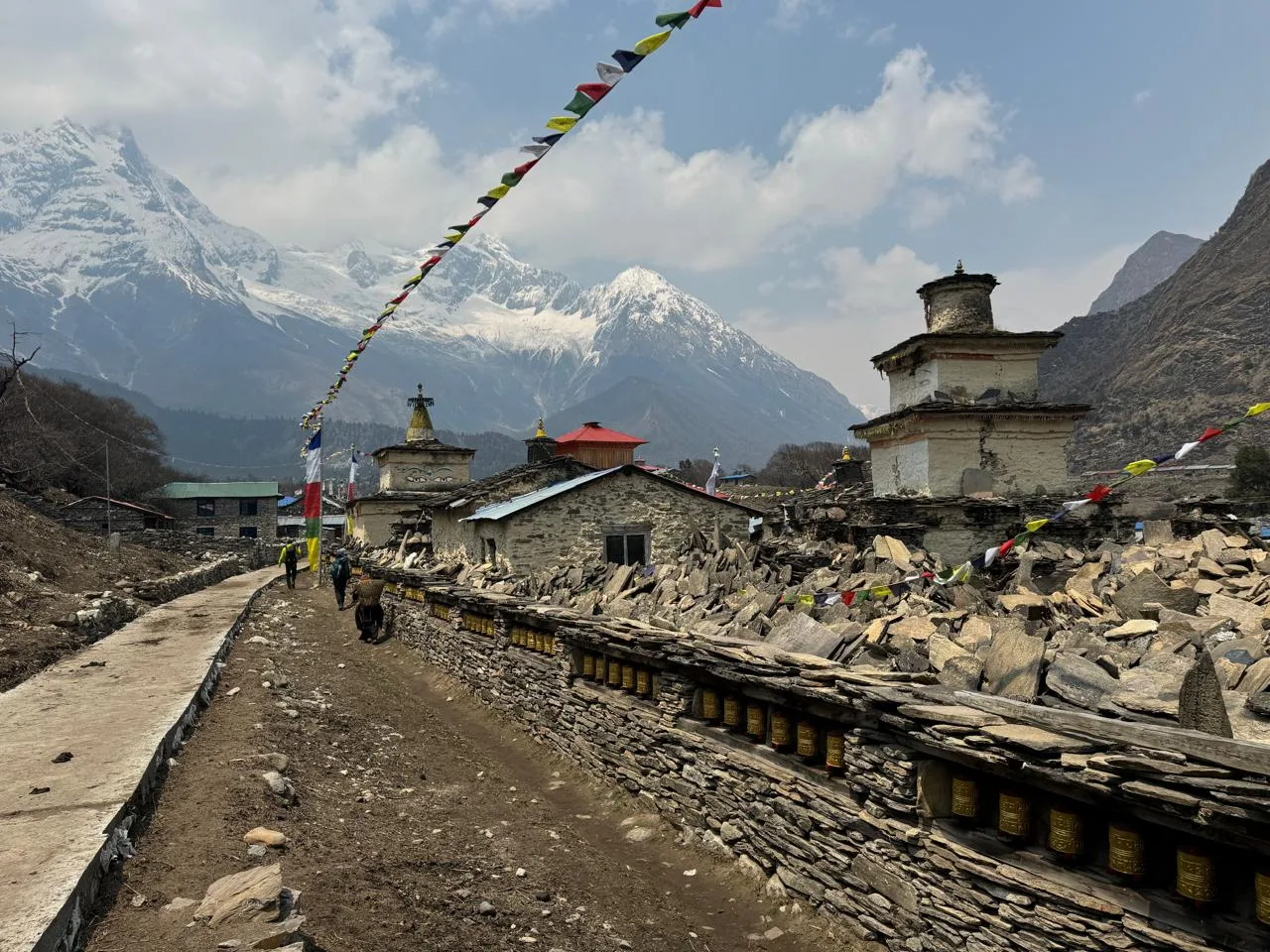
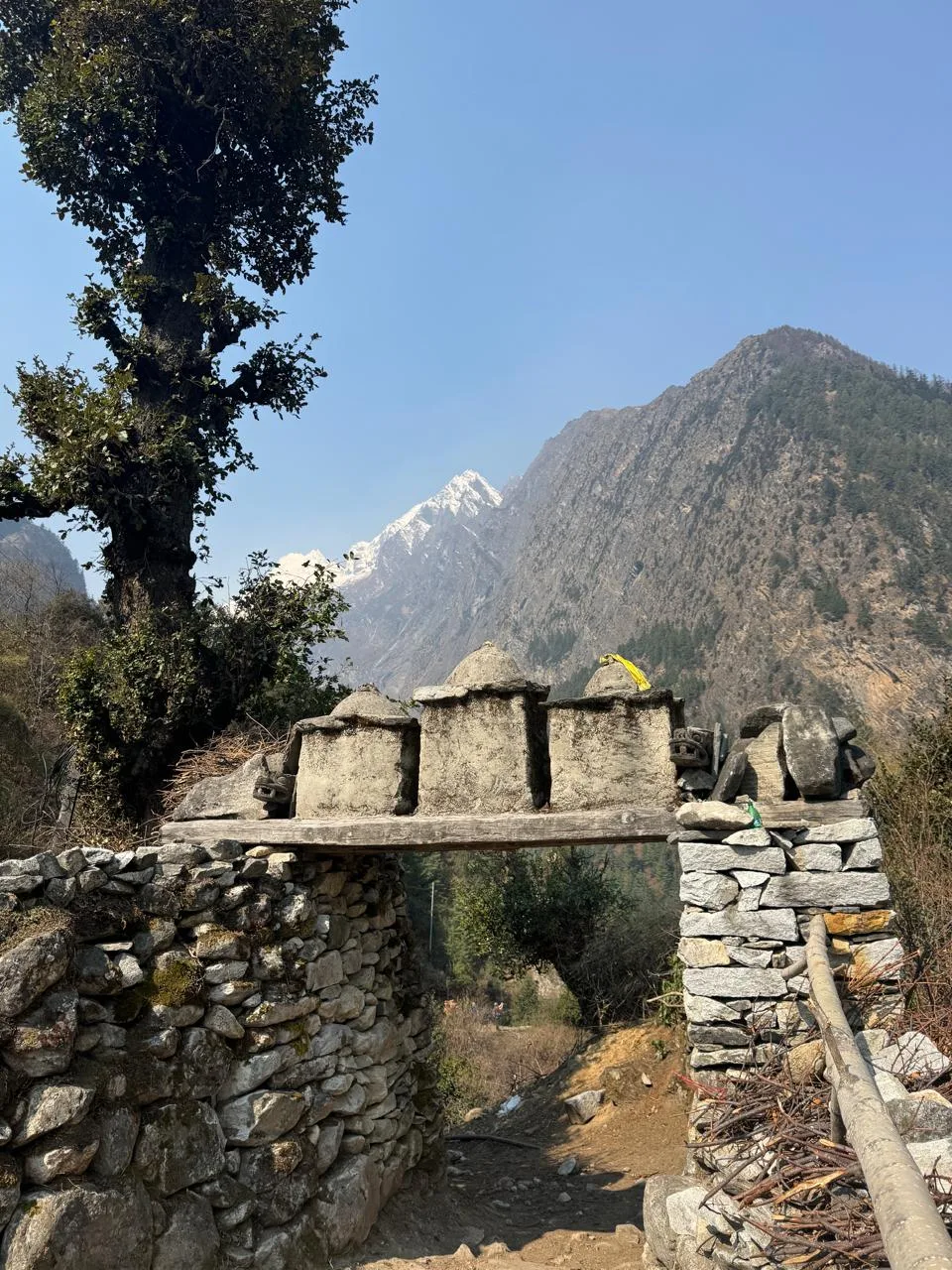
Today's walk takes you deeper into the hidden valleys of the Manaslu region. The trail weaves through forests of pine and rhododendron, crosses suspension bridges high above the river, and passes through picturesque villages decorated with prayer flags and mani walls. With every step, the influence of Tibetan culture becomes more noticeable. Surrounded by peaceful mountain scenery, you eventually arrive at Deng, a quiet settlement nestled among forested hills.
Day 4: Trek from Deng to Namrung
The journey continues through beautiful forests and traditional mountain villages. The trail gradually gains elevation, rewarding trekkers with increasingly spectacular views of the surrounding Himalayas. Ancient monasteries, prayer wheels, and stone-carved mani walls line sections of the route, reflecting the deep Buddhist traditions of the region. By afternoon, you reach Namrung, a scenic village known for its rich culture and stunning mountain backdrop.
Day 5: Trek from Namrung to Lho
Today offers some of the finest mountain scenery of the entire trek. The trail passes through traditional villages and alpine landscapes while revealing magnificent views of Manaslu and neighboring peaks. As you approach Lho, the massive face of Mount Manaslu dominates the horizon, creating an unforgettable sight. The village itself sits in a spectacular location, offering breathtaking views that become even more magical during sunset.
Day 6: Trek from Lho to Samagaon and Explore Pungyen Gompa
Leaving Lho behind, the trail enters a high alpine landscape filled with grazing yaks, prayer flags, and snow-capped peaks. The walk to Samagaon is relatively gentle, allowing plenty of time to admire the dramatic scenery surrounding the valley. After lunch, explore the sacred Pungyen Gompa, an ancient monastery set beneath the towering glaciers of Manaslu. The peaceful atmosphere, combined with incredible mountain views, makes this one of the most memorable days of the trek.
Day 7: Hike to Manaslu Base Camp and Return to Samagaon
This is the highlight of the entire journey. Starting early in the morning, the trail climbs steadily toward Manaslu Base Camp through rocky terrain, glacial landscapes, and high mountain ridges. As the altitude increases, the views become more spectacular with every step. Reaching Manaslu Base Camp at 4,800 meters rewards trekkers with breathtaking views of glaciers, icefalls, and the mighty Mount Manaslu rising high above the valley. After spending time soaking in the incredible surroundings, descend back to Samagaon for a well-earned rest.
Day 8: Trek from Samagaon to Samdo
Today's trek leads further into the remote upper reaches of the valley. The trail follows open alpine terrain with stunning views of glaciers, rugged mountains, and vast landscapes stretching towards the Tibetan border. The short trekking day allows plenty of time to relax and explore Samdo, a traditional Tibetan-influenced village where life remains deeply connected to the mountains and ancient traditions.
Day 9: Trek from Samdo to Dharmasala
The trail gradually climbs through barren high-altitude landscapes toward Dharmasala, the final stop before crossing the famous Larkya La Pass. Snow-capped peaks surround the valley, while glaciers and rocky ridges create a dramatic Himalayan setting. Although the trek is relatively short, it plays an important role in helping your body adjust to the altitude before tomorrow's big challenge.
Day 10: Trek from Dharmasala to Bhimtang via Larkya La Pass
Today is both the most challenging and most rewarding day of the trek. Before sunrise, begin the steady climb toward Larkya La Pass at 5,160 meters. As you approach the summit, spectacular views unfold in every direction, revealing some of Nepal's most impressive mountain scenery. Standing on top of the pass feels like a true achievement, surrounded by towering peaks, glaciers, and endless Himalayan vistas. After enjoying the views, descend through glacial valleys and alpine meadows to reach the beautiful settlement of Bhimtang.
Day 11: Trek from Bhimtang to Dharapani
Leaving the high mountains behind, the trail descends through dense pine and rhododendron forests. Waterfalls, streams, and charming villages line the route as the landscape gradually becomes greener and warmer. The trek feels noticeably different from the rugged high-altitude terrain of previous days, offering a relaxing and scenic conclusion to the walking portion of the journey. Arrive at Dharapani and celebrate the successful completion of an incredible adventure.
Day 12: Drive from Dharapani to Kathmandu, Pokhara, or Chitwan
After breakfast, begin the drive back through Nepal's beautiful countryside. As rivers, hills, villages, and terraced fields pass by your window, there is plenty of time to reflect on the unforgettable memories created along the Manaslu Base Camp Trek. From remote mountain villages and ancient monasteries to glaciers, high passes, and breathtaking Himalayan views, this journey offers an experience that will stay with you long after returning home.
Map:
Add map embed code or URL in the tour editor.
Tour Images