
[Trip_Info_Shortcode id=’5102′]
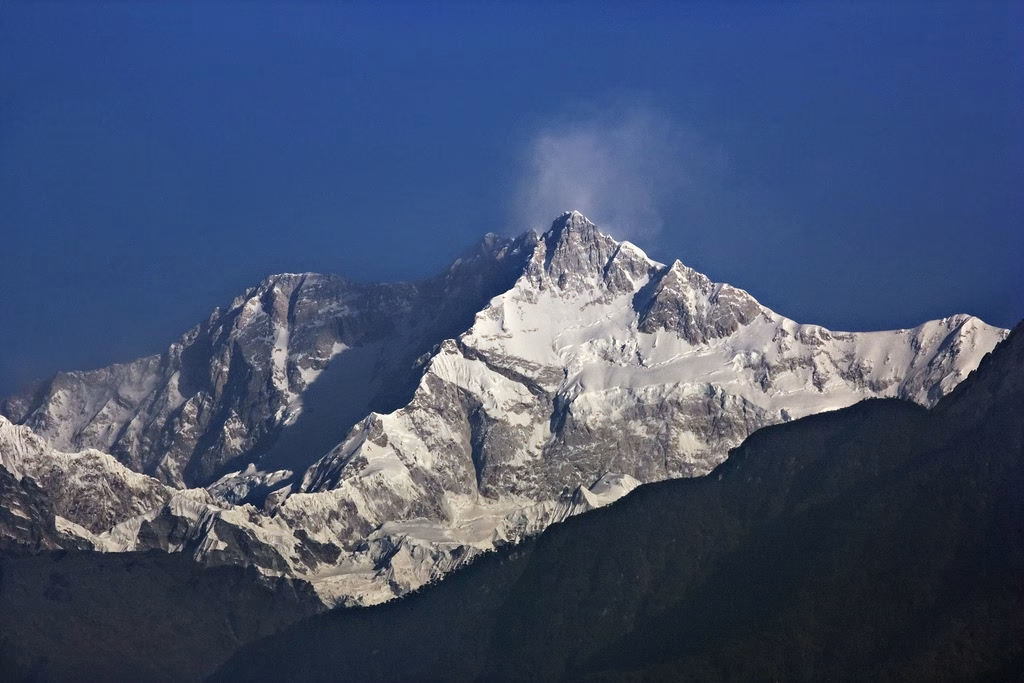
A glorious venture setting out to conquer the world’s third-highest mountain at 8586m, the Kanchenjunga Expedition. This expedition, which takes place in the far easternmost remote corner of Nepal. Unfolds in the pristine beauty of the Himalayas, cultural experiences, as well as in an intense climb. In the fight against commercial routes, Kanchenjunga offers solitude undisturbed by human presence. A deep bond with nature from start to finish. The trek to the base camp travels through verdant valleys, rhododendron forests, and glacial rivers. And attains elevation gradually to aid proper acclimatization. Climbers will get to experience rich Sherpa and Tibetan cultures through traditional villages such as Ghunsa and Khambachen.
In the base camp, they spend weeks preparing to acclimatize and do rotations. And set up high camps on their way to the summit of Kanchenjunga. Climbing would comprise technical mountaineering skills, bravery, and resourcefulness amidst erratic weather on the high mountain and high-altitude conditions, thereby contributing to safety and the success of the expedition through their experienced Sherpa guides and cooperating support team.
The same glorious path back helps the climbers relax while going home after summitting. For the seasoned mountaineer, the Kanchenjunga Expedition is a fitting territory for a run with less trace, difficult-wrought technically, and high reward in nature. Every inch of this expedition represents a physical challenge with a backdrop of nature’s beauty, cultural depth, and shared mountaineering lore. The summit means little compared to the journey there. The call of Blaze Mountain awaits you to take up this wonderful challenge and be a part of one such timeless Himalayan tale.
Trek Note: Kanchenjunga Expedition
Trek Duration: 50 Days
Max Elevation: 8,586M
Trek Grade: Extremely Challenging & Technically Demanding
Best Season: Spring (April-May), Autumn (September-October)
Accommodation: Camping
Permits Required: Kanchenjunga Conservation Area Permit, Climbing Permit, Liaison Officer
Probably one of the toughest Himalayan challenges that could be attempted by seasoned climbers. The attempt at the world’s third-highest mountain, Kanchenjunga. Situated in remote eastern Nepal, the solitude for the much-cherished panoramic beauty and mountaineering challenge during the trek is unrivaled. After a thrilling scenic flight to Bhadrapur, the overland leg of the journey sets off, being an increased gain in altitude through culturally imbued villages, emerald green valleys, and alpine forests.
The final ascent to Kanchenjunga is a complete test of mettle and resource, requiring endurance, experience, and a measured and methodical approach to mountaineering right from the very beginning. The same footpath would be followed for trekking back, giving enough time for pondering through contrasting challenge and attraction. The Kanchenjunga Expedition is tailor-made for a seasoned climber who is looking for an expedition in isolation, a challenge, and something very rewarding. Blaze Mountain guarantees complete logistics support, expert Sherpa guidance, medical preparedness, and all safety measures needed for a successful expedition.
Additional Information:
You can access full details regarding the Kanchenjunga Expedition from our website. If you need any extra information or extra service, feel free to contact us. To meet our agent, please follow the link, and/or if you want to talk to us directly, you can call our office at 01-4522505.
Specialty of Kanchenjunga Expedition
Far in Nepal’s eastern Himalayas, Kanchenjunga, the third-highest mountain in the world, offers one of the most remote and rewarding expeditions. Its isolation, challenging terrain, and untouched wilderness make it a dream climb for seasoned mountaineers seeking a true Himalayan adventure. Below are the unique features that define the Kanchenjunga Expedition.
- Remote and Wild Himalayan Experience
Kanchenjunga lies in one of the most secluded parts of Nepal, far from commercial trekking hubs and mass tourism. This region simply boasts untouched alpine wilderness, pristine valleys, and dramatic landscapes that drift with altitude. The trails here are quiet, often devoid of trampling feet, leaving a peaceful and raw feel with nature. Isolation brings about deeper solitude and purer mountaineering. - One of the Most Technical 8,000ers
Climbing Kanchenjunga is a serious undertaking, requiring high-level technical skills in ice, snow, and mixed alpine terrain. Multiple high camps and harsh weather unpredictability complicate steep sections, thus testing one’s experience, endurance, and strategy in the expedition. For the mountaineers that love challenging ascents with fewer crowds, Kanchenjunga fits that description and even has more. - Rich Biodiversity and Natural Beauty
The journey to the base camp translates into an impressive spectrum of ecological zones, from subtropical forests up towards the high alpine meadows. The rare wildlife species, such as the red panda, Himalayan black bear, and snow leopard, can be found in the Kanchenjunga Conservation Area. Along the trail, the scenery remains wild, vibrant, and beautifully untouched throughout the journey. - Cultural Authenticity in Eastern Nepal
Unlike the very crowded trekking routes in central Nepal, the Kanchenjunga Trail is complemented by Rai, Limbu, and Tibetan-influenced villages along it. Ancient customs and monasteries exist there alongside a great spiritual bond of the peoples to the mountains. Absolutely delightful hospitality and cultural immersion enrich the experience in some of the least visited parts of Nepal. - Expert Support and Expedition Management
Anything and everything, whether you are thinking of making a trip or already set on going to Kanchenjunga, Blaze Mountain assures you a safe, well-coordinated, and professional support trip. We at Blaze Mountain have a highly experienced crew of Sherpas, guides, high-altitude porters, and a reliable logistics crew. With all thorough acclimatization, medical backup, and planning for the weather, we ensure summit success and a top-level expedition experience overall.
Is the Kanchenjunga Expedition Right for Trekkers and Climbers?
- The Kanchenjunga Expedition is best suited for experienced climbers with prior high-altitude and technical mountaineering experience above 6,000 meters.
- It is one of the most remote and technically challenging 8,000-meter peaks, requiring excellent physical conditioning and mental endurance.
- Climbers must be skilled in glacier travel, fixed rope usage, and managing extreme alpine weather conditions over extended periods.
- This expedition is ideal for those seeking a serious Himalayan challenge beyond crowded peaks like Everest or Manaslu.
- It involves establishing multiple high camps and navigating icefalls, crevasses, and steep snow-covered ridges.
- The region’s remoteness offers a true sense of wilderness, making it perfect for mountaineers who value solitude and purity in adventure.
- For passionate trekkers, the trek to Kanchenjunga Base Camp offers an excellent alternative to the summit climb.
- The trekking route features rich biodiversity, dramatic scenery, and culturally vibrant villages influenced by Tibetan, Rai, and Limbu traditions.
- Trekkers will enjoy the untouched beauty of eastern Nepal while staying within a more manageable altitude range.
- Whether climbing or trekking, both experiences promise deep personal reward, natural beauty, and a genuine Himalayan adventure.
Who Should Join the Kanchenjunga Expedition?
- Experienced trekkers who have completed high-altitude treks and want to transition into mountaineering.
- Intermediate to advanced climbers looking for a 7,000-meter peak before attempting 8,000-meter summits.
- Adventure seekers who enjoy remote, off-the-beaten-path Himalayan expeditions.
- Physically fit individuals with a strong mindset and the ability to endure long, challenging climbs.
The Kanchenjunga Expedition is an incredible experience that will push your boundaries and reward you with breathtaking Himalayan vistas and a genuine sense of success if you possess the willpower, physical stamina, and enthusiasm for high-altitude adventure. Climbers who are prepared to take on the challenge can participate in this adventure since Blaze Mountain guarantees a safe and well-supported trek.
Best Season for Kanchenjunga Expedition:
Selecting the appropriate season is essential to a safe and successful ascent of the Kanchenjunga Expedition, a high-altitude experience that requires careful planning. The excursion is best conducted in the spring (April–May) and fall (September–October) seasons due to its isolated location and difficult terrain. The best climbing conditions, clear sky, and most consistent weather patterns are available throughout these two seasons. Climbers are better able to make decisions and prepare when they are aware of the features of Nepal’s four distinct seasons.
- Spring, from March to May, is the most agreeable season for the Kanchenjunga Expedition. Temperatures at this season are moderate, and weather stability is great at both the lower and higher altitudes. Visibility is excellent, and the trail to the base camp is lined with blooming rhododendrons and alpine flora. It is in this season that snow conditions at high altitude are more predictable and allow for the safer establishment of high camps and planning for summit pushes. This season being the peak trekking expedition season for other Himalayan expeditions smoothens logistical arrangements and support.
- Summer/monsoon (June-August) is an unsuitable period for expeditions in Kanchenjunga or any other high Himalayan region. During this period, heavy rains disrupt the trails, increase landslide hazards, and create flight cancellations. Visibility becomes poor due to thick cloud cover, while lower trail systems are infested with leeches and insects. Much more discomforting and unsafe would be constant rain, along with humidity, while trekking and climbing, particularly in remote areas like Kanchenjunga.
- Autumn (September-November) is the second-best season for the expedition. Post-monsoon weather gives clear skies, crisp air, and excellent visibility as a perfect stage for high-altitude climbing. The trails are dry, and the atmosphere is fresh, making it an enjoyable and scenic trek to base camp. This season is particular for experienced climbers making an attempt on the summit in a safe and successful way due to its periods of stable weather windows and supported temperatures.
- Winter (December-February) is not recommended for the Kanchenjunga Expedition due to severe cold temperatures and vile weather conditions at high altitude. Heavy snowfall and high winds in upper camps increase a risk for climbing and present behind-the-scenes logistical challenges. In contrast, low-altitude pathways are relatively calm and picturesque, and snow and high-altitude climbing become way too down risky and exhausting. Only experienced mountaineers having top-end gear and excellent knowledge of winter expeditions should be ready to take up climbing in this season, and generally, it is highly discouraged.
Kanchenjunga Weather Table According to Altitudes:
| Altitude (m) | Day Temperature (°C) | Night Temperature (°C) | Weather Conditions |
|---|---|---|---|
| 1,000m – 2,500m | 20°C to 25°C | 10°C to 15°C | Warm during the day, cooler nights, clear skies with occasional clouds. |
| 2,500m – 4,500m | 15°C to 10°C | 5°C to -5°C | Milder temperatures with some light rainfall, colder nights with cool winds. |
| 4,500m – 6,500m | 5°C to 0°C | -10°C to -15°C | Cold with occasional snow, winds begin to pick up in higher elevations. |
| 6,500m – 8,000m | -5°C to -10°C | -20°C to -30°C | Harsh winds, extreme cold, snowstorms more frequent. |
| 8,000m – 8,163m (Summit) | -20°C to -30°C | -30°C to -40°C | Extreme cold, powerful winds, very low oxygen, blizzards common. |
Local Culture and Tradition Around Kanchenjunga
The area around Kanchenjunga sustains a myriad of cultures, partly influenced by the ethnic Rai, Limbu, and Tibetan communities. These indigenous people have spiritual affiliations with the mountain and, in their regard, view Kanchenjunga as a sacred protector. The villages found along the trekking route are vibrant with traditions, wherein ancient customs and rituals are still incorporated into daily lives. In this place, prayer flags stream in the air, and prayer wheels spin in the monasteries scattered everywhere. They welcome trekkers into their lives-working with farming and animal husbandry, weaving, and pottery.
Religion is intrinsic to the surrounding people of the Kanchenjunga. The Tibetan Buddhist influence can be seen with numerous monks and nuns in the monasteries performing rituals and ceremonies propitiating the mountain deities. Great zeal is displayed during the festivities like Lhosar (Tibetan New Year) and Buddhist prayer ceremonies with elaborate dances, songs, and feasts. Such cultural celebrations give the trekking party an excellent opportunity to see the spiritual bond of the people with the mountain, thus adding a cultural dimension to the expedition that is otherwise a strenuous journey.
Food & Accommodation Facilities During Kanchenjunga Expedition
To guarantee that hikers and climbers are comfortable and well-fed on their strenuous journey, the Kanchenjunga Expedition provides a range of food and lodging alternatives. Because of the area’s remoteness, the amenities are simple, but they give hikers the warmth and cover they need to relax and recuperate. Below is a summary of what to anticipate while on the expedition:
Food Options
During the Kanchenjunga Expedition, trekkers and climbers will have access to both local and Western food to maintain energy levels during the journey.
- Local Cuisine: The local cuisine is predominantly Tibetan and Sherpa-themed, with traditional dishes like Dal Bhat (lentil soup and rice), Tibetan bread, momos (dumplings), and Sherpa stew. The food is high in carbohydrates and proteins, making the meal plan strong enough to carry through long trekking days at high altitude and assist in recovery.
- Western Food: For diversity, a few of the lodges on the trek offer Western food like pasta, pancakes, sandwiches, and fried potatoes. The Western food is a comfort food source that provides instant energy and relief from consuming the local foods.
- Beverages & Refreshments: Mid-way in the trek, chocolates, biscuits, and dry fruits are available for quick snacks. Hot chocolate, tea, and coffee are often served, warming and hydrating bodies, especially after a cold day’s trail.
Accommodation Options
Accommodation along the Kanchenjunga Expedition is basic yet comfortable, designed to provide rest after long days of trekking.
- Tea Houses & Lodges: The most common form of accommodation is in tea houses and lodges. These consist of minimal but cozy rooms, where one can share or rent out private rooms. The local hosts who are Rai and Tibetan communities make these homes homey.
- Higher Altitude Accommodation: As one goes higher, the lodging is more rugged. At higher altitudes, there is colder weather, and facilities are fewer, usually shared toilets and bathroom facilities. In spite of the crudeness, the welcome is warm and friendly, giving one a relaxing haven at the end of the day.
- Height Camping: At higher elevations, there can be camping, especially on acclimatization days. Trekkers will be staying in tents pitched in serene environments, which will give a serene and restful night before facing the next phase of the trek.
With a combination of nutritious food options and simple, hospitable lodging, the Kanchenjunga Expedition ensures that trekkers are well-rested and fueled for their journey through one of the most stunning regions of the Himalayas.
Necessary Gear for the Kanchenjunga Expedition:
Proper gear is essential to ensure safety, comfort, and success on the Kanchenjunga Expedition. The gear must be suitable for both the lower altitudes and the challenging high-altitude conditions of this trek.
Clothing:
- Base layers (thermal tops and bottoms): Essential for regulating body temperature by wicking away moisture and providing warmth.
- Fleece jacket or down jacket: These layers will keep you insulated and protected from cold weather, especially in high-altitude conditions.
- Waterproof and windproof outer layer: A durable jacket will protect against snow, rain, and strong winds, which are common at higher altitudes.
- Trekking pants (water-resistant): Water-resistant pants will ensure your legs stay dry and comfortable while trekking through varied terrain.
- Insulated gloves and warm hat: Cold hands and head can lead to discomfort and fatigue, so high-quality gloves and a hat are essential for warmth.
- Thermal socks and mountaineering boots (insulated): Thick, moisture-wicking socks combined with sturdy, insulated boots will protect your feet from the cold and ensure comfort on long days.
Climbing Equipment:
- Crampons: These will provide the necessary traction on icy surfaces, preventing slippage when navigating steep or frozen terrain.
- Ice axe: Vital for stability and support on ice and snow-covered slopes, offering extra grip when climbing.
- Harness and ropes: For safety during the climb, ensuring secure movement on vertical sections or ice-covered terrain.
- Climbing helmet: A must-have to protect your head from falling rocks and ice, especially on the summit push and other technical sections of the climb.
Camping and Sleeping:
- Sleeping bag (rated for extreme cold): A high-quality sleeping bag is necessary for warmth during cold nights at higher altitudes, ensuring you get proper rest.
- Sleeping pad for insulation: The sleeping pad provides both comfort and insulation from the cold ground, which is essential for a restful sleep.
- Tent for high-altitude camps: A weather-resistant, insulated tent is necessary to withstand high-altitude conditions, offering shelter from strong winds and snow.
- Headlamp with extra batteries: Essential for navigating the camp area and for any night-time treks. Ensure the headlamp is bright and reliable.
Health & Safety:
- First aid kit: A comprehensive first aid kit, including essentials like bandages, antiseptic, and pain relievers, is crucial for addressing injuries or emergencies on the trail.
- Altitude sickness medication: To prevent and manage symptoms of altitude sickness, carry recommended medications and always monitor your condition.
- Water purification system: Clean drinking water is not always available, so a purification system (tablets, filters, or purifiers) is essential for safe hydration.
- Sunscreen and lip balm: High-altitude sun exposure is intense, and protecting your skin from harmful UV rays is critical, so carry sunscreen and lip balm with SPF.
- Personal hygiene items: Items like biodegradable soap, wet wipes, and hand sanitizer will help maintain hygiene on the trail, where water sources may be limited.
Miscellaneous:
- Trekking poles: Essential for maintaining balance and reducing strain on the knees while trekking across uneven, rocky terrain.
- Sunglasses or goggles: Protect your eyes from harmful UV rays and snow glare at higher altitudes with high-quality sunglasses or goggles.
- Camera and power bank: Capture the incredible scenery and ensure your camera stays charged to document the journey.
- Backpack with rain cover: A reliable backpack will hold all your gear, and a rain cover will protect your equipment during sudden downpours or snowstorms.
Why Choose Kanchenjunga Expedition with Blaze Mountain?
The Kanchenjunga Expedition conveyed through Blaze Mountain provides an assurance for dignified and guided experiences in one of the hidden most remote and enchanting corners of Nepal. With years of Sherpa training in high-altitude trekking, our guides and support team know the Kanchenjunga region inside out. They provide all the necessary guidance and leadership while taking care to enlighten you about the culture and landscapes that you will behold. Blaze Mountain guarantees the best in safety measures, from emergency gear to acclimatization planning and the ability to guide you through the challenges of the expedition to make your journey safe but unforgettable.
Blaze Mountain, in addition to expert guidance and safety, takes every effort to provide a complete experience of nature combined with insights into local culture. Our itineraries enable trekkers to immerse themselves in local communities for a glimpse into the unique lives of the Rai, Limbu, and Tibetan people. From local delicacies to warm hospitality received in cozy tea houses and at scenic campsites, our expedition ensures that every little detail is made interesting. Whether looking for an adventure, culture, or a personal challenge, with professionalism and care, Blaze Mountain will give you the experience of a lifetime on its Kanchenjunga Expedition.