
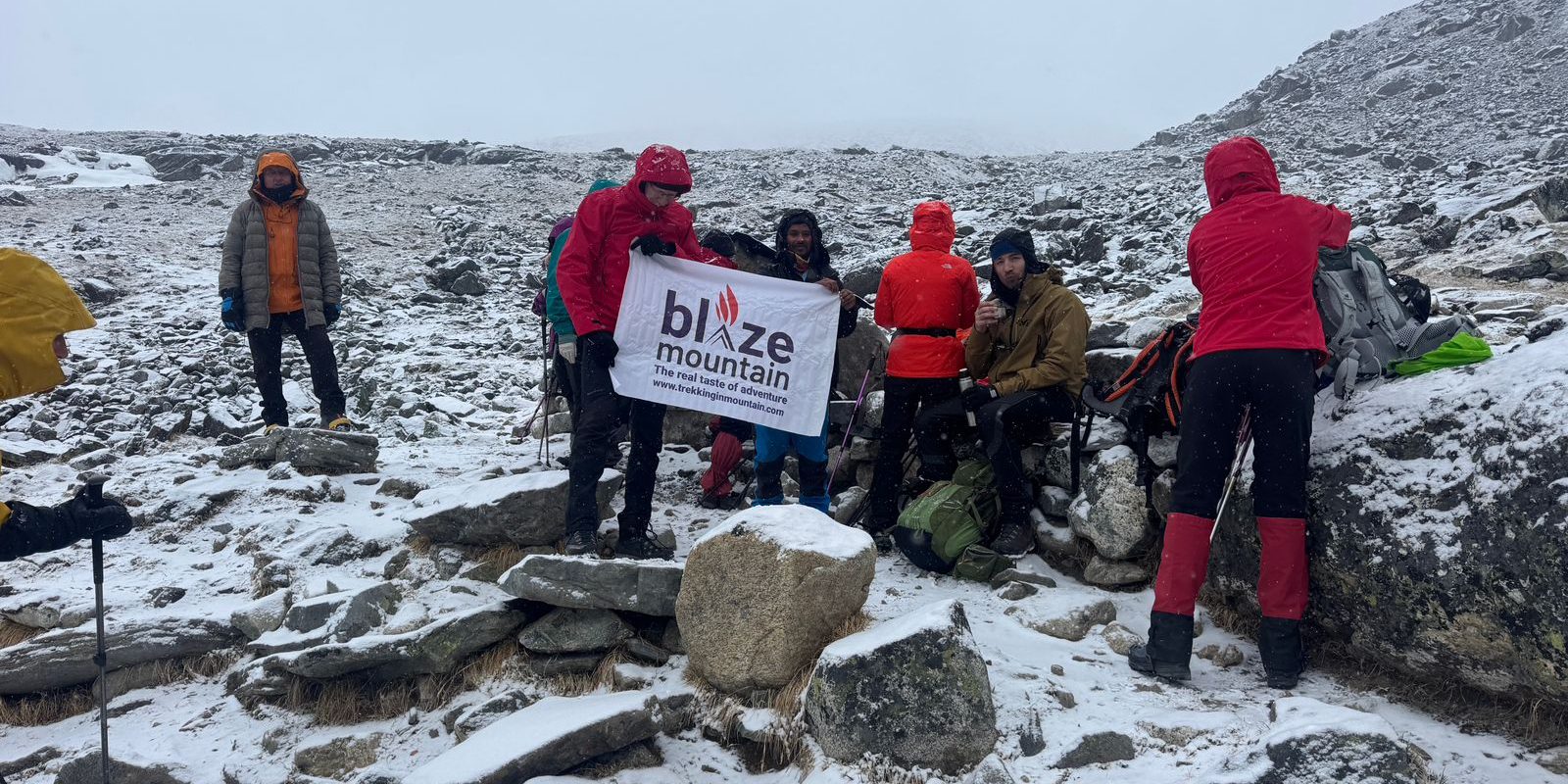
Cho la pass Trek - 15 Days
General Info
Trip Overview
Cho La Pass Trek is considered one of the most famous and popular trekking trails of the Everest region. This is a kind of trek that takes one across two important passes: Renjo La and Kongma La, situated near Mt. Everest. It includes towering mountains surrounding the Cho La Pass Trek, highly cultural ethnicity of Sherpas, charming villages, and rich cultural diversity and traditions of the area. During trekking here, one also comes across century-old festivals, which give a peek into unique cultural heritage that the Sherpa people possess.
This itinerary goes through Sagarmatha National Park; it is a UNESCO World Heritage Site and boasts an incredible array of flora and fauna. Blaze Mountain Adventure takes you through various small yak-grazing villages, providing ample time to observe the distinct lifestyle and rich cultural traditions of the people. The Cho La Pass Trek is basically a tea house trek; you will be accommodated in lodges along the way. This can be best undertaken during September to December or between February to May, at which time of the year one sees clear weather, along with breath-taking vistas.
Cho La Pass Trek is a lifetime memory trek because there are different facilities, such as Everest Base Camp, Gokyo Lake, and Kalapathar. Full board service by Blaze Mountain Adventure caters to your every need during the entire trek and makes your journey comfortable and safe. Please feel free to contact us at Blaze Mountain Adventure for further inquiries or adventure bookings.
Short Itinerary
- Day 01: Arrival in Kathmandu (1,400m) – Arrival at Tribhuvan International Airport where our representative receives you and transfers…
- Day 02: Flight to Lukla (2,860m) and Trek to Phakding (2,610m) | 3 to 4 hours trek – Early morning scenic flight to Lukla, one of the most adventurous airports…
- Day 03: Trek to Namche Bazaar (3,440m) | 6 to 7 hours trek – The trail continues along the Dudh Koshi valley, crossing several high suspension…
- Day 04: Acclimatization Day at Namche Bazaar – This is a crucial rest and acclimatization day to adjust to higher…
- Day 05: Trek to Dole (4,200m) | 5 to 6 hours trek – The trail diverges from the main Everest Base Camp route toward Gokyo…
- Day 06: Trek to Machhermo (4,470m) | 4 to 5 hours trek – The trail ascends gradually through wide valleys and open landscapes. This section…
- Day 07: Trek to Gokyo (4,790m) | 4 to 5 hours trek – The route follows glacial streams and rocky moraine paths leading into the…
- Day 08: Hike to Gokyo Ri (5,357m) and Acclimatization Day – Early morning hike to Gokyo Ri is one of the highlights of…
- Day 09: Trek to Thagnak (4,700m) | 3 to 4 hours trek – A short but important trekking day across rocky terrain and glacial sections…
- Day 10: Cross Cho La Pass (5,420m) and Trek to Dzongla (4,830m) | 7 to 8 hours trek – This is the most physically and technically demanding day of the trek.…
- Day 11: Trek to Lobuche (4,940m) | 3 to 4 hours trek – A relatively short and steady trek along glacial moraine paths. The landscape…
- Day 12: Trek to Everest Base Camp (5,364m) and Return to Gorakshep (5,164m) | 7 to 8 hours trek – The trail follows the rocky glacier path toward Everest Base Camp. The…
- Day 13: Hike to Kala Patthar (5,545m) and Trek to Namche Bazaar (3,440m) | 7 to 8 hours trek – Early morning hike to Kala Patthar offers the closest and most stable…
- Day 14: Trek to Lukla (2,860m) | 6 to 7 hours trek – Final trekking day follows the Dudh Koshi valley back to Lukla. The…
- Day 15: Flight from Lukla to Kathmandu (2,860m to 1,400m) – Early morning flight back to Kathmandu, depending on weather conditions and flight…
About Trip:
Cho La Pass Trek is considered one of the most famous and popular trekking trails of the Everest region. This is a kind of trek that takes one across two important passes: Renjo La and Kongma La, situated near Mt. Everest. It includes towering mountains surrounding the Cho La Pass Trek, highly cultural ethnicity of Sherpas, charming villages, and rich cultural diversity and traditions of the area. During trekking here, one also comes across century-old festivals, which give a peek into unique cultural heritage that the Sherpa people possess.
This itinerary goes through Sagarmatha National Park; it is a UNESCO World Heritage Site and boasts an incredible array of flora and fauna. Blaze Mountain Adventure takes you through various small yak-grazing villages, providing ample time to observe the distinct lifestyle and rich cultural traditions of the people. The Cho La Pass Trek is basically a tea house trek; you will be accommodated in lodges along the way. This can be best undertaken during September to December or between February to May, at which time of the year one sees clear weather, along with breath-taking vistas.
Cho La Pass Trek is a lifetime memory trek because there are different facilities, such as Everest Base Camp, Gokyo Lake, and Kalapathar. Full board service by Blaze Mountain Adventure caters to your every need during the entire trek and makes your journey comfortable and safe. Please feel free to contact us at Blaze Mountain Adventure for further inquiries or adventure bookings.
Trip Highlights:
- High-altitude Himalayan crossing via Cho La Pass at approximately 5,420 meters connecting Gokyo Valley and Everest Base Camp routes.
- Experience two iconic regions in one trek: the turquoise Gokyo Lakes and the Everest Base Camp trail.
- Stunning panoramic views of Everest, Cho Oyu, Lhotse, Ama Dablam, and surrounding Himalayan peaks.
- Crossing of Cho La Glacier section, offering a real alpine adventure with snow and rugged terrain.
- Visit Namche Bazaar, the main Sherpa town and cultural hub of the Everest region.
- Explore the serene Gokyo Valley and its series of high-altitude lakes.
- Gokyo Ri viewpoint hike for one of the best 360-degree Himalayan sunrise views.
- Cross remote high mountain villages like Dole, Machhermo, and Dzongla with authentic teahouse experience.
- Walk through diverse landscapes including pine forests, rocky valleys, glaciers, and alpine terrain.
- Opportunity to complete the classic Everest Base Camp circuit with a more adventurous route via Cho La Pass.
- Experience Sherpa culture, traditional lifestyle, and warm Himalayan hospitality in remote settlements.
- Challenging yet rewarding high-altitude trek designed for experienced trekkers seeking adventure beyond standard routes.
Best Season for this Trip:
From an operational standpoint, the Cho La Pass Trek is a high-altitude Himalayan route (approx. 5,420m) that requires careful season selection due to its glacier crossing, steep ascents, and exposure to rapidly changing weather conditions. Seasonality directly affects safety, visibility, and overall client experience.
Autumn (September to November)
This is our primary operating season and the most recommended period for the Cho La Pass Trek.
After the monsoon, the atmosphere becomes exceptionally clear, offering outstanding visibility of Everest, Cho Oyu, Ama Dablam, and surrounding Himalayan peaks. Trail conditions are dry, stable, and well-defined, significantly reducing technical risk during the Cho La Pass crossing. Weather remains consistent, with cold but manageable temperatures at higher elevations.
This season is ideal for fixed departures, group trekking, and clients seeking a premium Himalayan experience with maximum clarity and reliability. It is also the most predictable window for successfully completing the EBC–Gokyo–Cho La circuit.
Spring (March to May)
Spring is our second preferred season and a strong alternative for operating the Cho La Pass Trek.
During this period, the lower and mid-hill regions are enriched with blooming rhododendrons and vibrant alpine vegetation, offering a visually diverse trekking experience. Weather conditions remain relatively stable, and temperatures are comfortable for long trekking days.
While high-altitude visibility may occasionally be affected by haze compared to autumn, the overall mountain views remain impressive. Snow may still be present on Cho La Pass, but it is generally stable and manageable under proper guidance.
This season is well-suited for trekkers who prefer slightly quieter trails and a more nature-focused experience.
Winter (December to February)
Winter operations are limited and highly conditional for the Cho La Pass Trek.
At higher elevations, temperatures drop significantly, often reaching extreme sub-zero conditions. Heavy snowfall is common, and the Cho La Pass section can become technical or temporarily impassable depending on weather patterns. Ice formation on the glacier crossing increases difficulty and requires advanced trekking experience.
We only recommend winter departures for experienced trekkers with proper cold-weather gear, strong physical preparation, and flexible itineraries. The advantage of this season is complete solitude on the trail and a raw, untouched Himalayan atmosphere.
Summer / Monsoon (June to August)
This is the least favorable and generally non-operational season for the Cho La Pass Trek.
Heavy monsoon rainfall leads to slippery trails, reduced visibility, and increased risk of landslides in lower sections. Forest areas are affected by leeches, and mountain views are frequently obstructed by dense cloud cover.
Although the landscape becomes lush and green, the overall trekking experience is compromised due to weather instability and logistical challenges, including flight delays in the Everest region.
We generally do not operate standard group departures during this season, and only customized, flexible-risk itineraries may be considered
Food and Accommodations on Trip:
From an operational standpoint, food and accommodation on the Cho La Pass Trek are basic but dependable, following the standard Everest region teahouse system. Since this route connects Gokyo Valley, Cho La Pass, and the Everest Base Camp trail, facilities gradually become more limited as altitude increases. The focus is not luxury but safety, warmth, and proper nutrition for high-altitude trekking.
Food in the lower regions such as Lukla, Phakding, and Namche Bazaar is relatively diverse due to better supply access. Trekkers can expect a wide range of meals including dal bhat, pasta, noodles, fried rice, momos, eggs, pancakes, and soups. Breakfast options are more flexible, and hygiene standards are generally good. Namche Bazaar in particular offers the most variety and is the main point for proper energy loading and acclimatization before entering higher terrain.
As the trek progresses into mid and higher regions like Dole, Machhermo, Gokyo, and Dzongla, food options become more limited but consistent. The most reliable and recommended meal throughout the trek is dal bhat, as it provides high energy and is freshly prepared. Other available items include simple noodle soups, thukpa, garlic soup, potatoes, and basic fried rice dishes. Menu variety reduces with altitude, but hot meals remain available, which is essential for maintaining strength in cold conditions.
At higher elevations near the Cho La Pass section, food becomes very basic due to remoteness and logistics. Options are usually limited to soups, instant noodles, porridge, and hot drinks like tea and hot lemon. Garlic soup is commonly recommended for acclimatization and warmth. At this stage, the priority is hydration and warm calorie intake rather than variety or taste, as conditions are extreme and resources are limited.
Accommodation throughout the Cho La Pass Trek is based on a teahouse system operated by local Sherpa communities. In lower regions, lodges offer relatively comfortable facilities with twin-sharing rooms, mattresses, blankets, and pillows. Some places provide attached or shared bathrooms, along with paid Wi-Fi, charging facilities, and occasional hot showers. Namche Bazaar offers the best comfort level and serves as the main acclimatization hub.
In mid-altitude regions such as Dole, Machhermo, Gokyo, and Dzongla, accommodation becomes more basic. Rooms are typically simple twin-sharing setups with limited insulation, making nights colder. Bathrooms are mostly shared and located outside the main building. Heating is usually available only in the dining area, and charging facilities are limited and often available for a small fee. Despite the simplicity, these lodges are essential shelters in high-altitude conditions.
Near the Cho La Pass area, accommodation is the most basic on the entire route. Lodges are small, with minimal insulation, shared toilets, and no heating in rooms. Electricity is often limited or solar-based, and comfort is secondary to survival conditions. Stays in this section are usually short and carefully planned due to harsh weather and altitude exposure.
Overall, food and accommodation on the Cho La Pass Trek are simple but reliable. The system is designed to support trekkers through high-altitude terrain with warm meals, basic shelter, and consistent local hospitality, ensuring safety and functionality rather than luxury.
Includes / Excludes
Includes:
- ✓ Airport pick-up and drop-off in Kathmandu
- ✓ Domestic flights (Kathmandu – Lukla – Kathmandu)
- ✓ All required trekking permits (Sagarmatha National Park permit and local entry permits)
- ✓ Experienced licensed trekking guide
- ✓ Required number of porters (based on group size)
- ✓ All teahouse accommodation during the trek (twin-sharing basis)
- ✓ Three meals a day during the trek (breakfast, lunch, dinner)
- ✓ Tea/coffee during meal times
- ✓ Guide and porter insurance, salary, and equipment
- ✓ First aid kit carried by guide
- ✓ Government taxes and trekking agency service charges
- ✓ Assistance in emergency coordination and evacuation support if required
Excludes:
- ✗ International airfare to Nepal
- ✗ Nepal visa fees (can be obtained on arrival at airport)
- ✗ Meals in Kathmandu (breakfast, lunch, dinner)
- ✗ Personal travel insurance (must cover high-altitude trekking and emergency evacuation)
- ✗ Hot showers, Wi-Fi, and charging device fees during trek (if applicable in lodges)
- ✗ Personal trekking equipment (sleeping bag, down jacket, trekking poles, etc.)
- ✗ Drinks (soft drinks, bottled water, alcoholic beverages, snacks)
- ✗ Tips for guide and porter (expected but not mandatory)
- ✗ Emergency evacuation or helicopter rescue costs (if not covered by insurance)
- ✗ Personal expenses such as souvenirs, laundry, or extra accommodation in Kathmandu
Detailed Itinerary of Cho la pass Trek:
Day 01: Arrival in Kathmandu (1,400m)
Arrival at Tribhuvan International Airport where our representative receives you and transfers you to the hotel in Thamel or a similar tourist hub. After check-in and rest, a detailed pre trek briefing is conducted covering route overview, altitude risks, packing checklist, safety protocol, and weather expectations. This day is kept light to help you recover from international travel and adjust to Nepalu2019s environment.
Day 02: Flight to Lukla (2,860m) and Trek to Phakding (2,610m) | 3 to 4 hours trek
Early morning scenic flight to Lukla, one of the most adventurous airports in the world. After meeting the trekking crew, final gear adjustment and load distribution is done. The trek begins with a gentle descent through pine forests and small Sherpa settlements. The trail follows the Dudh Koshi River with multiple suspension bridge crossings. Phakding is a peaceful riverside village where the first night in the mountains is spent.
Day 03: Trek to Namche Bazaar (3,440m) | 6 to 7 hours trek
The trail continues along the Dudh Koshi valley, crossing several high suspension bridges including the famous Hillary Bridge. After Monjo, entry into Sagarmatha National Park takes place where permits are checked. The final section involves a long uphill climb to Namche Bazaar. Weather permitting, first glimpses of Everest may be visible during the ascent. Namche is the main acclimatization and trading hub of the Everest region.
Day 04: Acclimatization Day at Namche Bazaar
This is a crucial rest and acclimatization day to adjust to higher altitude. A short hike is recommended to Everest View Hotel or Khumjung village for better oxygen adaptation and mountain views. Namche offers bakeries, cafes, local markets, and cultural sites including Sherpa museums. This day helps reduce altitude sickness risk before entering higher regions.
Day 05: Trek to Dole (4,200m) | 5 to 6 hours trek
The trail diverges from the main Everest Base Camp route toward Gokyo Valley. The path climbs steadily through rhododendron and pine forests with increasing mountain exposure. The environment becomes quieter and more remote. Views of Ama Dablam and surrounding peaks appear along the ridge lines. Dole is a small settlement surrounded by alpine terrain and yak pastures.
Day 06: Trek to Machhermo (4,470m) | 4 to 5 hours trek
The trail ascends gradually through wide valleys and open landscapes. This section is known for its peaceful environment and occasional wildlife sightings. Machhermo is an important stop for altitude monitoring, and trekkers are often briefed about high-altitude safety here. The air becomes noticeably thinner, and temperatures drop significantly at night.
Day 07: Trek to Gokyo (4,790m) | 4 to 5 hours trek
The route follows glacial streams and rocky moraine paths leading into the spectacular Gokyo Valley. As you approach, the first sight of the turquoise Gokyo Lakes appears, surrounded by snow-capped Himalayan peaks. The landscape becomes more dramatic and open. Gokyo village sits beside the third lake and serves as a major high-altitude base.
Day 08: Hike to Gokyo Ri (5,357m) and Acclimatization Day
Early morning hike to Gokyo Ri is one of the highlights of the entire trek. The steep ascent rewards with panoramic views of Everest, Lhotse, Makalu, and Cho Oyu. After returning to Gokyo, the rest of the day is used for recovery and preparation for Cho La Pass crossing. This acclimatization is essential before entering glacier terrain.
Day 09: Trek to Thagnak (4,700m) | 3 to 4 hours trek
A short but important trekking day across rocky terrain and glacial sections near the Ngozumpa Glacier area. The trail is uneven and requires careful footing. Thagnak is a small settlement used as the base camp before crossing Cho La Pass. The afternoon is reserved for rest, hydration, and preparation of gear for the next challenging day.
Day 10: Cross Cho La Pass (5,420m) and Trek to Dzongla (4,830m) | 7 to 8 hours trek
This is the most physically and technically demanding day of the trek. Early morning start is essential to ensure stable snow conditions. The ascent involves steep rocky paths and icy glacier sections where crampons may be required depending on conditions. After reaching the pass, panoramic views of surrounding peaks are visible. A long descent follows over rocky and sometimes slippery terrain leading to Dzongla. This day requires strong physical endurance and guide supervision.
Day 11: Trek to Lobuche (4,940m) | 3 to 4 hours trek
A relatively short and steady trek along glacial moraine paths. The landscape becomes more barren and dramatic with views of Khumbu Glacier. At Lobuche, the trail reconnects with the main Everest Base Camp route. This village is an important resting point before the final push toward EBC.
Day 12: Trek to Everest Base Camp (5,364m) and Return to Gorakshep (5,164m) | 7 to 8 hours trek
The trail follows the rocky glacier path toward Everest Base Camp. The terrain is challenging with loose rocks and high-altitude conditions. At Base Camp, trekkers experience the iconic location used for Everest expeditions. After spending time there, the return trek is made to Gorakshep for overnight stay. This is one of the most memorable days of the entire journey.
Day 13: Hike to Kala Patthar (5,545m) and Trek to Namche Bazaar (3,440m) | 7 to 8 hours trek
Early morning hike to Kala Patthar offers the closest and most stable view of Mount Everest. Sunrise views are considered the best visual reward of the trek. After descending to Gorakshep, the long return journey begins toward Namche Bazaar through Pheriche and Pangboche. As altitude decreases, breathing becomes easier and recovery begins.
Day 14: Trek to Lukla (2,860m) | 6 to 7 hours trek
Final trekking day follows the Dudh Koshi valley back to Lukla. The trail passes familiar villages, suspension bridges, and forested sections. Upon arrival, the successful completion of the trek is celebrated with the guide and porter team. Overnight stay in Lukla before departure.
Day 15: Flight from Lukla to Kathmandu (2,860m to 1,400m)
Early morning flight back to Kathmandu, depending on weather conditions and flight schedule. This flight is often delayed or rescheduled due to mountain weather, so flexibility is always required. Upon arrival in Kathmandu, hotel transfer is provided. The rest of the day is free for rest, hot shower, shopping, or celebration dinner.
Frequently Asked Questions
Find answers to the most common questions about our tours, trekking, and travel services.
