
Upper Mustang Trek - 16 Days
General Info
Trip Overview
Upper Mustang Trek Note:
Blaze Mountain Adventure organizes safe and comfortable trekking for our guests. The experience we have had as a porter during the early stage of our career has helped us to understand the real trekking, which we use to make the trip happy and memorable. If you want to change our trekking itinerary, Blaze Mountain Adventure can customize it to meet your needs. Otherwise, we will follow the above itinerary. Blaze Mountain Adventure organizes both a teahouse trek and a camping trek on your request.Short Itinerary
- Day 1: Arrival in Kathmandu (1,400m) – You land in Kathmandu, and the city hits you right away with…
- Day 2: Kathmandu Sightseeing and Trek Preparation – Today is all about culture and history. You move around Kathmandu Valley…
- Day 3: Drive or Fly to Pokhara (822m) – You leave Kathmandu and head toward Pokhara, either by road or flight.…
- Day 4: Fly to Jomsom (2,720m) and Trek to Kagbeni (2,810m) – Early morning flight to Jomsom is where things start to feel like…
- Day 5: Kagbeni to Chele (3,050m) – You officially step into the restricted Upper Mustang region today. Kagbeni feels…
- Day 6: Chele to Syangboche (3,800m) – Today is tougher, with more climbs and long ridge walks that test…
- Day 7: Syangboche to Ghami (3,520m) – The trail today is a mix of ups and downs, crossing passes…
- Day 8: Ghami to Tsarang (3,620m) – You walk along one of the longest mani walls in Nepal today,…
- Day 9: Tsarang to Lo Manthang (3,840m) – Today is special. The trail gradually opens up, and then suddenly Lo…
- Day 10: Explore Lo Manthang (3,840m) – This is your exploration day inside the ancient city. You visit monasteries,…
- Day 11: Lo Manthang Exploration (Chhoser Caves / Namgyal Gompa) – Another deep dive into the hidden culture of Mustang. You explore Namgyal…
- Day 12: Lo Manthang to Dhakmar (3,820m) – You leave the walled city behind and take a different return route…
- Day 13: Dhakmar to Ghiling (3,570m) – The trail continues through windy valleys and quiet settlements. You cross passes…
- Day 14: Ghiling to Chhuksang (2,980m) – Today you start descending gradually. The dry desert landscapes slowly begin to…
- Day 15: Chhuksang to Jomsom (2,720m) – You walk back toward Jomsom through the Kali Gandaki valley, with strong…
- Day 16: Fly to Pokhara and Return to Kathmandu – An early flight takes you back to Pokhara, where the green hills…
About Trip:
Upper Mustang Trek Note:
Blaze Mountain Adventure organizes safe and comfortable trekking for our guests. The experience we have had as a porter during the early stage of our career has helped us to understand the real trekking, which we use to make the trip happy and memorable. If you want to change our trekking itinerary, Blaze Mountain Adventure can customize it to meet your needs. Otherwise, we will follow the above itinerary. Blaze Mountain Adventure organizes both a teahouse trek and a camping trek on your request.Trip Highlights:
- Explore the ancient walled city of Lo Manthang
- Experience authentic Tibetan culture and lifestyle
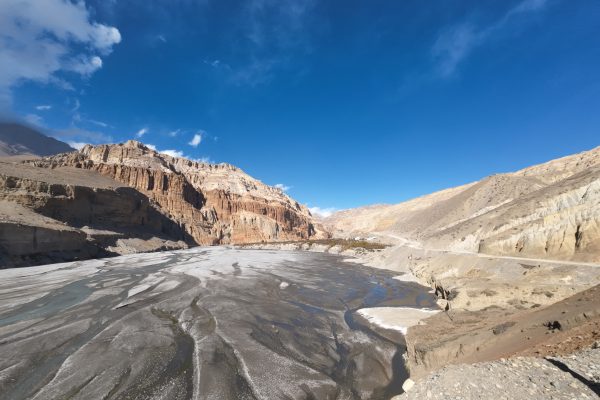
- Walk through dramatic desert-like landscapes and canyons
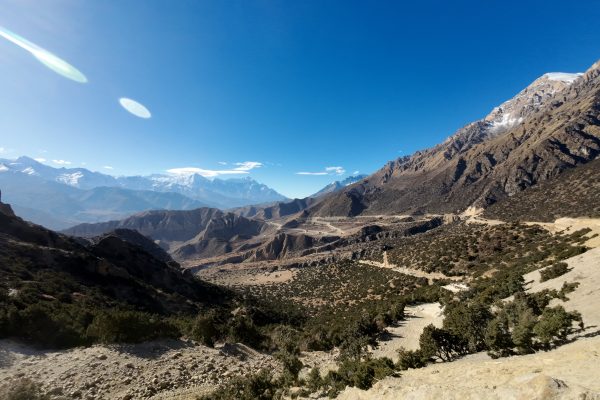
- Enjoy stunning views of Annapurna, Dhaulagiri, and Nilgiri
- Visit centuries-old monasteries and sacred sites
- Discover ancient caves with murals and history
- Trek along the Kali Gandaki gorge
- Pass through remote, traditional villages
- Experience a restricted and less crowded region
- Capture unique photography in raw landscapes
- Walk on rugged trails with strong mountain winds
- Enjoy a peaceful and spiritual trekking experience
Best Season for this Trip:
You can trek Upper Mustang almost any time of the year, but let’s be real each season brings a completely different vibe out there. This isn’t your typical lush green Himalayan trail. Upper Mustang sits in a rain shadow area, so it’s dry, raw, and dramatic most of the time. Sometimes it feels like you’re walking through a forgotten desert kingdom, other times the sky opens up so clean it almost doesn’t look real. If you’re planning this right, here’s what it actually feels like on the ground.
Spring (March to May)
Spring in Upper Mustang feels calm, balanced, and just right. The weather starts warming up, the skies stay mostly clear, and the wind isn’t too aggressive yet. Unlike other treks, you won’t see crazy greenery here, but the contrast of colorful cliffs, dry valleys, and snow-capped peaks hits differently. Days are comfortable for walking, and mornings feel fresh without freezing your hands off. It’s one of those seasons where everything flows smoothly you walk, you explore, you actually enjoy the place without fighting the weather. Solid choice if you want a peaceful and scenic experience.
Summer / Monsoon (June to August)
Now this is where Upper Mustang flips the script. While the rest of Nepal is getting drenched, this region stays mostly dry because of the rain shadow. That means you can trek here when other routes are basically shut down. The temperature is warmer, the skies can still be clear, and the trails are quieter. Occasionally you’ll hit some wind and clouds, but nothing like the heavy monsoon chaos elsewhere. It feels a bit wild and different like you found a secret trekking window when no one else is around. If you want fewer crowds and don’t mind a bit of heat, this season is underrated.
Autumn (September to November)
Autumn is when everything just locks in perfectly. The air turns crisp, the skies go deep blue, and the visibility is honestly top-tier. The mountains look sharper, the landscapes feel more alive, and every view feels like a postcard. You’ll see more trekkers on the trail, but it adds to the energy rather than ruining it. Tea houses feel lively, conversations flow, and every stop feels like part of the journey. Weather is stable, days are comfortable, and you rarely have to worry about anything messing up your plan. If you want the “best overall” experience, this is it.
Winter (December to February)
Winter in Upper Mustang is quiet, cold, and a bit harsh but also incredibly raw and peaceful. The wind can hit hard, especially in open valleys, and mornings feel properly freezing. Some lodges may be closed as locals move to lower areas, so things get minimal. But the trade-off? Silence. No crowds, no noise just you, the landscape, and those insane snow-dusted mountains under clear skies. It feels isolated in a powerful way. Not for everyone, but if you like solitude and don’t mind the cold biting a little, winter gives you a completely different kind of experience.
Food and Accommodations on Trip:
Food and accommodation in Upper Mustang aren’t luxury don’t expect that. This is a remote, high-altitude region where everything comes in slowly, sometimes by mule, sometimes by foot. But that’s exactly what makes it feel real. You’re not just staying somewhere you’re living the trail, sharing space with locals, eating what the land and logistics allow. It’s simple, sometimes rough, but it works and after a long day of walking in that dry, windy landscape, even basic comfort starts to feel like a reward.
Food
Food up here is all about energy and warmth. You’ll see a mix of Nepali and Tibetan dishes, and honestly, most of it is simple but satisfying. Dal Bhat is everywhere unlimited refills, heavy, and exactly what your body needs after hours of trekking. Then you’ve got thukpa, momo, Tibetan bread, fried rice, noodles all the usual trekking staples. Don’t expect fancy menus or big variety as you go higher, choices get limited and prices go up because of transport. But the food hits differently out here hot, fresh, and served when you’re actually hungry. You’ll start craving the same meals because they just work.
Accommodation
Accommodation is mostly tea houses basic, no filters. Rooms are simple, usually twin beds with blankets, and that’s about it. No luxury setup, no heaters in rooms, and bathrooms are often shared. As you go higher, things get more minimal, and sometimes you’ll feel that drop in comfort. But the dining room? That’s where life happens. A warm stove in the middle, people sitting around, sharing stories, drying socks, sipping tea that’s the real vibe. It’s not about the room, it’s about the experience. You rest, you recharge, and you move again. That’s how it goes in Upper Mustang.
Includes / Excludes
Includes:
- ✓ Airport pick-up and drop-off in Kathmandu
- ✓ Kathmandu to Pokhara and Jomsom flights (both ways as per itinerary)
- ✓ Required trekking permits (Restricted Area Permit & ACAP)
- ✓ Experienced licensed trekking guide
- ✓ All accommodation during the trek (tea houses/lodges)
- ✓ Three meals a day during the trek (breakfast, lunch, dinner)
- ✓ Government taxes and official charges
- ✓ First aid medical kit carried by the guide
- ✓ Welcome and farewell dinner in Kathmandu
Excludes:
- ✗ International airfare
- ✗ Nepal visa fee
- ✗ Travel insurance (must include high-altitude coverage)
- ✗ Personal expenses (drinks, snacks, hot showers, Wi-Fi)
- ✗ Porter service (unless requested separately)
- ✗ Extra nights in Kathmandu or Pokhara
- ✗ Emergency evacuation (if needed)
- ✗ Tips for guide and porter
- ✗ Personal trekking equipment and gear
- ✗ Any expenses not mentioned in the inclusions list
Detailed Itinerary of Upper Mustang Trek:
Day 1: Arrival in Kathmandu (1,400m)
Day 2: Kathmandu Sightseeing and Trek Preparation
Day 3: Drive or Fly to Pokhara (822m)
Day 4: Fly to Jomsom (2,720m) and Trek to Kagbeni (2,810m)
Day 5: Kagbeni to Chele (3,050m)
Day 6: Chele to Syangboche (3,800m)
Day 7: Syangboche to Ghami (3,520m)
Day 8: Ghami to Tsarang (3,620m)
Day 9: Tsarang to Lo Manthang (3,840m)
Day 10: Explore Lo Manthang (3,840m)
Day 11: Lo Manthang Exploration (Chhoser Caves / Namgyal Gompa)
Day 12: Lo Manthang to Dhakmar (3,820m)
Day 13: Dhakmar to Ghiling (3,570m)
Day 14: Ghiling to Chhuksang (2,980m)
Day 15: Chhuksang to Jomsom (2,720m)
Day 16: Fly to Pokhara and Return to Kathmandu
Map:
Tour Images