

Annapurna Base Camp Trek - 12 Days
General Info
Group Size
2-12 Persons
Max Altitude
4,130M
Trip Duration
12 Days
Accommodation
4*Hotel and Teahouse/Lodges
Trip Difficult
Moderate
Trek Route
—
Meals
BLD
Country
Nepal
Trip Overview
The Annapurna Base Camp Trek offers a fulfilling, relaxing experience in the heart of the stunning Annapurna Himalayas. This hike through terraced farmland, rhododendron woods, and charming Gurung and Magar villages offers captivating, smaller scenic experiences.
These villages highlight the hospitable people, offering travelers a chance to learn about the cultures woven throughout the Himalayas. The trail traverses the fascinating Modi Khola valley, passing through key stops like Chhomrong and Bamboo. It culminates at Machhapuchhre Base Camp, standing at 4,130m.
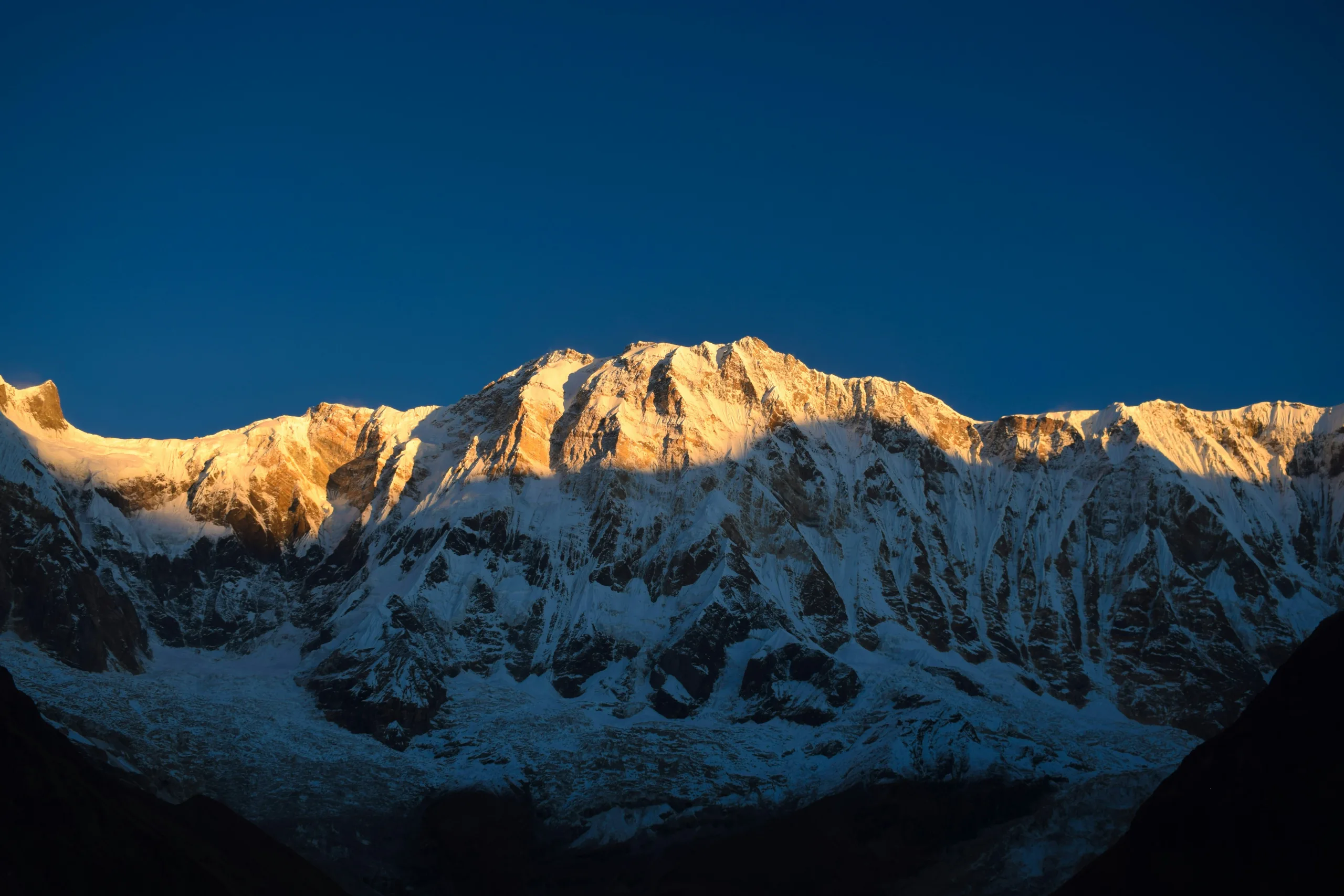
The final ascent to the sacred Uchchelo of Annapurna offers breathtaking panoramic views of several majestic peaks. These include Annapurna I (8,091m), Machhapuchhre (6,993m), Hiunchuli (6,441m), and many more uplifts. Trekking through this mountain and watching the sunrise over the snow-covered peaks is an extraordinary sight. It's an unforgettable experience for any trekker.
They consider it one of the best trekking routes for all levels. Consequently, they keep it challenging. Moreover, teahouses will provide lodging and offer basic yet adequate and delicious meals. In addition, the clearing of the skies during the autumn and spring seasons creates a physiologically conducive environment for the safe completion of the trek. Furthermore, the favorable weather conditions enhance the trekking experience, ensuring optimal visibility and comfort. As a result, trekkers can fully enjoy the journey while feeling safe and well-prepared. Additionally, the trek offers a perfect balance of challenge and reward, making it an unforgettable adventure.
From this trail, both beginner and expert adventurers can catch glimpses of splendid views from every landscape. It allowing them to form a deep and intimate bond with nature. It is at Blaze Mountain that you can come for a safe and highly organized trek and run to the Annapurna Base Camp!
Short Itinerary
- Day 1: Arrival in Kathmandu (1,400m) – A Blaze Mountain representative will greet you and take you to your…
- Day 2: Drive or Fly to Pokhara (823m) – After breakfast, take a short domestic aircraft, a private vehicle, or a…
- Day 3: Drive to Nayapul and Trek to Ghandruk (1,940m) – Drive to Nayapul, the trek's beginning point, after breakfast. Before arriving at…
- Day 4: Trek from Ghandruk to Chhomrong (2,170m) – Today's trek winds past traditional villages, terraced slopes, and rhododendron forests. You…
- Day 5: Trek from Chhomrong to Dovan (2,600m) – Climb through verdant bamboo and rhododendron trees after descending to the Chhomrong…
- Day 6: Trek from Dovan to Deurali (3,230m) – Alongside glacial rivers, the road continues through narrow valleys and thick woods.…
- Day 7: Trek to Annapurna Base Camp (4,130m) via Machhapuchhre Base Camp (3,700m) – Today's route brings you into the center of the Annapurna Sanctuary, making…
- Day 8: Sunrise at Annapurna Base Camp and Trek to Bamboo (2,310m) – Get up early to see a breathtaking sunrise over the Annapurna mountain…
- Day 9: Trek from Bamboo to Jhinu Danda (1,780m) – Before descending to Jhinu Danda, retrace your ways through Chhomrong. The natural…
- Day 10: Trek to Nayapul and Drive to Pokhara – After breakfast, continue the trek through beautiful villages and terraced fields before…
- Day 11: Drive or Fly Back to Kathmandu – Return to Kathmandu via domestic airplane, private car, or tourist bus. When…
- Day 12: Final Departure – Following breakfast, you will be driven to Tribhuvan International Airport by a…
About Trip:
The Annapurna Base Camp Trek offers a fulfilling, relaxing experience in the heart of the stunning Annapurna Himalayas. This hike through terraced farmland, rhododendron woods, and charming Gurung and Magar villages offers captivating, smaller scenic experiences.
These villages highlight the hospitable people, offering travelers a chance to learn about the cultures woven throughout the Himalayas. The trail traverses the fascinating Modi Khola valley, passing through key stops like Chhomrong and Bamboo. It culminates at Machhapuchhre Base Camp, standing at 4,130m.
The final ascent to the sacred Uchchelo of Annapurna offers breathtaking panoramic views of several majestic peaks. These include Annapurna I (8,091m), Machhapuchhre (6,993m), Hiunchuli (6,441m), and many more uplifts. Trekking through this mountain and watching the sunrise over the snow-covered peaks is an extraordinary sight. It's an unforgettable experience for any trekker.
They consider it one of the best trekking routes for all levels. Consequently, they keep it challenging. Moreover, teahouses will provide lodging and offer basic yet adequate and delicious meals. In addition, the clearing of the skies during the autumn and spring seasons creates a physiologically conducive environment for the safe completion of the trek. Furthermore, the favorable weather conditions enhance the trekking experience, ensuring optimal visibility and comfort. As a result, trekkers can fully enjoy the journey while feeling safe and well-prepared. Additionally, the trek offers a perfect balance of challenge and reward, making it an unforgettable adventure.
From this trail, both beginner and expert adventurers can catch glimpses of splendid views from every landscape. It allowing them to form a deep and intimate bond with nature. It is at Blaze Mountain that you can come for a safe and highly organized trek and run to the Annapurna Base Camp!
Trip Highlights:
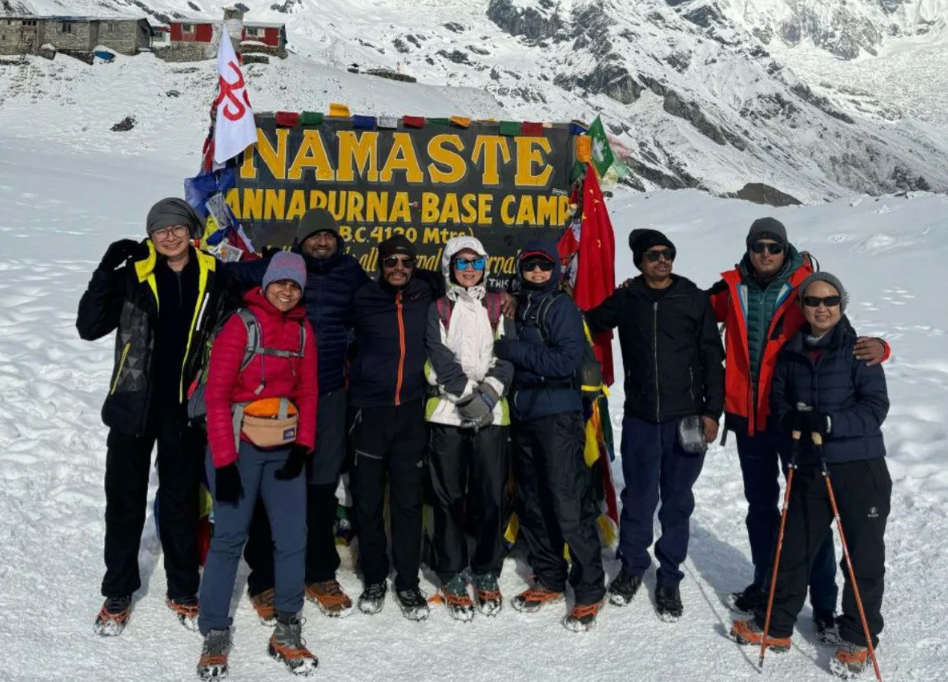
- Stand at Annapurna Base Camp (4,130m) — surrounded by a 360° amphitheatre of peaks including Annapurna I (8,091m), Machapuchare, Hiunchuli, and Gangapurna
- Walk through the legendary Modi Khola river valley — one of the most dramatic gorges in the Himalayas
- Witness the rhododendron forests of Ghorepani explode in red and pink during spring season
- Sunrise over the Himalayas from Poon Hill (3,210m) — one of the most photographed viewpoints in Nepal
- Experience the warm hospitality of Gurung and Magar villages like Ghandruk, Chomrong, and Landruk
- Trek through diverse landscapes — terraced farmland, dense forests, alpine meadows, and glacial moraines all in one route
- Spot wildlife including Himalayan tahr, deer, and if lucky, the elusive snow leopard in the Annapurna Conservation Area
- Soak tired muscles in the natural hot springs at Jhinu Danda on the descent
- Cross suspension bridges over roaring glacial rivers deep in the valley
- Complete a classic teahouse trek — no camping needed, with warm lodges and dal bhat available the whole route
- Suitable for fit beginners — no technical climbing required, making it one of Nepal's most accessible high-altitude treks
- The entire route sits inside the Annapurna Conservation Area (ACCA) — the largest protected area in Nepal
Best Season for this Trip:
You can hit the ABC trail anytime if you’re really up for it. But let’s not pretend like every month feels the same up there. Each season gives its own energy sometimes the path welcomes you with bright skies and blooming flowers; other times it hits you with thick fog and cold winds straight to your bones. So if you're planning this properly, this is how it actually feels out there.
Spring (March to May)
Now this one? This is where it feels like the whole mountain is waking up after a long sleep. The air gets warmer, the trail turns soft and colorful, and you’re literally walking through blooming rhododendron forests. It doesn’t feel rushed either the days are long, the sun stays with you, and the skies stay open. Mornings are crisp but not painful. By midday, you’re in a T-shirt, soaking in those clean views of Annapurna and Machapuchare like you earned it. You feel alive. That’s what spring does. If you want beauty and comfort together, this is your season.Monsoon (June to August)
This one’s for the bold. For people who like the raw stuff. Monsoon doesn't care about your photos or your comfort. It throws rain, mud, leeches, and fog at you like it's testing if you really wanted this trek or just the Instagram shot. Most of the time, you’re walking through thick green jungle and clouds. The views? Rare, but when they do show up, they hit different. There’s barely anyone else on the trail. It's just you, the rain, and the sound of rivers getting wild. It’s moody and intense if you like walking in the rain and don’t mind a little mess, this one’s got soul.Autumn (September to November)
If you're looking for the most balanced experience this is it. Everything just clicks in autumn. The rain’s gone, the clouds clear out, and the views feel like they’ve been waiting just for you. The sky turns deep blue, the mountain peaks glow early in the morning, and the air is fresh like it just got reset. You’ll meet trekkers from everywhere. It’s not crowded in a bad way it’s alive. Everyone’s in a good mood, and the tea houses feel like little community spots. The trail feels smooth, the weather behaves, and every day feels like the right decision.Winter (December to February)
This one’s cold, no sugarcoating that. The wind stings your face, your fingers feel stiff in the early hours, and teahouses up high might be half-closed. But the silence? The peace? Unreal. You get these insane views of snow-covered peaks with no one around. Just you and the trail. The skies stay clear most of the time, and the air is dry and clean. It’s like the mountain’s sleeping but still watching you. If you’re someone who enjoys that quiet kind of intensity and you're not scared of freezing mornings, winter will treat you in its own beautiful way.Food and Accommodations on Trip:
Let’s talk real. You’re not trekking through the Himalayas with five-star hotel rooms and buffet breakfasts. But what you do get is solid simple food that hits the spot after a long day and warm beds in places that feel like home in the middle of nowhere. It’s not luxury, but it’s enough. And when you’re sitting by the stove with a hot plate in your hand, tired but proud trust me, it feels more than enough.
Here’s how food and stay really go on this trail.
Food on the Trail
You eat well. Not fancy, but filling and fresh. Most of the food is locally cooked, so don’t expect anything super fast but that’s part of the vibe. Sit down, rest your legs, and wait for something warm to arrive. It’s all you need up there. What you’ll usually find:-
- Dal Bhat (the king of trekking meals you’ll probably eat this daily and love it every time)
-
- Veg and non-veg fried rice
-
- Noodles (veg, egg, chickenpends on on the place)
-
- Pasta, mein, macaroni
-
- Soup (garlic soup is the go-to up here)
-
- Tibetan bread, pancakes, and toast for breakfast
-
- Tea, coffee, hot lemon, and sometimes even hot chocolate
Accommodation along the Route
You’ll be staying in what we call tea houses local lodges built and run by families who live in the region. They’re simple, quiet, and cozy when you need them most. Don’t expect big rooms or heated showers, but they’re clean and get the job done. Here’s what most places offer:-
- Twin-sharing rooms with basic beds and blankets
-
- Common dining hall with a central stove (this is where everyone gathers)
-
- Shared bathrooms (attached toilet in a few upgraded places, but not always)
-
- Solar- or gas-heated showers (extra charge for hot water in many spots)
-
- Charging ports for your devices (some places charge extra for this)
Includes / Excludes
Includes:
- ✓ Airport pickup and drop-off by private vehicle.
- ✓ 2 nights hotel accommodation in Kathmandu with breakfast.
- ✓ 2 nights hotel accommodation in Pokhara with breakfast.
- ✓ Tourist bus transportation between Kathmandu and Pokhara (both ways).
- ✓ Private transportation from Pokhara to Nayapul and back.
- ✓ Annapurna Conservation Area Permit (ACAP).
- ✓ TIMS (Trekkers' Information Management System) Card.
- ✓ Experienced, government-licensed English-speaking trekking guide.
- ✓ Porter service (1 porter for every 2 trekkers).
- ✓ Guide and porter salary, meals, accommodation, insurance, and transportation.
- ✓ Accommodation in teahouses/lodges during the trek.
- ✓ Three meals a day (breakfast, lunch, and dinner) during the trekking period.
- ✓ Seasonal fruits during the trek.
- ✓ First aid medical kit carried by the guide.
- ✓ Trek completion certificate.
- ✓ All government taxes and service charges.
Excludes:
- ✗ International airfare to and from Nepal.
- ✗ Nepal entry visa fee
- ✗ Domestic flights between Kathmandu and Pokhara (if applicable).
- ✗ Travel and personal medical insurance.
- ✗ Lunch and dinner in Kathmandu and Pokhara.
- ✗ Personal expenses such as snacks, chocolates, soft drinks, and alcoholic beverages.
- ✗ Hot showers, Wi-Fi, battery charging, and laundry services during the trek.
- ✗ Personal trekking equipment and gear.
- ✗ Tips for guides, porters, and drivers.
- ✗ Emergency evacuation and rescue costs.
- ✗ Any expenses arising from unforeseen circumstances such as flight delays, natural disasters, political disturbances, or personal emergencies.
- ✗ Any services not specifically mentioned in the "Cost Includes" section.
Detailed Itinerary of Annapurna Base Camp Trek:
Day 1: Arrival in Kathmandu (1,400m)
A Blaze Mountain representative will greet you and take you to your hotel when you arrive at Tribhuvan International Airport in Kathmandu. Once you've checked in, you may either explore the lively alleys of Thamel, a renowned tourist destination in Kathmandu, or unwind and recuperate from your travel. You will meet your hiking guide in the evening to receive a trip briefing and make final preparations for the next adventure. Spend the night in Kathmandu.
3/4 Star Hotels
|
1400M
|
Breakfast/Dinner
|
Kathmandu
Day 2: Drive or Fly to Pokhara (823m)
After breakfast, take a short domestic aircraft, a private vehicle, or a picturesque tourist bus to Pokhara. Beautiful vistas of rivers, terraced hills, and quaint villages may be seen along the way. When you get to Pokhara, take in the serene ambience of the city beside the lake. You may stroll around Phewa Lake in the evening while taking in the breathtaking Annapurna range backdrop. Spend the night in Pokhara.
3/4 Star Hotels
|
823M
|
BLD
|
Pokhara
Day 3: Drive to Nayapul and Trek to Ghandruk (1,940m)
Drive to Nayapul, the trek's beginning point, after breakfast. Before arriving at Ghandruk, a lovely Gurung hamlet renowned for its rich culture and breathtaking mountain vistas, the route progressively climbs past terraced fields, woods, and quaint communities. Take in the stunning views of Machhapuchhre, Hiunchuli, and Annapurna South from the settlement. Spend the night at Ghandruk.
Teahouse/Lodge
|
1940M
|
BLD
|
Ghandruk
Day 4: Trek from Ghandruk to Chhomrong (2,170m)
Today's trek winds past traditional villages, terraced slopes, and rhododendron forests. You will arrive at Chhomrong, the entrance to the Annapurna Sanctuary, after traversing suspension bridges and ascending picturesque stone steps. The town has breathtaking views of the surrounding Himalayan peaks and Machhapuchhre. Spend the night at Chhomrong.
Teahouse/Lodge
|
2170M
|
BLD
|
Chhomrong
Day 5: Trek from Chhomrong to Dovan (2,600m)
Climb through verdant bamboo and rhododendron trees after descending to the Chhomrong Khola. The route progressively moves further into the Annapurna Conservation Area after passing through Sinuwa and Bamboo. You will arrive to Dovan, where you will spend the night surrounded by thick forests and mountain landscapes.
Teahouse/Lodge
|
2600M
|
BLD
|
Dovan
Day 6: Trek from Dovan to Deurali (3,230m)
Alongside glacial rivers, the road continues through narrow valleys and thick woods. As you ascend, you'll note that the terrain becomes more rough as you pass Himalaya and Hinku Cave. Deurali is a crucial halt before entering the Annapurna Sanctuary and offers breathtaking mountain views. Spend the night at Deurali.
Teahouse/Lodge
|
3230M
|
BLD
|
Deurali
Day 7: Trek to Annapurna Base Camp (4,130m) via Machhapuchhre Base Camp (3,700m)
Today's route brings you into the center of the Annapurna Sanctuary, making it one of the most rewarding days of the trek. Surrounded by an amazing view of snow-capped peaks, go toward Annapurna Base Camp after arriving at Machhapuchhre Base Camp. Enjoy breathtaking views of Hiunchuli, Gangapurna, Machhapuchhre, Annapurna I, and Annapurna South as you arrive. Spend the night in Annapurna Base Camp.
Teahouse/Lodge
|
4130M
|
BLD
|
ABC & MBC
Day 8: Sunrise at Annapurna Base Camp and Trek to Bamboo (2,310m)
Get up early to see a breathtaking sunrise over the Annapurna mountain range. The entire sanctuary comes to life with golden hues as the first rays of sunshine reach the nearby summits. After breakfast, head down via the Himalaya, Deurali, and Machhapuchhre Base Camp before arriving at Bamboo. Spend the night in Bamboo.
Teahouse/Lodge
|
2310M
|
BLD
|
Bamboo
Day 9: Trek from Bamboo to Jhinu Danda (1,780m)
Before descending to Jhinu Danda, retrace your ways through Chhomrong. The natural hot springs along the Modi Khola River are the day's high point. After several days of hiking, unwinding in the warm waters while taking in the scenery is the ideal approach to relieve tense muscles. Spend the night at Jhinu Danda.
Teahouse/Lodge
|
1780M
|
BLD
|
Jhinu Danda
Day 10: Trek to Nayapul and Drive to Pokhara
After breakfast, continue the trek through beautiful villages and terraced fields before reaching Nayapul. From there, drive back to Pokhara. The remainder of the day is free for relaxation, sightseeing, or celebrating the successful completion of your trek. Overnight stay in Pokhara.
3/4 Star Hotels
|
823M
|
BLD
|
Pokhara
Day 11: Drive or Fly Back to Kathmandu
Return to Kathmandu via domestic airplane, private car, or tourist bus. When you get there, you may spend your spare time shopping, touring, or seeing Nepal's capital city's cultural attractions. Blaze Mountain may commemorate your hiking accomplishment with a goodbye supper in the evening. Spend the night in Kathmandu.
3/4 Star Hotels
|
1400M
|
BLD
|
Kathmandu
Day 12: Final Departure
Following breakfast, you will be driven to Tribhuvan International Airport by a Blaze Mountain representative in accordance with your flight itinerary. With amazing memories of the Himalayas, local culture, and one of Nepal's most famous trekking experiences, your fantastic Annapurna Base Camp Trek comes to a conclusion.
N/A
|
N/A
|
N/A
|
N/A
Map:
Add map embed code or URL in the tour editor.
Tour Images