
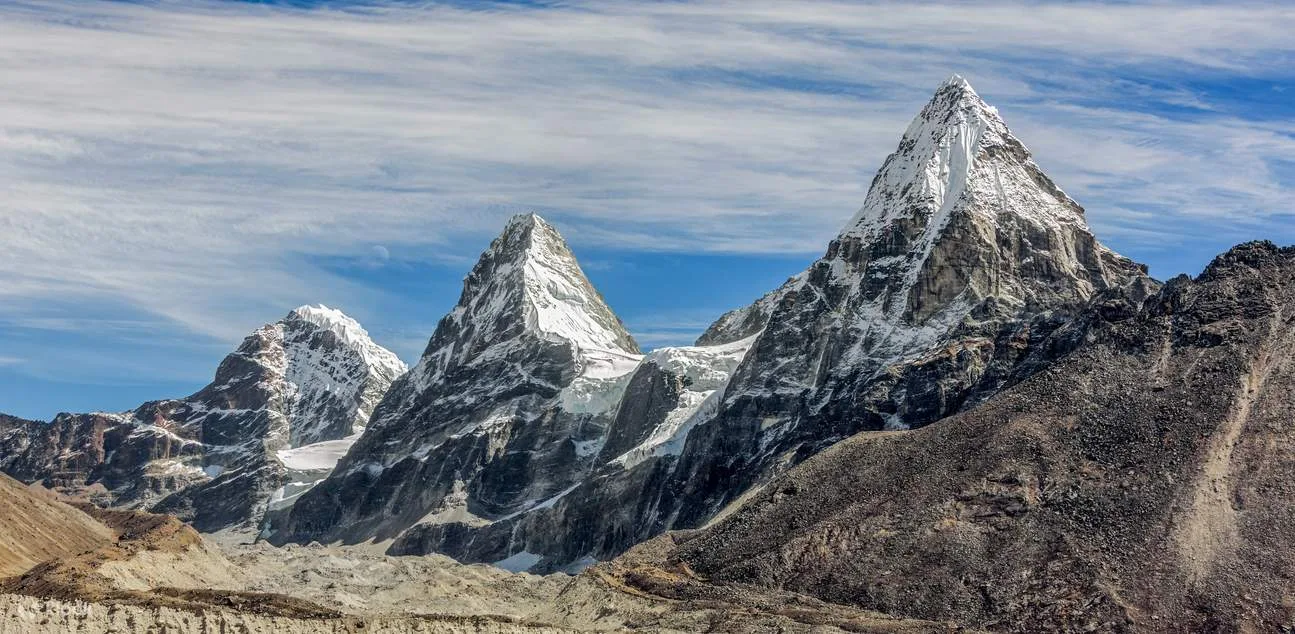
Mountaineers looking to explore one of Nepal’s less-trafficked summits will find a thrilling challenge in an ABI Peak Climbing adventure. Climb the virgin route of ABI Peak (6,080m) in East Nepal. Embark on a journey into the heart of the Himalayas, experiencing the thrill of high-altitude climbing, the beauty of the great outdoors, and the charm of traditional Himalayan life, all while enjoying breathtaking views. This expedition is perfect for people who want to challenge themselves and experience the pristine beauty of the eastern Himalayas.
You fly to Tumlingtar, then trek through diverse landscapes, including delightful Sherpa villages and thick forests. Following acclimatization at several points along the way, climbers will arrive at the base camp at 5,400 meters, where they will prepare for the grueling ascent. ABI Peak Climbing challenges climbers with a mix of snow and rock climbing skills. As they ascend, they’ll enjoy sweeping views of the towering summits of Makalu, Everest, and Kanchenjunga.
Reaching the top of ABI Peak comes with cultural richness and stunning landscapes. The trek involves cultural immersion in communities nearby, and an opportunity to learn about the people who inhabit the eastern Himalayas and their way of life and traditions. Coupled with expert guides and sherpas to make it a safe experience, ABI Peak Climbing is a once-in-a-lifetime expedition for seasoned climbers. Come take a trip with Blaze Mountain to conquer the great ABI Peak in remote Nepal by climbing through breathtaking landscapes.
Treknote: ABI Peak Climbing :
Locating in the eastern Himalaya of Nepal, Abi Peak Climbing is an adventurous, strenuous expedition for experienced mountaineers which stands at 6,080 meters. This journey blends technical snow and rock climbing with the splendor of wild and scenic wonders. Climbers will begin by taking a flight to Tumlingtar, where they will trek through traditional villages and dense forests on the way to offer a taste of the area’s culture. After acclimatization stops and the ascent to a base camp at 5,400 meters, trekkers are organized for the summit push, which provides stunning views of nearby peaks Makalu, Everest, and Kanchenjunga.
The trek to Abi Peak is strenuous but the vistas are extraordinary If you are able to spare the time to head all the way to the base of the peak. Summit day offers a long day of climbing over snow and rock. Rate to the top, where you will enjoy sweeping views of the stunning mountain ranges, truly making this an unforgettable experience. Accompanied by experienced sherpas and professional climbing guides, Abi Peak Climbing guarantees a memorable journey that offers cultural enrichment, exploration, and safety to all involved. This adventure will take you to one of Nepal’s most beautiful, but lesser-known, peaks a once-in-a-lifetime opportunity to summit at 6,080 meters!
Additional Information:
You can access full details regarding the ABI Peak Climbing from our website. If you need any extra information or extra service, feel free to contact us. To meet our agent, please follow the link, and/or if you want to talk to us directly, you can call our office at: 01-4522505.
Specialty of ABI Peak Climbing:
ABI Peak Climbing is a distinctive and difficult experience that stands out because it combines isolated hiking, unexplored, technical climbing, and stunning vistas. This is what really makes it unique:
- Untouched Virgin Route
ABI Peak is unclimbed virgin, one of the few such peaks in Nepal. While most other Himalayan summits are now crowded by trekkers and climbers alike, ABI Peak has limited exploration and remains exclusive. An untouched route that offers the thrill of summit climbing without the crowds often encountered on more popular peaks, this is where true adventure can still be found — in a relatively underexplored corner of the Himalayas. - Technical Climbing Challenge
Climbing ABI peak is not for the light of heart. It needs climbers to maintain good snow and rock climbing. With varied terrain comes more complexity, and climbers must adapt to changing conditions. As you ascend to the summit, you will need to use a combination of tech rock climbing and snow climbing techniques. ABI Peak is therefore a long rewarding tour where the combination of the two climbing skills boosts your skills to the next level. - Breathtaking Panoramic Views
Climbing up to the highest point of the ABI Peak offers breathtaking panoramic views of other world highest and glorious peaks. From the top, you will see the towering summits of Everest, Makalu and Kanchenjunga in the distances ahead. The enormous expanse of the Himalaya, that unrolls below you, makes the feeling of the catch a perfect spot for taking in the scene of hitting the surrounding peaks and valleys. These stunning vistas are what make the trek to the summit worth every step. - Content Cultural Immersion Along the Trek Cultural Immersion Along the Trek
The trek to ABI Peak will be also getting to know about the rich culture of this Himalayan region, as the ascent is tough, physically. You will pass through traditional Sherpa villages where you can meet local people and learn about their customs and way of life. In addition to the physical challenge of the climb, the Sherpa community’s warm hospitality and fascinating culture offer a special cultural experience. One of the things that makes the trek to ABI Peak even more special is the combination of rich culture and splendour of successful topography. - Himalayan Environment remote and untouched
The ABI Peak Climbing expedition leads you deep into the remote, untouched areas of the eastern Himalayas in Nepal. The climb takes climbers through lush woods, rocky terrains and deserted valleys away from the commotion of the human world. Its provides an environment where there is little human activity, allowing you to experience the Himalayas at their most authentic. This untouched wilderness, off the beaten path, provides a level of tranquillity and communion with nature that is difficult to experience in more commercial trekking destinations. It’s an absolute haven for the adventurer in you in a natural and unspoiled environment.
Is ABI Peak Climbing Right for Trekkers and Climbers?
Although ABI Peak Climbing is a remarkable experience, not everyone is cut out for it. It is intended for people with a high degree of physical fitness and climbing expertise. Who should think about this expedition.
- Veteran Climbers and Mountaineers
ABI Peak is a combination of snow and rock climbing. The expedition is suitable for trekkers who already have technical climbing experience, as it requires the use of specific techniques on ice and rock. For those experienced in climbing peak of this difficulty level, ABI Peak has the challenge and excitement you desire. It’s a perfect choice for experienced climbers looking to push themselves on a more obscure climb in the eastern Himalayas. - Physically Fit Adventurers
ABI Peak is accessible on foot and scaling up, thus good physical fitness is essential. Trekkers should be ready for grueling hikes through rocky terrain and long days of ascending. One must have proper training for physical endurance and altitude. This is not a trek for beginners or those lacking in trekking or climbing experience: the conditions here will test your physical and mental resilience. - Quest for Exploration and Need for Solitude
If you are looking for an exclusive adventure away from the crowd, consider climbing Mount Abbey Peak with ABI Peak Climbing. If you are an adventurer who likes to discover unbeaten and lesser known trails, you will love this challenge. This trek is a rare glimpse into the vast beauty of the Himalayas without the distraction of crowded trails. ABI Peak is a great trek for those interested in admiring the culture and tranquillity of more remote surroundings. - Climbers In Search Of High Altitude Experience
ABI Peak is a high-altitude climb with a summit of 6,080 meters that requires proper acclimatization. This is not a trek for the uninitiated in high-altitude conditions. But, if you have done time in the high altitude regions, and are ready to take on all the risks involved, this climb has rewarding views and the feeling of accomplishment from reaching a lesser-visited summit in the Himalayas. - Certainly Not for First Time Trekkers or Casual Hikers
While the journey is some of the most beautiful and impressive scenery imaginable, it is also worth noting that ABI Peak Climbing is a true expedition. If you’re new to hiking or are simply a more casual hiker looking for an easier-going trek, this climb is probably not for you. Unlike the trek to Everest Base Camp, the technical difficulties, altitude, and overall commitment of the expedition mean that inexperienced trekkers may be entirely unqualified.
Best Season for ABI Peak Climbing:
Spring and fall are the greatest seasons to climb ABI Peak because of the good weather conditions that make these seasons perfect for high-altitude climbing. This is the reason:
- Spring (March to May)
One of the best seasons for ABI Peak Climbing is, the spring. The weather is clear here too, and the stable conditions are ideal for mountaineering during these months. It becomes warmer, but the upper levels are still cold enough to retain the snow and ice climbing conditions. Spring also tends to bring cleaner skies, meaning climbers can admire stunning views of other peaks around them, like Everest, Kanchenjunga and Makalu. Vast mountain landscapes start to bloom during this season adding real scenic beauty to the entire journey. - Fall (September to November)
ABI Peak is also a great climb in the autumn. The weather is stable, skies are clear, and temperatures are moderate, so this is the best time to trek and climb. The fall months tend to be drier, providing for better visibility and less risk because of rain or snowstorms. Daytime temperatures are crisp and cool, and at higher elevations, nighttime temperatures are still cold. Fall, with its lower cloud cover and low chance of precipitation, presents climbers with an unobstructed approach and one of the best chances for a spectacular summit experience on ABI Peak! - Winter (December to February)
ABI Peak Climbing in winter is usually not advised due to frigid temperatures and difficult weather conditions. Temperatures at the summit and below can dip to freezing or worse, adding the risk of dangerous climbing if you aren’t equipped to deal with them. The snowfall at higher elevations can be deep and rotten, which increases risk of avalanche. Though the region is otherwise quiet, the brutal weather makes the slog physically and mentally grueling. You need to be well prepared for a winter climb though, and you need to be very experienced in extreme cold. - Summer (June to August)
The Summer season is not the ideal time for ABI Peak Climbing. Heavy rainfall is quite common during this period making the trails slippery with a higher risk of landslides. The monsoon season also means more cloud cover: the weather is unpredictable, and falling raindrops can make visibility less than ideal. Because there is more of a risk of encountering wet snow or mud during the ascent, the trekking trails tend to be muddy and challenging to navigate. Because of these conditions, it is preferable to not to clime in monsoon season and ensure your safety and a more enjoyable experience.
Climate and Weather During ABI Peak Climbing:
The weather at the height of ABI Depending on altitude, climbing varies greatly, and every season offers unique benefits and obstacles. For a safe and effective climb, it is essential to comprehend how the weather changes as you rise. An outline of what to anticipate at various elevations throughout the ascent is provided below:
- Lower altitudes (1800m to 3000m):
The lower altitudes of the ABI Peak trek has a mild climate, with moderate temperatures and pleasant trekking conditions. Daytime temperatures in spring and autumn range from 15°C to 20°C, while nights can be cold with temperatures dropping to around 5°C. In winter, temperatures can drop even further with nights reaching lows of -5°C. During the monsoon season, less rain is observed in the higher regions but heavy rains can cause slippery paths and potential landslides in the lower regions. - Mid-altitudes (3,000m to 5,000m):
The higher you go, the colder it gets, and the more fickle the weather becomes. Spring and fall are still the ideal seasons for treks in these altitudes, with daytime temperatures ranging from 5°C to 15°C and nights dropping to around -5°C to -10°C. Temperatures get significantly lower during winter time with the ranges being between -10°C to -15°C, and the weather is relatively harsh, particularly at night. During the monsoon season there may be intermittent rain or snow, rendering the path slippery and muddy. - Expansive Altitudes (5,000m to 6,000m):
Weather is more extreme at these elevations, with climbers facing colder temperatures and stronger winds. In spring and autumn, the daytime temperature can vary from -5°C to 5°C, and the night temperature can drop to -10°C to -15°C, with clear skies which ensure better visibility. During winter, the weather gets extreme, with temperatures dropping to -20°C, strong winds, and even snowstorms. The monsoon deluges at these altitudes, complicating climbing and trekking. - Summit (6,080m):
The top of ABI Peak is very cold; the weather in this area is fickle and fierce. Daytime high temperatures in the spring and autumn months cover between -10°C and -5°C and the temperature can fall to -20°C or lower at night. The summit is typically windy, and the wind can make it feel even colder. Winter brings below freezing temperatures, with wind chill making it feel much colder, as low as -30ºC sometimes. Snow falls at the summit during the monsoon season, and climbers can encounter blizzard conditions, making this one of the most challenging times for a summit attempt.
Weather Table for ABI Peak Climbing:
| Season | Lower Altitudes (1,800m – 3,000m) | Mid-Altitudes (3,000m – 5,000m) | High Altitudes (5,000m – 6,000m) | Summit (6,080m) |
|---|---|---|---|---|
| Spring (March to May) | Daytime: 15°C to 20°C Night: 5°C | Daytime: 5°C to 15°C Night: -5°C to -10°C | Daytime: -5°C to 5°C Night: -10°C to -15°C | Daytime: -10°C to -5°C Night: -20°C |
| Autumn (September to November) | Daytime: 15°C to 20°C Night: 5°C | Daytime: 5°C to 15°C Night: -5°C to -10°C | Daytime: -5°C to 5°C Night: -10°C to -15°C | Daytime: -10°C to -5°C Night: -20°C |
| Winter (December to February) | Daytime: 5°C to 10°C Night: -5°C | Daytime: -5°C to 5°C Night: -10°C to -15°C | Daytime: -10°C to -15°C Night: -15°C to -20°C | Daytime: -15°C to -10°C Night: -30°C |
| Monsoon (June to August) | Daytime: 15°C to 20°C Night: 10°C | Daytime: 5°C to 10°C Night: -5°C to -10°C | Daytime: -5°C to 0°C Night: -10°C to -15°C | Snowfall, temperatures vary significantly |
Summary:
- The greatest seasons for climbing and hiking are spring and fall, when there is less precipitation, clear skies, and temperate temperatures.
- Winter is the hardest season to summit because to the intense cold, snow, and strong winds.
- The monsoon season is less conducive to climbing because of the slick and dangerous conditions caused by the heavy rain at lower elevations and the snow at higher elevations.
Local Culture and Tradition Around ABI Peak Climbing:
Not only is the ABI Peak area known for its beautiful scenery and challenging hikes, but the area also supports a colorful and rich local life. The Rai, Limbu, Sherpa, and Tamang people also inhabit this region, and each has their own language, customs, and traditions. Rai and Limbu communities are mostly attached to nature and animism and worship inanimate objects like mountains, rivers, and forests as god. These communities still have a vibrant and distinct cultural identity, and traditional wooden houses and terraced farming systems can still be found in many villages.
Throughout the people of this place, you can find a non-identical combination of Buddhism and Hinduism: it is often and most openly influence the culture of their everyday lives. Sherpas and Tamangs are Buddhists; whereas, the Rai and Limbu are practitioners of indigenous beliefs. The surrounding villages are peppered with monasteries, stupas, and Hindu temples, cinching the spiritual core of the people. Traditional festivals like Lhosar (Tibetan New Year), Buddha Jayanti, and Maghe Sankranti are celebrated with much enthusiasm, often accompanied by colorful processions, traditional dances, and community feasts. One can explore some geography of this region during these festivals where Trekkers are good at trekking which adds the salt to the adventure.
The ABI Peak area is one of the best trekking locations in Nepal celebrated for its spectacular views and hospitable locals. Often, visitors are greeted by local people who offer a cup of chiya (tea) and ask trekkers to sit in their homes. It’s not unusual to get a blessing from monks or village elders before continuing your journey, and that the trekker’s travels will be safe and prosperous. This interaction provides trekkers with an insight into the local culture and traditions, as these cultural experiences make the trek not only physically fulfilling but also culturally rewarding.
Food & Accommodation Facilities During ABI Peak Climbing:
During the ABI Peak Climbing adventure, trekkers and climbers will savor a variety of regional and straightforward Western food. In order to maintain the Himalayas’ natural beauty while providing trekkers with the energy, comfort, and relaxation they require, the food and lodging along the route are planned accordingly. An overview of what to anticipate is provided below:
Food Options:
In order to keep trekkers energized for the strenuous ascent, the cuisine along the ABI Peak Climbing route combines some well-known Western cuisines with some traditional local fare.
- Traditional Meals:
Savor filling and healthy regional fare like Sherpa stew, Tibetan bread with curry, and Dal Bhat (lentil soup with rice). Particularly at higher elevations, these meals assist hikers sustain their energy levels since they are bursting with essential calories and minerals. - Western Dishes:
For those who would want a break from the traditional cuisine, tea houses serve Western-style dishes including spaghetti, sandwiches, and pancakes. After several days of conventional meals, these dishes provide a familiar and soothing taste. - Refreshments & Drinks:
During pauses, the route offers energizing refreshments including chocolates, cookies, and dried fruits that provide a rapid energy boost. Trekkers may stay warm with hot beverages like tea, coffee, and hot chocolate, particularly during colder weather at higher elevations.
Accommodations Options:
The ABI Peak Climbing route offers straightforward yet comfortable lodging alternatives that allow hikers to relax and refuel for the next leg of their adventure.
- Tea Houses & Lodges:
Most accommodation along the route consists of tea houses and lodges with basic facilities and shared or private rooms. These establishments create a home away from home for trekkers, allowing them to relax after a strenuous day. The rooms are typically outfitted with simple bedding, and some tea houses have shared bathrooms. - Higher Altitude Lodging:
Locations at higher elevations are more rustic and lacking in basic creature comforts. Rooms are colder and communal restrooms are often the standard. However, the warmth of local hospitality compensates for the absence of luxury. - Camping:
Camping may be required in the upper areas of the ABI Peak Climbing, particularly during the acclimatization period. Tents will be erected by trekkers, offering a closer encounter with the nature and mountains about.
To sum up, the food and lodging options available throughout the ABI Peak Climbing route guarantee that hikers will be comfortable and well-fed during their demanding but worthwhile adventure. A satisfying vacation is guaranteed by the combination of Western and local food and affordable, comfortable hotel alternatives.
Climbing Gear for ABI Peak Climbing
Climbing ABI Peak requires a range of essential gear to ensure safety, comfort, and efficiency throughout the trek and ascent. Below is a list of necessary climbing gear, categorized for different aspects of the expedition:
1. Mountaineering Gear:
- Crampons: Essential for walking on snow and ice, crampons will help you maintain grip while ascending steep and icy sections of the peak.
- Ice Axe: A key tool for self-arresting in case of a fall, helping you control your descent on icy slopes.
- Climbing Ropes: Ropes are necessary for technical sections, providing support and safety for climbers during the ascent.
- Harness: A climbing harness is essential for securing yourself to ropes during technical climbs and when rappelling.
- Carabiners: These durable metal loops are used for securing ropes, harnesses, and other climbing equipment during the ascent.
- Ascender/Descender: A device that allows you to climb and descend ropes with ease, providing safety while navigating steep sections.
2. Clothing:
- Base Layer: A moisture-wicking base layer is necessary to keep you dry and comfortable, especially in cold weather conditions. Consider wearing merino wool or synthetic fabrics for the best performance.
- Insulating Layer: A fleece jacket or down jacket will help keep you warm in cold conditions, especially at higher altitudes.
- Outer Layer (Shell): A waterproof and windproof jacket and pants will protect you from the elements, such as snow, rain, and strong winds.
- Thermal Gloves and Mittens: Proper hand protection is essential for handling climbing equipment and keeping your fingers warm at higher elevations.
- Climbing Boots: Sturdy, waterproof, and insulated boots with a firm sole and compatibility with crampons are necessary for safe climbing.
3. Trekking Equipment:
- Backpack: A comfortable, durable backpack with a capacity of 40-60 liters is recommended for carrying all your essential gear, food, and water.
- Sleeping Bag: A high-quality sleeping bag rated for cold temperatures (ideally -20°C or lower) is essential for staying warm during the nights at high altitudes.
- Sleeping Pad: A lightweight, insulated sleeping pad will provide comfort and protection from the cold ground.
- Trekking Poles: Helpful for maintaining stability and reducing the impact on your knees during the trek and climb.
4. Personal Safety & Navigation:
- Headlamp: A reliable headlamp with extra batteries is essential for navigating in low-light conditions or during nighttime climbs.
- First Aid Kit: Carry a compact first aid kit with basic supplies such as bandages, antiseptic, and medications for altitude sickness.
- Sunglasses or Goggles: UV-protection sunglasses or goggles will protect your eyes from the glare of snow and high-altitude sun exposure.
- Altitude Sickness Medication: Make sure to carry Diamox (or an equivalent) and consult your guide for recommendations on managing altitude sickness.
- Map and Compass/GPS: While guides are provided, carrying a map and GPS can add an extra layer of security for navigation, especially in unfamiliar areas.
5. Miscellaneous:
- Water Bottles/Hydration System: Keep yourself hydrated by carrying durable water bottles or a hydration system, preferably insulated to prevent freezing.
- Food and Snacks: Energy bars, nuts, and other lightweight, high-calorie snacks are perfect for quick refueling during breaks.
- Camera/Personal Items: If desired, carry a camera for capturing memories, and other personal items like a journal or notebook.
Why Choose Blaze Mountain for ABI Peak Climbing?
What sets Blaze Mountain apart is unrivaled expertise, safety, and personalized service. With personally-tailored itineraries, our guides are well acquainted with high-altitude climbs, and they will guide you safely and most importantly, meaningfully, to the summit of ABI Peak. We specialize in personalized itineraries that cater to your fitness level and climbing objectives, allowing you to tackle the peak at your own pace. We provide comfortable accommodations, high-quality climbing gear, and professional support, all with a focus on quality service.
Along with technical expertise, Blaze Mountain adds cultural exploration and stunning landscape to the experience. Beyond the trek itself: Our guides help you learn about local culture, customs and traditions of the people living along the path as you take in awe-inspiring sights of Everest, Makalu and Kanchenjunga. Using only green practices and reputable tourism, we preserve the natural splendour of the landscape so your ascent is memorable and sustainable. At ABI Peak Climbing, we make sure that you are safe and that you celebrate your successful summit and return journey.