
Larkya Peak Climbing (6,249 m / 20,498 ft), located in Nepal’s majestic Manaslu region, offers an exciting challenge for experienced climbers. If you want this exhilarating adventure, Blaze Mountain provides the opportunity to conquer one of the best peaks in Nepal with fantastic mountain views. It consists of trekking through remote Himalaya villages, dense forests, and rocky terrain followed by a summit that provides dramatic views of the Manaslu, Himlung Himal, Annapurna, and Ganesh Himal ranges. This particular excursion requires a combination of physical stamina, technical climbing ability and mental toughness; perfect for seasoned climbers looking for adventure in the high Himalayas of Nepal.
The journey to Larkya Peak begins with the popular segment of the Manaslu Circuit Trek, renowned for its cultural richness and natural beauty. As you traverse through verdant forests, alpine meadows and old monasteries, you’ll see some of Nepal’s diverse landscapes and immerse in the everyday lives of the ethnic Gurung and Tamang peoples. The higher you go, the rougher the terrain gets, with snow and ice showing up at higher altitudes. The technical climbing portions require knowledge of how to use ice axes and crampons as well as how to climb on rope, making this an excellent trek for seasoned trekkers.
Panoramic views of some of the tallest peaks of the region. From the summit you can see the breathtaking Manaslu (8,163 meters), Himlung Himal (7,126 meters) and Annapurna II (7,937 meters), as well as numerous peaks around. So step out into nature, say “Hey” to the sun, and tackle a summit you will be glad you did. The Larkya Peak Climbing with Blaze Mountain may be a perfect climbing journey and cut a marvelous path through the uniquely spectacular culture of Nepal.
Treknote: Larkya Peak Climbing
Head to the remote Manaslu region in Nepal where Larkya Peak, at 6,249 metres, presents an exhilarating ascent. Starting with the famous Trek around Manaslu, it leads climbers through the stunning landscape of beautiful villages, ancient monasteries, and verdant woodlands. The further trekkers make their way, the rougher the terrain gets, with the need to employ climbing techniques, listening crampons and ice axes. This trek is for experienced climbers and is an opportunity to embrace the culture of the people while acclimatizing to the higher altitudes gradually.
It is a steep hike to the top of Larkya Peak; however, climbers are rewarded with an overwhelming sense of achievement upon reaching the summit. Furthermore, they are treated to breathtaking panoramic views of some of the highest peaks in the Himalayas, including Manaslu, Annapurna II, Himlung Himal, and Ganesh Himal. Blaze Mountain takes care of the climbers by providing complete assistance, guidance, and logistics throughout the journey to ensure a safe and successful summit. They should book this expedition with Elemental Adventure. This trip is a unique mixture of high altitude adventure with cultural immersion–perfect for the veteran adventurer looking for an unforgettable experience.
Additional Information:
You can access full details regarding the Larkya Peak Climbing from our website. If you need any extra information or extra service, feel free to contact us. To meet our agent, please follow the link, and/or if you want to talk to us directly, you can call our office at: 01-4522505.
Specialty of Larkya Peak Climbing:
Located in the center of Nepal’s Manaslu area, Larkya Peak Climbing provides a thrilling and difficult experience. This adventure, which is renowned for its technical difficulties and stunning landscape, calls for advanced climbing abilities as well as the use of ropes, crampons, and ice axes. Trekkers will enjoy breathtaking vistas of the Himalayas, the splendor of isolated villages, and a rich cultural legacy in addition to the exhilarating climb. For seasoned climbers seeking a combination of excitement, technical difficulty, and cultural immersion, Larkya Peak Climbing is ideal.
- Challenging Technical Climb
The ” climbing ” in Larkya Peak acknowledges advanced skills, including using avalanche gear (ice axes, crampons, etc…) and ropes to traverse snow slopes and glaciers. This simply makes it a perfect route for seasoned climbers in search of a true mountaineering experience. This makes for a challenging climb that is both physically demanding and technically interesting. - Unmatched Himalayan Views
The view of some of the iconic peaks in Nepal including Manaslu, Himlung Himal, Annapurna, and Ganesh Himal from the summit of Larkya Peak is 360-degree panoramic. The views represent some of the most stunning in the Himalayas, offering the climbers a spectacular reward for their efforts at the end of their climb. - Cultural Immersion
On your way to the summit, walk across Tamang and Gurung villages, and see local hospitality and culture. The trek showcases a variety of cultural aspects, with offerings of people’s traditional lifestyles as well as ancient monasteries and mountain communities, making it more than just a physical pursuit. - Scenic Manaslu Circuit Trek
Larkya Peak Climbing route is fused with the renowned Manaslu Circuit Trek that syncs through densely forested area, verdant alpine meadows, and rugged mountains. This offers the trekkers of various surroundings to discover before they arrive at the top, making the overall experience of beautiful surroundings alongside bodily endurance. - Physical and Mental Challenge
After not only physically demanding but also mentally challenging. The altitude, technical climbing, and long days of trekking test climbers’ endurance, stamina, and mental fortitude. This definitely is an awesome and beneficial climbing expedition for all those professional climbers out there.
Is Larkya Peak Climbing Right for Trekkers and Climbers?
In the heart of Nepal’s Manaslu area, Larkya Peak Climbing is a thrilling and difficult climbing experience. This expedition’s technical complexity and breathtaking Himalayan views make it ideal for seasoned climbers and trekkers looking for an exciting challenge. In order to safely reach the top, climbers must utilize ice axes, crampons, and ropes to negotiate steep slopes, glaciers, and rocky terrain. This is a multidimensional journey that blends mountaineering and cultural discovery, as trekkers will encounter the rich culture of isolated mountain settlements in addition to the physical and technical components.
- Discharging Technical Woes:
Larkya Peak Climbing is suitable only for experienced climbers Some parts of the ascent are difficult; those will require specialized climbing gear like ropes, crampons and ice axes. The finer points of the ridge offer a true mountaineering challenge on the way to the summit. - Breathtaking Himalayan Views:
The summit provides trekkers an excellent vantage point to view some of the world tallest Himalaya peaks including Mount Manaslu, Himlung Himal, Annapurna and Ganesh Himal. Not only do you get this feeling of accomplishment once you reach the summit, but the views are also one of the major draws for climbers. - Cultural Exploration:
You are no longer just on the climb, but experiencing the lovely culture of the manaslu region. The trekker cross through the remote villages of Tamang and Gurung communities provide you the taste of their lifestyle and local culture. - Manaslu Circuit Trek Itinerary: Integration
Kicking off from the popular Manaslu Circuit Trek, you will cross vegetation zones varying from lush green land to alpine meadows before arriving at the footing of the peak. It inevitably adds a degree of adventure to the trek. - Adrenaline: An Exciting Physical and Mental Challenge
Larkya peak climbing with a demanding itinerary is not less than a challenge that a climber has to face with mental strength. The work at high altitudes, arduous terrain and long days at the mountain requires high endurance and focus. So, so one can say that this is a beautiful challenge for tough climbers because the sense of duty after reaching the peak is Great.
Best Season for Larkya Peak Climbing:
Spring (March to May) and fall (September to November) are the ideal seasons to try Larkya Peak Climbing. With consistent temperatures, clear sky, and a minimal likelihood of precipitation, these months offer the best weather for high-altitude climbing. During these times, climbers can fully appreciate the Himalayan scenery and the technical difficulties of the ascent.
- Spring (March to May):
The best and most popular season for Larkya Peak Climbing is Spring. Mild weather, daytime temperatures range from 10°C to 15°C and nights in most of the countries drop to -10°C at higher altitudes. The skies are mostly clear, with sweeping views of the surrounding peaks. In addition, this season presents the blooming of rhododendron forests, green hills, and lush valleys. The stable weather makes it easier for climbers to navigate the challenging terrain and reach the top. - Fall (September to November):
October and November marks the fall season and the second best time to trek Larkya Peak, similar to spring, it offers crisp and cool climate with a daily temperature of 5°C to 12°C at lower elevation, and -5°C to -10°C at higher altitude during the night. The monsoon rains have gone, leaving clear skies and good visibility for climbers. Moreover, since there are lesser trekkers in autumn, it is a more peaceful and serene experience as well. While the weather is relatively stable, be prepared for random cold fronts and abrupt changes of conditions at greater altitude. - Winter (December to February):
Winter is the most unfavorable season for Larkya Peak Climbing. The temperature plunges and becomes bitter in winter time, especially in high altitude areas, where it can drop to -20° C or more. Such extreme cold raises the risk of frostbite and hypothermia, making the ascent deadly even for the most experienced climbers. Snow can make trails slick and tricky, and the dangers of avalanches are higher. Most of the lodges and tea houses in the region close during this time of year because of the harsh conditions, making it an undesirable time to climb. - Summer/Monsoon (June to August):
The summer monsoon season is not a good period for Larkya Peak Climbing as well. Due to heavy rainfalls, the trails can be muddy and unsafe, resulting in landslides and lack of stability in the area. Thick cloud cover can limit visibility, and humidity can make the climbing uncomfortable. Trails become slippery, making the overall hike more treacherous, and the higher levels of rainfall also will mean a greater chance for unpredictable weather.
Climate and Weather During Larkya Peak Climbing:
Climate of Larkya Peak and the region are typical of the high Himalayan areas, which have a harsh climate and varies quite drastically, especially at high altitudes. Weather ranges substantially from the base of the walk to the highest mountain, and climbers must be prepared for quickly changing temperatures and conditions as they ascend.
The temperatures are fairly mild at lower altitudes, but they start to decrease as climbers get to the higher elevations. Temperature is a major aspect of a trek, one starts in green valleys with daytime temperature ranging from 15° to 20° and very slowly but surely, temperatures can drop when one progresses into the Himalayan region and especially at night where temperature can drop below 0 ° at altitude above 4,000 m. The summit conditions are very cold, around -5°C to -10°C at daytime and -20°C at nights or even lower.
During the trek (particularly at very high altitudes), climbers may experience altitude sickness due to thinner air, so acclimatization is essential. It becomes more demanding to climb due to sudden snow and rain in spring and autumn. However, the weather is more stable in the spring and autumn high seasons, so chances of reaching the summit are better.
| Month | Altitude | Temperature Range (°C) | Conditions |
|---|---|---|---|
| March – May | 3,000m – 6,000m | 10°C to -20°C | Mild temperatures, clear skies, possible snowfall |
| June – August | 3,000m – 6,000m | 15°C to -10°C | Heavy rainfall, high humidity, limited visibility |
| September – November | 3,000m – 6,000m | 5°C to -15°C | Cool, stable weather, ideal for climbing |
| December – February | 3,000m – 6,000m | 0°C to -20°C | Extremely cold, risk of frostbite, heavy snowfall |
Climbers should always be prepared for changing conditions, carrying appropriate clothing and gear for both cold and snowy conditions, as well as unexpected rainfall. Larkya Peak weather can be unpredictable, especially at higher altitudes. Being prepared for these weather variations will ensure a safer and more successful expedition.
Local Culture and Tradition Around Larkya Peak:
Culturally diverse with the majority of people in the area being a combination of the Gurung and Sherpa ethnicities, the Larkya Peak region is a chance to experience this cultural and religious history of the Himalayas for trekkers. The native culture is very much tied to the surrounding area, with the people having existed in harmony with the mountains for centuries.
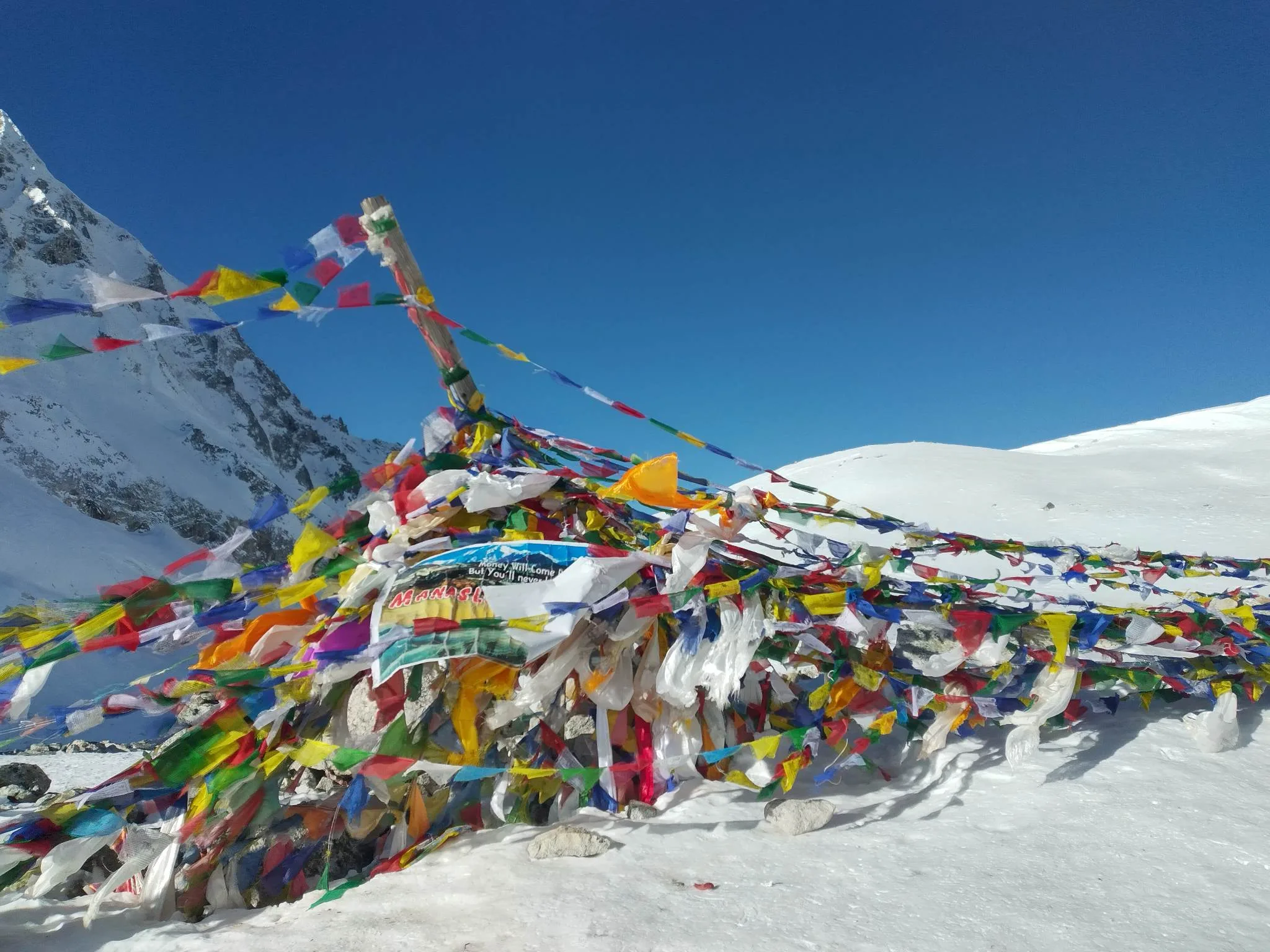
As trekkers wander through villages, they will experience traditional Tibetan Buddhist practices, with a host of monasteries and prayer wheels throughout their paths. The Sherpas, recognized for their environmental tenacity for their mountain range, possess a powerful spiritual link to the mountains which they classify as divine. And prayer flags fluttering in the wind and chortens, or Buddhist shrines, lining the trekking route, a sign of prayers for safety and success on the journey.
The regional communities preserve a mainly agricultural, livestock and tourist living. Teahouses in villages like Samagaon, a major stop along the trail to Larkya Peak, offer trekkers an immersion into the locals’ daily lives. (Its people are hospitable, and visitors can learn weaving, woodwork and yak herding from them.)
Its accompanied by local festivals, Losar(Tibetan New Year) when local people come together to share traditional dances, music and feast. These festivals provide a great opportunity for trekkers to witness the vibrant culture of the region in full colour. But during the summit day of Larkya Peak, the welcoming people’s behavior as well as their culture and religion set an enriching experience for climbers.
This, combined with the communities’ rich reverence for the natural world and their Buddhist conviction of peace and mindfulness, brings a deep stillness and connection with your surroundings and elevates the overall experience of climbing for trekkers.
Food & Accommodation Facilities During Larkya Peak Climbing:
Trekkers and climbers will enjoy a variety of Western and local cuisine throughout the Larkya Peak Climbing excursion, in addition to simple yet cozy lodging alternatives. These amenities are designed to preserve the Himalayan region’s natural appeal while giving hikers the energy, comfort, and relaxation they need along the way. Below is a summary of what to anticipate:
Food:
The food along the Larkya Peak Climbing route combines local and Western cuisines, ensuring climbers remain fueled throughout the physically demanding trek.
- Traditional Meals: Savor filling dishes like Sherpa stew, Tibetan bread with curry, and Dal Bhat, which is lentil soup served over rice. These meals give hikers the vital calories and minerals they need to stay energized, especially at higher elevations when energy needs rise.
- Western Dishes: Tea houses serve Western-style dishes including spaghetti, sandwiches, and pancakes for individuals who are yearning comforting flavors. After a few days of conventional meals, these dishes offer diversity and might be a pleasant change.
- Foods & Drinks: Chocolates, cookies, and dried fruits are easily accessible foods that provide a rapid energy boost during the hike. In order to keep trekkers warm, hot beverages including tea, coffee, and hot chocolate are frequently offered, particularly when temperatures decrease at higher elevations.
Accommodation:
Accommodation along the Larkya Peak route is simple yet adequate, ensuring trekkers have a place to rest and recharge for the next day’s adventure.
- Tea Houses & Guesthouses: These lodging alternatives make up the majority of the lodging options; they provide modest facilities and plain rooms with common toilets. These areas are friendly and inviting, providing climbers with a cozy spot to unwind following a demanding day of hiking.
- Lodges (Higher Altitudes): As the journey continues up into the mountains, the lodgings are more basic, with common restrooms and sometimes cooler rooms. Notwithstanding these difficulties, the warmth of the locals more than makes up for the lack of luxury.
- Camping (High Altitudes): Camping may be required in the highest areas, especially for acclimatization. Along certain sections of the trail, hikers erect tents to foster a stronger bond with the mountains and the natural world.
To sum up, the food and lodging along the Larkya Peak Climbing route give hikers the nourishment and relaxation they need to carry on with their demanding but worthwhile journey.
Climbing Gear for Larkya Peak Climbing:
For Larkya Peak Climbing, it’s essential to have the right gear to ensure safety, comfort, and success throughout the journey. The climb involves challenging high-altitude terrain, including ice, snow, and rocky sections, which means that climbers need to be fully prepared with specialized equipment. Below is a list of essential climbing gear that every participant should bring:
Clothing:
- Base Layers: Moisture-wicking base layers (top and bottom) are essential to keep sweat away from your skin. Look for materials like merino wool or synthetic fabrics.
- Insulated Jacket: A down or synthetic insulated jacket is necessary for warmth, especially at higher altitudes.
- Waterproof Jacket: A high-quality waterproof jacket will protect you from rain, snow, and wind.
- Climbing Pants: Durable and flexible pants that allow for movement while protecting against the cold and rough terrain.
- Thermal Gloves and Socks: These help maintain warmth and comfort during cold weather.
- Climbing Boots: High-altitude, waterproof boots with a rigid sole are crucial for gripping steep and icy surfaces.
Technical Gear:
- Ice Axe: Used for support on icy slopes and to maintain balance during climbs.
- Crampons: Attach to boots to provide traction on snow and ice.
- Climbing Helmet: Protects your head from falling rocks and during the climb.
- Harness: Used for safety when roped up and during sections of technical climbing.
- Ropes: Essential for securing and belaying, especially on technical sections.
- Carabiners: For connecting gear to your harness and other points of attachment.
Additional Gear:
- Backpack: A sturdy, comfortable backpack (40-50 liters) is essential for carrying your gear, food, and water.
- Sleeping Bag: A high-altitude sleeping bag rated for temperatures as low as -20°C (-4°F) or lower.
- Sunglasses and Goggles: Protect your eyes from the intense sun and snow glare at higher elevations.
- Water Bottle and Hydration System: Staying hydrated is crucial; carry a durable water bottle or hydration pack.
- First Aid Kit: Basic first aid supplies, including blister treatment, pain relievers, and altitude sickness medication.
Possessing the appropriate equipment for Larkya Peak Climbing guarantees that you are physically equipped to handle the difficulties of the ascent and the hike. In addition to keeping you safe, wearing the right clothes and carrying the right equipment will let you concentrate on the trip and take in the amazing scenery as you go.
Why Choose Blaze Mountain for Larkya Peak Climbing?
Blaze Mountain is a unique experience for any climber looking to the Larkya Peak Climbing expedition. Our exceptional guides, porters, and support staff are highly trained, certified and prepared for every environment imaginable. Climbing guides have extensive knowledge and experience in high-altitude trekking and are committed to ensuring your personal safety, health, and success along the ascent. Our efforts are geared towards creating a trip itinerary that is specific to your requirements, physical endurance, and preferences, so you never have to hurry and your route offers the maximum time of adjustment for achieving the summit.
When you choose Blaze Mountain, you also choose local culture and sustainable tourism. We partner with local communities and encourage cultural exchange, and promote eco-tourism practices that protect the area’s natural beauty and heritage. Our travels are crafted in such a way that you get an experience of a lifetime along with knowledge about the indigenous culture of the Himalayas. Finally, we take care of all the logistics with accommodations, meals, and transportation, so all you have to worry about is the challenge in front of you, and that we are always one step ahead.