
Cholatse Peak Climbing - 20 Days

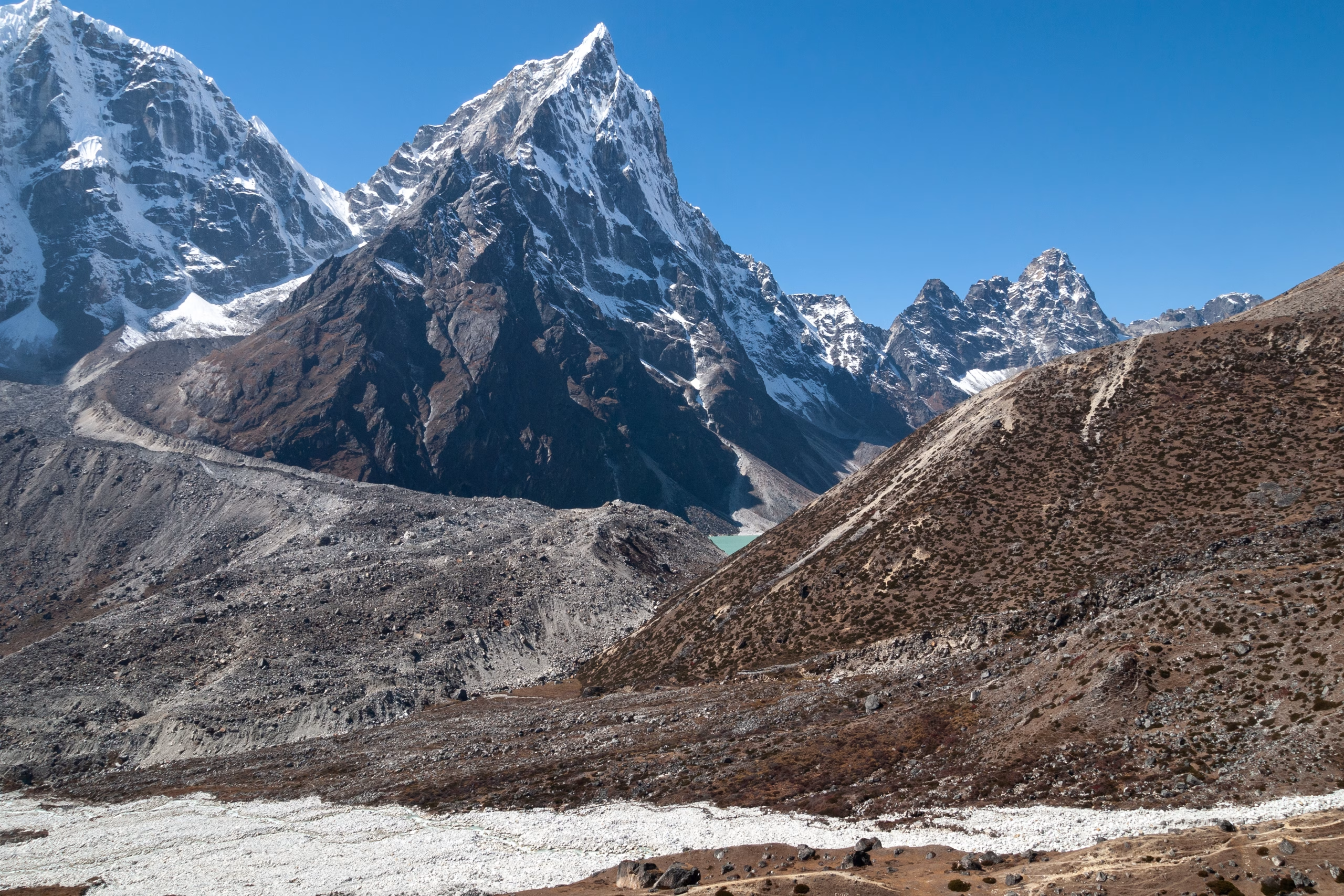
Cholatse Peak Climbing is one of the most fascinating and technically challenging mountaineering expeditions in the Everest region of Nepal. With its steep ridges and icy slopes demanding quality climbing skills and experience, Cholatse rises to a height of 6,440 meters. Summiting is only part of the soil; this trek delivers stunning scenery, cultural immersion, and a never-to-be-forgot action.

Cholatse has jagged ridges, steep rock faces, and icy stretches, and it is a peak that should only be attempted by skilled climbers. The upleap includes specialized ice and rock climbing requiring the use of fixed lines, ice axes, and crampons. The ascent showcases unbelievable sightlines of some of the highest summits on Earth, from Everest to Nuptse, Lhotse, Ama Dablam, and Makalu. With this mountain you summit closer than ever to heaven itself, the feeling of success at the peak is an unparalleled achievement which makes this a perfect challenge for ambitious mountaineers looking to hone their skills in the Himalayan mountains.

In addition to professional guidance, expert logistics and a well-planned itinerary, this ensures a safe and successful ascent of Cholatse. You’ll start your climb with the technical sections fully supported and trained by our seasoned climbing guides. If you are an experienced climber seeking your next significant challenge or an adventurous mountaineer attempting a technical peak, Cholatse Peak Climbing is one of the most memorable experiences you will ever experience with Blaze Mountain!

Treknote: Cholatse Peak Climbing

Cholatse Peak Climbing is a strenuous and technically difficult expedition that necessitates the highest level of preparation and previous climbing experience. The trek takes the classic Everest region paths, with spectacular scenery, cultural immersion, and a chance to acclimatize before the drive to the summit. The adventure starts with a spectacular fly to Lukla, followed by hiking through thick forests, Sherpa hamlets and elevated scenery.

Trekkers will continue on the challenging Cho La Pass (5,420m) before arriving at the Cholatse Base Camp (5,000m) where they receive vital climbing training and complete their preparations. Reaching the summit takes technical climbing expertise, and the route includes steep ridges, frozen slopes, and exposed parts. Having time to acclimatize, an expert leading you and being well conditioned will all help you climb safely and successfully.

Additional Information:

You can access full details regarding the Cholatse Peak Climbing from our website. If you need any extra information or extra service, feel free to contact us. To meet our agent, please follow the link, and/or if you want to talk to us directly, you can call our office at: 01-4522505.


Speciality about Cholatse Peak Climbing:

Cholatse Peak Climbing is a unique and Challenge Expedition in the Everest region which includes both trekking and technical mountaineering. Cholatse is not one of the most popular treks like others, it needs considerable amount of Physical Endurance and climbing skills which makes it a great choice for experienced mountaineers looking for an adventure more than trekking. Specialties that Carve out Cholatse Peak Climbing an Incredible Experience:

  • Challenging Ascent:
    Cholatse is known for its steep and technical climb requiring a combination of ice climbing, rock scrambling and high-altitude stamina. The summit push includes glacier-crossing, snow slopes and rocky ridgelines, more than a test of mountaineering chops. It’s perfect for climbers who want a serious test that includes both trekking and technical climbing.
  • Breathtaking Views:
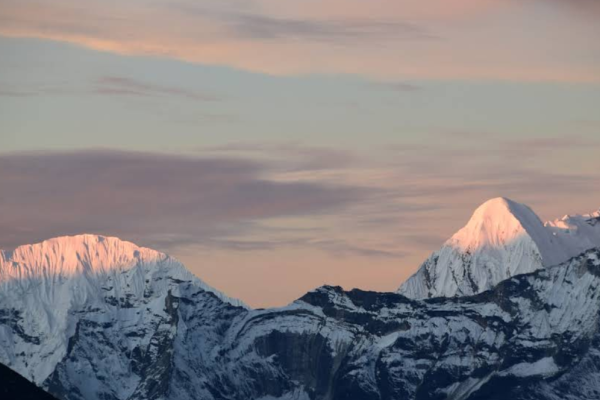
    The high point provides some of the most incredible panoramic vistas in the Himalayas. And from the summit, climbers are treated to breathtaking views of Everest, Lhotse, Makalu, Cho Oyu and many other giant peaks of the Khumbu region. The jagged peaks, with snow cloaked on either side, and the vivid colors of the valleys and glaciers create an indelible visual impression of Cholatse.
  • Extended Hiking Trail for Acclimatization:
    Climbers get a well-paced acclimatization trek through the Sherpa villages of Namche Bazaar, Tengboche and Dingboche before attempting the summit. The gradual climb in altitude not only allows climbers to acclimatize to the high altitudes, but also experience the cultural richness of the region, through the Sherpa way of life and Buddhist monasteries.
  • Less Crowded, More Remote:
    Unlike Everest peaks, Cholatse is less buggy, providing a more intimate mountaineering experience. Due to this peak being so far from everything, climbers get a deeper connection with the environment and also a taste of the solitude of the Himalayas.
  • Professional Guides and Safety:
    One needs technical skill in getting to the top of Cholatse, and Blaze Mountain’s pro and experienced guides know the landscape inside and out, keeping climbers safe. The climbers are all supplied with their requisite gear, ranging from ice axes to crampons to climbing ropes and even the supplies needed to face high-altitude medical emergencies. It allows climbers to concentrate on the test at hand while not sacrificing safety.

Is Cholatse Peak Climbing Right for Trekkers and Climbers?

For seasoned climbers and hikers seeking a demanding and fulfilling Himalayan experience, Cholatse Peak Climbing is the perfect option. It is appropriate for those with certain abilities and degrees of expertise since it blends technical mountaineering with high-altitude walking.

  • For Trekkers:
    Cholatse enters all the previous high altitude treks trekkers either Everest Base Camp or Annapapurna Circuit. However, the trek features rugged terrain, steep escalades, and far-off towns — making this an incredible journey through the Everest territory. Trekker requires good physical condition and acclimatization to the altitude.
  • For Climbers:
    Cholatse Peak Climbing is ideal for those climbers with technical mountaineering background. The ascent to the summit is a mixture of ice and rock climbing, so you should be familiar with crampons, ice axes, and roping techniques. An adventure for experienced climbers who have spent time above 6,000 meters. It’s not for novices as the ascent is technical but it’s a great challenge for experienced climbers looking for a proper challenge.

In conclusion, if you are fit enough physically, climbers with the right skills, Cholatse Peak Climbing is suitable for trekkers & climbers with the ability to achieve the trekking & technical climb. If you are up for a challenge then this expedition is a once-in-a-lifetime adventure in the Himalayas.

Best Season for Cholatse Peak Climbing:

The best time for Cholatse Peak Climbing is during the spring and autumn seasons, as these periods offer the most favorable weather conditions for trekking and climbing in the Everest region.

  • Spring (March to May):
    Cholatse Peak Climbing in Spring Season One of the begging seasons to undertake Cholatse Peak Climbing. The weather is mostly steady, with clear conditions, reasonable temperatures, and clear visibility. This season welcomes the flora of the rich alpine, making it a beautiful trekking route. Spring provides the best trekking and climbing conditions, when the weather is neither too extreme and the best conditions on the mountain are available.
  • Autumn (September to November):
    Cholatse can also be well climbed in autumn. Dry, clear weather and pleasant temperatures The skies are frequently crisp and blue, lending well to visibility. The Himalayan fall season provides a great atmosphere for both trekking and summit attempts, as the best weather stabilizes on the mountain, so climbers particularly like making their efforts now.
  • Winter (December–February)
    The cold whole of Everest regionin winter means less trekkers but other challenges when compared to the summer season as some say. It’s colder, and there might be more snow along the way, requiring climbers to gear up for worse weather. But the blue skies and deserted paths allow for a reprieve of silence and peace in the hills, coupled with sweeping vistas of the snowy terrain.
  • Monsoon (June to August):
    The monsoon season is avoided by most climbers due to the threat of heavy rainfall, landslides, and slippery trails, but some more adventurous or stubborn types make a go for it. The rains create a verdant landscape, and the saving grace is that many trails are less crowded. The weather is fickle, but higher temperatures and increased humidity can make trekking tough.

Climate and Weather during Cholatse Peak Climbing:

Cholatse Peak Climbing climate and weather vary greatly by altitude and season. Namche Bazaar and Dingboche are warmer, with daytime temperature varying between 10 and 15 degree Celsius in spring and autumn and minus 5 to 0 degree Celsius at night. At higher altitudes, especially above 5,000 meters, the condition becomes far more extreme with daytime temperatures between -5°C and 5°C, and as low as -10°C by night time.

At its summit of 6,440 meters, Cholatse’s high altitude brings severe cold with temperatures often dropping below -20°C, and fierce winds creating even lower effective temperatures. Based on the weather patterns of the region, spring and autumn are the best times for climbing and with the weather being stable, dry and clear, it offers better visibility and relatively safer climbing conditions. Winter means worse weather with snowstorms and low temperatures while the monsoon entails humidity, rains, landslides, and mudslides, especially at lower elevations.

Anyone planning to climb should be well prepared for the cold, especially at higher elevations, and to have proper gear to cope with the difficult and unpredictable weather conditions.

Local Culture and Tradition Around Cholatse and Everest Region:

The Everest area, including Cholatse Peak, is rich in cultural heritage and ancient traditions that have played a major role in the lives of the Sherpa people. The people are known as the Sherpas – natives of this mountainous and relatively inaccessible region - whose culture was developed through generations in the Buddhist tradition and harsh topography. As you make your way to Cholatse, you will be greeted by the warmth and hospitality of the local Sherpa people, known for their indomitable spirit and friendly nature.

Buddhism, or Sherpa religion, dominates the life of the Sherpas with numerous monasteries and stupas located throughout the region. These villages offer sacred sites, like the famed Tengboche Monastery in the village of the same name, where monks convene to pray and perform rituals. The area has many religious festivals, such as Lhosar, Tibetan New Year, which is celebrated with colorful processions, prayers, dances, and feasts. Trekking routes are adorned with Buddhist prayer flags, as well as mani stones and similar markings inscribed with sacred mantras.

The Sherpa community’s traditional livelihood is farming, yak herding and trade. The locals rely on yaks, which they use to transport goods, as well as for their milk and wool. As well as doing their jobs, the Sherpas have a deep respect for the mountains, which they believe are sacred. Locally known as Sagarmatha (in Nepali) or Chomolungma (in Tibetan), Mount Everest is regarded as a deity and treated with utmost respect. It is not unusual to see butter lamps and prayer flags being offered, and even animal sacrifices, to appease the mountain spirits so that climbers and trekkers can pass through safely.

From an early age, we are taught never to underestimate the kindness of strangers and our experience here certainly amplified this notion that we are more than hapless climbers in a hostile environment and that we are all part of this grand adventure. The traditions, hospitality and faith of the area truly provide visitors with a link to the region’s rich cultural and spiritual heritage that adds an extra measure of meaning and memorable value to the experience.

Food & Accommodation Facilities during Cholatse Peak Climbing:

Food:

You’ll encounter a range of regional and foreign cuisine alternatives while climbing. The cuisine at lower elevations, such as Namche Bazaar and Lukla, is more varied and includes both foreign and native Nepali foods, such as spaghetti and dal bhat. The meals get easier as you go up, with an emphasis on foods that are high in energy to keep you going. There are hot beverages like tea and coffee to keep you warm and hydrated.

  • Lower Altitude (Namche Bazaar, Lukla): For lower altitude, you will get variety of food options from local Nepali Foor(like dal bhat and momo) to more familiar International meals like pasta and pizza. This region has a wide choice of food with options for both trekkers and climbers.
  • Higher Altitudes (Dingboche, Lobuche): Things get rustic at higher elevations with meals like fried rice and vegetable stew to keep power supplies up in preparation for the rugged ascent. The food is often simple but healthy to fuel trekkers and climbers.
  • Hot Drinks: Hot drinks such as tea, coffees, and hot chocolates are provided to stay hydrated while warm, which is the key factor to maintain energy levels, especially on higher altitudes where temperature gets low.
  • Dietary Requirements: Food is abundant you should receive a well balanced, high energy diet to support the strenuous activities of climbing and trekking. Calorie-dense meals will be required to power your expedition.

Accommodations:

Comfortable lodges may be found at lower elevations along the Cholatse Peak Climbing path, while more rudimentary teahouses can be found at higher elevations. You may anticipate communal rooms with hardwood beds and blankets at higher elevations, while you can enjoy warmth and Wi-Fi at lower elevations. Despite their simplicity, the local teahouses’ friendly atmosphere and genuine welcome provide for a pleasant stay after exhausting hiking days.

  • Lower Areas (Namche Bazaar, Lukla): It is a comfortable stay in lower areas as they have teahouses and lodges with heating, electricity, and Wi-Fi. Rooms are spartan, but you will find a little more comfort than after a long day of trekking.
  • High Altitude (Dingboche, Lobuche, Gorak Shep): The accommodation becomes more basic in higher altitudes. People share rooms, sleeping squeezed onto wooden beds, with thick blankets to ward off the cold. Fewer amenities are available in these places, and the emphasis is on a space to get comfortable after a long trekking day.
  • Lodges: Teahouses are small locals run lodges. Few are so simple, but all are welcoming and offer a cozy refuge for trekkers to rest and prepare for the next stage of the ascent. They provide basic comforts, but their warmth and hospitality is the standout.

Climbing Gear for Cholatse Peak Climbing

To ensure a safe and successful climb of Cholatse Peak, here’s a list of essential climbing gear:

1. Footwear and Traction

  • Mountaineering Boots: Sturdy, waterproof boots with ankle support and compatibility with crampons.
  • Crampons: Necessary for traction on icy surfaces.

2. Climbing Tools

  • Ice Axe: Essential for stability and self-arrest in case of a fall on snow or ice.
  • Harness: Required for rope work and safety during the climb.
  • Rope: A dynamic rope (50-60 meters) for fixed rope sections.
  • Carabiners & Belay Device: Locking carabiners and a belay device for secure rope management.

3. Clothing and Warmth

  • Climbing Gloves: Insulated gloves for warmth and dexterity during the climb.
  • Down Jacket: A warm down jacket for cold weather at high altitudes.
  • Gaiters: Waterproof gaiters to protect legs and boots from snow and ice.

4. Sleeping Equipment

  • Sleeping Bag & Pad: A high-altitude sleeping bag rated for -20°C (-4°F) and a compact sleeping pad for insulation.

5. Safety Gear

  • Avalanche Safety Gear: Avalanche transceiver, shovel, and probe for safety in high-risk areas.

6. Personal Gear

  • Sunglasses & Goggles: UV-protective sunglasses and goggles for eye protection from sun and snow.
  • Personal Items: Headlamp, water bottles or hydration system, first-aid kit, and multi-tool for comfort and safety.

Why Choose Blaze Mountain for Cholatse Peak Climbing?

Blaze Mountain is a reliable company that gives you the best guide for your Cholatse Peak Climbing expedition. Your adventure will be accompanied by a team of professional guides who are experts in this region and climbing skills. As a result, we train and use the best equipment acceptable for the route while adhering to appropriate acclimatization schedules to ensure your safety and wellbeing at all times. Moreover, our tours are designed to offer an optimal ratio of adventure and resting time, to acclimatize properly and enjoy the full experience. In addition to a rich cultural experience.

Blaze Mountain offers the opportunity to work with local experts–the guides and porters from the Sherpa communities who make your journey the best it can be while sharing their knowledge and insights. We believe in tourism that is sustainable and benefits both the environment as well as the communities we visit. But with Blaze Mountain, you can expect a rich and safe experience all the way to Cholatse Peak, a place where quality and adventure go hand in hand.

General Info

Group Size 2-12 Persons
Max Altitude 6440M
Trip Duration 20 Days
Accommodation 4/3 Star Hotel and Teahouse/Lodges
Trip Difficult Challenging
Trek Route
Meals BLD
Country Nepal

Trip Overview

Trip overview content can be added in the About Trip field.

Short Itinerary

  • Day 1: Arrival in Kathmandu (1,400m) – Welcome to Nepal, home to the world's highest mountains and the beginning…
  • Day 2: Expedition Preparation in Kathmandu – Today is dedicated to completing all the final preparations for your climbing…
  • Day 3: Fly to Lukla (2,860m) and Trek to Phakding (2,610m) – An early morning scenic flight takes you from Kathmandu to Lukla, offering…
  • Day 4: Trek from Phakding to Namche Bazaar (3,440m) – After breakfast, continue trekking alongside the Dudh Koshi River while crossing several…
  • Day 5: Acclimatization Day at Namche Bazaar – Today is an important acclimatization day that helps your body adjust to…
  • Day 6: Trek from Namche Bazaar to Tengboche (3,860m) – Leaving Namche Bazaar behind, today's trail follows one of the most scenic…
  • Day 7: Trek from Tengboche to Dingboche (4,410m) – Wake up to magnificent mountain views before continuing your journey toward Dingboche.…
  • Day 8: Acclimatization Day at Dingboche (4,410m) – Today is another important acclimatization day to help your body adapt before…
  • Day 9: Trek from Dingboche to Cholatse Base Camp (4,950m) – Today you leave the busy Everest Base Camp trail and begin trekking…
  • Day 10: Climbing Training and Preparation at Cholatse Base Camp – Today is dedicated to final climbing preparation before moving higher on the…
  • Day 11: Climb from Base Camp to High Camp (5,700m) – After an early breakfast, begin the steady climb toward High Camp over…
  • Day 12: Summit Cholatse Peak (6,440m) and Return to Base Camp – Today is the highlight of your entire expedition as you begin your…
  • Day 13: Contingency Day for Summit Attempt – An additional day has been included in the itinerary to provide flexibility…
  • Day 14: Trek from Cholatse Base Camp to Pangboche (3,985m) – After breakfast, leave Base Camp behind and begin descending through rugged alpine…
  • Day 15: Trek from Pangboche to Namche Bazaar (3,440m) – After breakfast, continue your descent through beautiful rhododendron and pine forests while…
  • Day 16: Trek from Namche Bazaar to Lukla (2,860m) – Today marks the final day of your trek as you retrace the…
  • Day 17: Fly from Lukla to Kathmandu (1,400m) – Early in the morning, board a scenic flight back to Kathmandu, enjoying…
  • Day 18: Leisure Day in Kathmandu – This free day allows you to relax after the expedition or discover…
  • Day 20: Final Departure – Your unforgettable Cholatse Peak Climbing expedition comes to an end today. Depending…

Trip Highlights:

  • Summit the spectacular Cholatse Peak (6,440m), one of the most technical and rewarding trekking peaks in the Everest region.
  • Enjoy breathtaking views of Mount Everest, Lhotse, Nuptse, Ama Dablam, Cho Oyu, Makalu, and Taboche throughout the journey.
  • Experience an exciting combination of high-altitude trekking and technical alpine climbing in the Khumbu Himalayas.
  • Take a scenic mountain flight between Kathmandu and Lukla, one of the world's most thrilling flights.
  • Trek through the heart of Sagarmatha National Park, a UNESCO World Heritage Site rich in Himalayan wildlife and landscapes.
  • Explore traditional Sherpa villages including Lukla, Namche Bazaar, Tengboche, and Dingboche.
  • Visit the famous Tengboche Monastery, the largest and most sacred monastery in the Everest region.
  • Follow the classic Everest trekking trail before entering the remote Cholatse climbing route.
  • Spend carefully planned acclimatization days to maximize safety and summit success.
  • Climb across glaciers, snow slopes, mixed rock terrain, and steep alpine ridges under the guidance of experienced climbing guides.
  • Witness spectacular sunrise and sunset views over the snow-capped Himalayan giants.
  • Stay in traditional Himalayan teahouses during the trek and a fully equipped tented camp at higher elevations.
  • Learn essential mountaineering techniques and rope skills from professional climbing guides.
  • Cross pristine alpine valleys, glacial moraines, and rugged mountain landscapes rarely visited by ordinary trekkers.
  • Experience the peaceful atmosphere of the less-crowded Cholatse climbing route compared to other Himalayan expeditions.
  • Capture unforgettable photographs of dramatic ice walls, glaciers, hanging seracs, and towering Himalayan peaks.
  • Challenge yourself on one of Nepal's finest alpine climbing adventures suitable for experienced trekkers and aspiring mountaineers.
  • Celebrate your successful summit with panoramic 360-degree views from the top of Cholatse Peak.
  • Enjoy warm Sherpa hospitality and discover the unique Buddhist culture of the Everest region.
  • Complete an unforgettable Himalayan expedition with the expert planning, safety, and support of Blaze Mountain Travel & Tours.

Includes / Excludes

Includes:

  • Airport pick-up and drop-off in Kathmandu by private tourist vehicle, including all ground transportation mentioned in the itinerary.
  • Three nights of comfortable hotel accommodation in Kathmandu with daily breakfast before and after the expedition.
  • Round-trip domestic flights between Kathmandu (or Ramechhap, depending on the season) and Lukla, including applicable airport taxes.
  • All accommodation during the trek in local teahouses and fully equipped tented camping at Cholatse Base Camp and High Camp.
  • Three daily meals (Breakfast, Lunch, and Dinner) during the trek and climbing period, along with seasonal fruits, tea, and coffee where available.
  • All required permits and official fees, including the Cholatse Peak Climbing Permit, Sagarmatha National Park Entry Permit, and Khumbu Pasang Lhamu Rural Municipality Permit.
  • An experienced government-licensed trekking guide, professional climbing Sherpa, necessary support staff, and porters to carry your luggage throughout the expedition.
  • Group climbing equipment including fixed ropes, climbing ropes, snow bars, ice screws, camping equipment, and kitchen equipment required for the expedition.
  • Comprehensive first aid kit, emergency oxygen cylinder, pulse oximeter, and all staff insurance, meals, accommodation, salaries, and government taxes.
  • Sleeping bag, duffel bag (if required), trip completion certificate, and all company service charges.

Excludes:

  • International airfare, Nepal entry visa fees, and travel insurance covering high-altitude trekking, mountaineering, and emergency helicopter evacuation.
  • Lunch and dinner in Kathmandu, personal snacks, bottled drinks, alcoholic beverages, and any food or drinks not included in the standard meal plan.
  • Personal climbing equipment and trekking gear such as mountaineering boots, crampons, harness, ice axe, climbing clothing, gloves, sunglasses, and other personal accessories.
  • Personal expenses including hot showers, Wi-Fi, battery charging, laundry, telephone calls, souvenirs, and any extra accommodation or meals caused by flight delays, bad weather, or itinerary changes.
  • Tips and gratuities for guides, climbing Sherpas, porters, drivers, and other support staff, along with any personal medical expenses or services not mentioned in the "Cost Includes" section.

Detailed Itinerary of Cholatse Peak Climbing:

Day 1: Arrival in Kathmandu (1,400m)

Welcome to Nepal, home to the world's highest mountains and the beginning of your Cholatse Peak Climbing adventure. After arriving at Tribhuvan International Airport, our airport representative will warmly welcome you and transfer you to your hotel in Kathmandu. Once you have checked in, you can relax after your journey or explore the vibrant streets of Thamel, where colorful shops, cafu00e9s, and trekking stores create a lively atmosphere. In the evening, you'll meet your expedition leader and climbing team for a comprehensive trip briefing, equipment inspection, and final discussion about the expedition, ensuring you are fully prepared before leaving for the Himalayas.

Day 2: Expedition Preparation in Kathmandu

Today is dedicated to completing all the final preparations for your climbing expedition. Your guide will carefully inspect your personal climbing equipment, explain the climbing route, discuss altitude safety, and provide useful tips for the summit attempt. Meanwhile, our team will finalize all permits and logistics required for the expedition. If you still need to purchase or rent any trekking or mountaineering gear, Kathmandu offers plenty of reliable outdoor stores where you can find high-quality equipment. Spend the evening resting and getting excited as tomorrow your Himalayan adventure officially begins.

Day 3: Fly to Lukla (2,860m) and Trek to Phakding (2,610m)

An early morning scenic flight takes you from Kathmandu to Lukla, offering spectacular aerial views of snow-covered Himalayan peaks, deep valleys, and remote mountain villages. After landing at one of the world's most famous mountain airports, you'll meet the rest of the trekking crew before beginning an enjoyable trek towards Phakding. The trail gently descends through beautiful pine forests, crosses traditional suspension bridges draped with colorful prayer flags, and passes charming Sherpa villages, mani stones, and Buddhist prayer wheels. Following the Dudh Koshi River, you'll reach the peaceful village of Phakding, where you can relax and enjoy your first night in the Everest region.

Day 4: Trek from Phakding to Namche Bazaar (3,440m)

After breakfast, continue trekking alongside the Dudh Koshi River while crossing several suspension bridges and walking through rhododendron and pine forests. Enter Sagarmatha National Park at Monjo, where your permits will be checked before continuing deeper into the Khumbu region. The final climb to Namche Bazaar is challenging but incredibly rewarding, especially if the weather allows your first breathtaking view of Mount Everest rising above the surrounding peaks. Upon arrival, explore the lively Sherpa town filled with bakeries, cafes, trekking shops, and mountain lodges that have welcomed climbers for decades.

Day 5: Acclimatization Day at Namche Bazaar

Today is an important acclimatization day that helps your body adjust to the increasing altitude while keeping you active. You'll hike to the famous Everest View Hotel or nearby viewpoints, where spectacular panoramic views of Mount Everest, Ama Dablam, Lhotse, Nuptse, Thamserku, and Kongde Ri unfold before you. After enjoying the scenery and taking memorable photographs, return to Namche Bazaar for lunch before spending the afternoon visiting the Sherpa Culture Museum, local markets, or relaxing in one of the mountain cafu00e9s. This gradual ascent significantly improves your chances of a successful summit later in the expedition.

Day 6: Trek from Namche Bazaar to Tengboche (3,860m)

Leaving Namche Bazaar behind, today's trail follows one of the most scenic routes in the Everest region, offering uninterrupted views of Everest, Lhotse, Nuptse, Ama Dablam, and Thamserku throughout the day. The path gradually descends to the Dudh Koshi River before climbing through beautiful forests filled with pine, juniper, and rhododendron trees, where Himalayan wildlife such as musk deer and colorful pheasants are sometimes spotted. Upon reaching Tengboche, visit the famous Tengboche Monastery, the spiritual heart of the Khumbu region, where monks perform daily Buddhist prayers against the stunning backdrop of Ama Dablam.

Day 7: Trek from Tengboche to Dingboche (4,410m)

Wake up to magnificent mountain views before continuing your journey toward Dingboche. Descend through peaceful forests to cross the Imja Khola River, then gradually climb into the beautiful Imja Valley, where the landscape becomes more open and alpine as you gain altitude. Passing traditional Sherpa villages, ancient mani walls, yak grazing pastures, and stone-built houses, you'll eventually arrive at Dingboche, a picturesque settlement surrounded by towering Himalayan giants including Ama Dablam, Island Peak, Lhotse, Cholatse, and Taboche. The stunning scenery and peaceful atmosphere make Dingboche one of the most beautiful villages in the Everest region.

Day 8: Acclimatization Day at Dingboche (4,410m)

Today is another important acclimatization day to help your body adapt before heading into more challenging terrain. After breakfast, hike to Nangkartshang Peak (5,083m), one of the best viewpoints in the Everest region, where you'll be rewarded with spectacular panoramic views of Makalu, Lhotse, Ama Dablam, Cholatse, Taboche, Lobuche East, and countless snow-covered Himalayan peaks. After spending some time enjoying the breathtaking scenery and allowing your body to adjust to the altitude, descend back to Dingboche for lunch and a relaxing afternoon. Proper acclimatization at this stage plays a vital role in increasing your chances of a safe and successful summit.

Day 9: Trek from Dingboche to Cholatse Base Camp (4,950m)

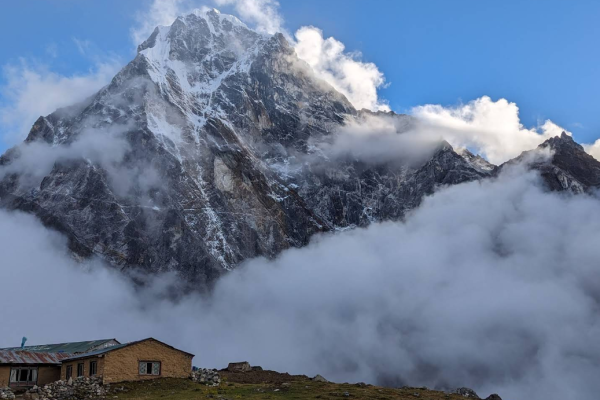
Today you leave the busy Everest Base Camp trail and begin trekking toward the quieter and more remote Cholatse Valley. The route follows rugged alpine terrain, glacial moraines, rocky ridges, and yak grazing pastures while offering magnificent views of Cholatse, Taboche, Lobuche, and the surrounding Himalayan peaks. As you approach Base Camp, the dramatic north face of Cholatse rises high above you, creating an unforgettable first impression of the mountain you will soon attempt to climb. After arriving, settle into the fully equipped campsite and enjoy a peaceful evening surrounded by glaciers and towering mountains.

Day 10: Climbing Training and Preparation at Cholatse Base Camp

Today is dedicated to final climbing preparation before moving higher on the mountain. Your professional climbing guide will conduct practical training sessions covering the proper use of crampons, ice axe techniques, fixed rope climbing, abseiling, harness safety, and glacier travel. This training not only refreshes your technical climbing skills but also helps build confidence for the summit push. The remainder of the day is spent resting, organizing equipment, monitoring weather conditions, and preparing mentally and physically for the challenging days ahead.

Day 11: Climb from Base Camp to High Camp (5,700m)

After an early breakfast, begin the steady climb toward High Camp over rocky slopes, snowfields, and glaciated terrain. As the altitude increases, the surrounding Himalayan panorama becomes even more impressive, with breathtaking views of Ama Dablam, Lobuche East, Nuptse, Everest, and countless surrounding peaks. Certain sections require the use of fixed ropes and climbing equipment, making today's ascent both exciting and technically rewarding. Upon reaching High Camp, settle into your tents, enjoy a warm meal, and rest early while your guide gives a final briefing for tomorrow's summit attempt.

Day 12: Summit Cholatse Peak (6,440m) and Return to Base Camp

Today is the highlight of your entire expedition as you begin your summit push well before dawn under the light of your headlamp. The climb follows steep snow slopes, exposed rock sections, narrow ridges, and technical ice terrain, requiring determination, teamwork, and guidance from your experienced climbing Sherpa. After several hours of climbing, stand proudly on the magnificent summit of Cholatse Peak (6,440m), where you'll witness unforgettable 360-degree views of Mount Everest, Lhotse, Nuptse, Ama Dablam, Cho Oyu, Makalu, Pumori, and countless Himalayan peaks stretching to the horizon. After celebrating your incredible achievement and capturing memorable photographs, carefully descend back to High Camp before continuing to Base Camp for a well-deserved rest.

Day 13: Contingency Day for Summit Attempt

An additional day has been included in the itinerary to provide flexibility in case of unfavorable weather, heavy snowfall, or any unforeseen circumstances that could delay the summit attempt. Since weather conditions in the high Himalayas can change rapidly, this reserve day significantly improves the overall safety and success rate of the expedition. If the summit has already been completed according to schedule, you can use the day to relax at Base Camp, explore the surrounding glacial landscape, or simply enjoy the peaceful atmosphere beneath the towering face of Cholatse Peak.

Day 14: Trek from Cholatse Base Camp to Pangboche (3,985m)

After breakfast, leave Base Camp behind and begin descending through rugged alpine landscapes and rocky moraines as you reconnect with the main Everest trekking trail. The lower altitude makes today's walk much more comfortable, allowing you to fully appreciate the spectacular mountain scenery that surrounded you during the climb. Passing through Dingboche and continuing toward Pangboche, you'll once again enjoy the warm hospitality of the Sherpa community while reflecting on your successful summit. Overnight at a comfortable teahouse in Pangboche.

Day 15: Trek from Pangboche to Namche Bazaar (3,440m)

After breakfast, continue your descent through beautiful rhododendron and pine forests while enjoying one last close-up view of Ama Dablam and the surrounding Himalayan peaks. Cross suspension bridges over the Dudh Koshi River and pass through traditional Sherpa villages before reaching Namche Bazaar. With the hardest part of the expedition now behind you, the evening is the perfect time to celebrate your successful summit with your climbing team while enjoying the lively atmosphere of the Everest region's most popular mountain town.

Day 16: Trek from Namche Bazaar to Lukla (2,860m)

Today marks the final day of your trek as you retrace the scenic trail back to Lukla. Walk through charming Sherpa villages, cross several suspension bridges decorated with colorful prayer flags, and follow the rushing Dudh Koshi River while taking in the beautiful mountain scenery one last time. Upon arriving in Lukla, celebrate the successful completion of your Cholatse Peak Climbing expedition with your guides, Sherpas, and porters, who have supported you throughout this unforgettable adventure.

Day 17: Fly from Lukla to Kathmandu (1,400m)

Early in the morning, board a scenic flight back to Kathmandu, enjoying one final aerial view of the magnificent Himalayas. After arriving in the capital, our representative will transfer you to your hotel, where you can relax with a hot shower and comfortable accommodation after days spent in the mountains. The remainder of the day is free for shopping, sightseeing, or simply unwinding while reflecting on your incredible journey.

Day 18: Leisure Day in Kathmandu

This free day allows you to relax after the expedition or discover more of Kathmandu's rich cultural heritage. You can visit UNESCO World Heritage Sites, stroll through the bustling markets of Thamel, purchase authentic Nepalese handicrafts, or enjoy local cuisine at one of the city's many restaurants. In the evening, Blaze Mountain will host a farewell dinner where you'll celebrate your successful expedition and receive your Cholatse Peak Climbing completion certificate.

Day 20: Final Departure

Your unforgettable Cholatse Peak Climbing expedition comes to an end today. Depending on your international flight schedule, our representative will transfer you to Tribhuvan International Airport for your onward journey. As you leave Nepal, you'll carry home unforgettable memories of breathtaking Himalayan landscapes, Sherpa hospitality, and the incredible achievement of standing atop the majestic Cholatse Peak.

Frequently Asked Questions

Find answers to the most common questions about our tours, trekking, and travel services.

Map: