
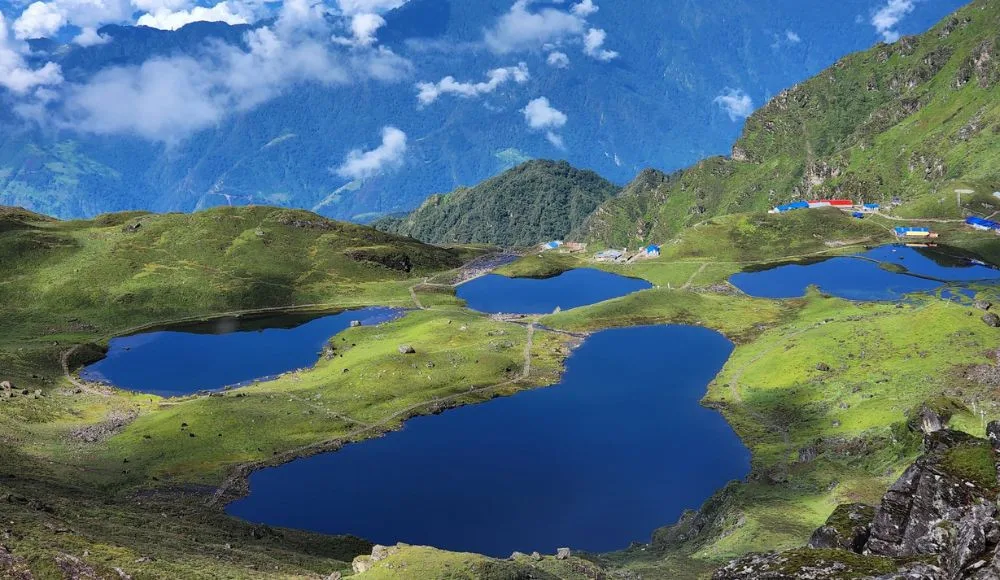
Pachpokhari Trek In The Sindupalchowk - 9 Days
General Info
Trip Overview
Short Itinerary
- Day 01: Arrival in Kathmandu (1,400m) – Arrival at Tribhuvan International Airport. Our Blaze Mountain representative receives you and…
- Day 02: Drive Kathmandu to Bhotang / Deurali (Approx. 6- 7 hours, 2,200 - 2,600m) – Early morning departure in a private jeep or shared transport depending on…
- Day 03: Trek Bhotang to Nasimpati (Approx. 5 - 6 hours, 3,200m) – Trek begins after breakfast. Initial section passes through small villages and farmland…
- Day 04: Trek Nasimpati to Dukhang (Approx. 5 - 6 hours, 3,800m) – This section marks a clear shift into remote Himalayan terrain. Human settlements…
- Day 05: Trek Dukhang to Panch Pokhari (4,100m) (Approx. 4 - 5 hours) – This is the most important day of the trek. The trail opens…
- Day 06: Exploration Day at Pach Pokhari (Acclimatization / Cultural Day) – This day is kept flexible for acclimatization and exploration. Morning hike around…
- Day 07: Trek Down to Dukhang (Approx. 5 - 6 hours) – Descent begins carefully. Even though going down, the terrain remains rough and…
- Day 08: Trek to Nasimpati / Bhotang (Approx. 6 - 7 hours total) – Long descent day through forest trails and ridge paths. Oxygen levels improve…
- Day 09: Drive Back to Kathmandu (Approx. 6 - 7 hours) – Final breakfast in the mountains. Drive back through the same scenic route.…
About Trip:
Trip Highlights:
Best Season for this Trip:
From a professional trekking company point of view, the Pach Pokhari trek is best operated during specific seasons where safety, visibility, and client experience are at their peak. Since this trek reaches around 4,100 meters and passes through remote alpine terrain, season selection directly impacts trip quality.
Autumn (September to November)
This is our primary operating season and the most recommended time for Pach Pokhari. After the monsoon, the atmosphere becomes crystal clear, offering the best mountain views of Jugal Himal and surrounding peaks. Trail conditions are dry and stable, which reduces risk and allows smoother movement for both clients and guides. Temperatures are moderate, making it comfortable for trekking at higher elevations. This season is ideal for group departures, fixed itineraries, and clients looking for a premium Himalayan experience with maximum visibility and safety.
Spring (March to May)
Spring is our second preferred season and an excellent alternative to autumn. During this time, the lower and mid-hill forests are filled with blooming rhododendrons, creating a visually rich trekking experience. Weather remains fairly stable, with mild temperatures that are comfortable for most trekkers. While occasional haze may slightly affect long-distance mountain views compared to autumn, overall visibility is still good. This season is perfect for clients who want a balance of nature, culture, and a quieter trail compared to peak autumn crowds.
Winter (December to February)
Winter operations are limited and carefully managed. At higher elevations, including the Pach Pokhari lakes, temperatures drop significantly and snowfall is common. The lakes may freeze, and trails can become more demanding. We only recommend this season for experienced trekkers who are properly equipped for cold conditions. Flexible itineraries, strong guides, and contingency planning are essential during this time. The advantage is a peaceful, less crowded environment and a more raw mountain experience.
Summer or Monsoon (June to August)
From an operational standpoint, this is the least favorable season. Heavy rainfall leads to slippery trails, leeches in forest sections, and an increased risk of landslides. Mountain views are often obstructed by clouds, which reduces the overall trekking experience. Although the landscape becomes lush and green, we generally avoid running standard group trips during this period. Trips can still be organized on request, but only with proper briefing and flexible expectations.
Food and Accommodations on Trip:
At Panch Pokhari, you are not stepping into a luxury route. You are stepping into a remote Himalayan trail where comfort is managed, not assumed. From an operational standpoint, everything is planned to keep clients safe, well-fed, and properly rested, even when infrastructure is limited.
Accommodation
The lower sections of the trek provide access to basic local teahouses and lodges. These are simple, functional, and run by local families. Rooms are typically twin-sharing with minimal furniture and standard bedding. Do not expect attached bathrooms or high-end facilities. What you get instead is warmth, local hospitality, and a place that does its job after a long day on the trail.
As the route gains altitude and moves toward the Panch Pokhari lakes, permanent lodges disappear. This is where our fully supported camping setup comes in. We handle everything. Tents, sleeping व्यवस्था, crew support, and campsite management. Camps are selected carefully with safety, wind protection, and accessibility in mind. Nights are colder, the environment is quieter, and the experience becomes more raw and real.
Food
Food is treated as fuel first, comfort second. In teahouse sections, meals are straightforward and reliable. Expect Dal Bhat as the core meal, supported by items like noodles, fried rice, soups, potatoes, eggs, and seasonal vegetables. Portions are sufficient, preparation is fresh, and hygiene is monitored.
Once in the camping phase, our crew takes full control of meal preparation. You are served hot, hygienic, and high-energy meals throughout the day. Breakfast is warm and filling, lunch is timed for trail efficiency, and dinner is designed for recovery. The focus stays on clean, digestible, and energy-rich food that supports trekking at altitude. Hot drinks like tea, coffee, and soup are regularly provided to maintain hydration and body warmth.
What to expect overall
This is a remote trek with controlled comfort. Accommodation is basic. Food is simple but sufficient. Everything is structured to support the terrain, not to imitate city standards. What clients receive is a well-managed, authentic Himalayan experience, where logistics are handled professionally and the environment stays untouched and real.
Includes / Excludes
Includes:
- ✓ All ground transportation required for the trek, including private vehicle transfers to and from the trek starting point near Panch Pokhari.
- ✓ Accommodation in local teahouses during lower sections and fully supported camping arrangements in higher and remote areas.
- ✓ All meals during the trek, including breakfast, lunch, and dinner, prepared hygienically to support trekking at altitude.
- ✓ Experienced and licensed trekking guide with strong knowledge of the route, safety, and local culture.
- ✓ Required number of porters to carry trekking equipment and client luggage.
- ✓ Necessary trekking permits and local entry fees for the Panch Pokhari region.
- ✓ Camping equipment including tents, sleeping व्यवस्था, kitchen setup, and support staff for high-altitude sections.
- ✓ Basic first aid kit and emergency support carried by the guide and team.
Excludes:
- ✗ International and domestic airfare to and from Kathmandu.
- ✗ Nepal entry visa fees and travel insurance, including high-altitude coverage.
- ✗ Personal trekking equipment such as sleeping bags, down jackets, trekking poles, and other gear.
- ✗ Beverages including soft drinks, bottled water, alcoholic drinks, and extra snacks.
- ✗ Hot showers, charging, and personal expenses in teahouses where applicable.
- ✗ Tips for guides, porters, and support staff, which are expected but not mandatory.
- ✗ Costs arising from unforeseen circumstances such as weather delays, natural disasters, or itinerary changes.
- ✗ Any additional services not specifically mentioned in the included section.