
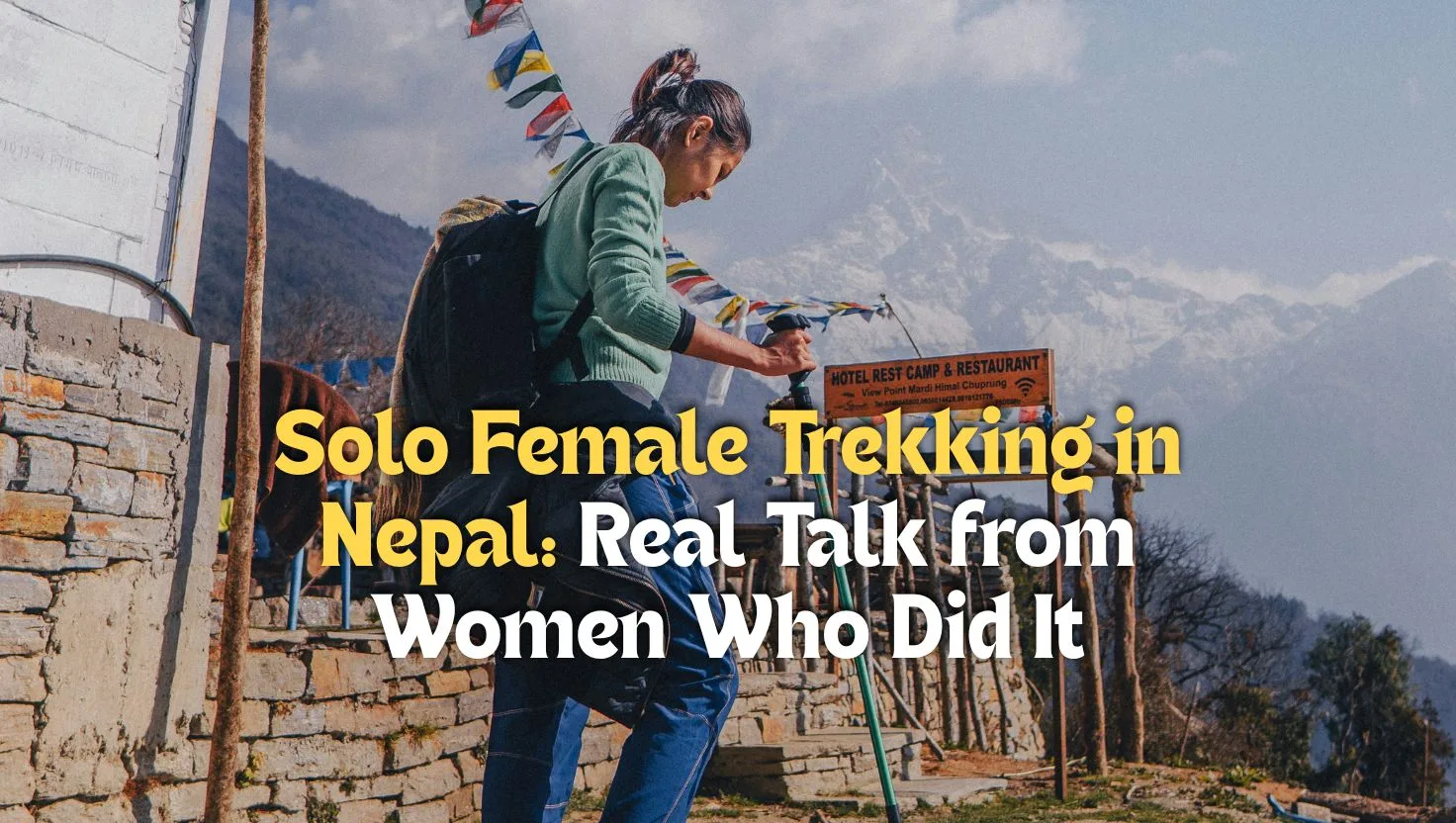
Let’s skip the sugarcoating for a minute. You’re a woman, you want to trek Nepal solo, and nobody’s giving you honest answers. Is it safe, really? What do you do about periods in the middle of nowhere? Can you hike in shorts, or is that taboo? Are the tea house owners going to be creepy? Does solo trekking actually cost more than going with friends?
Here’s what’s actually happening: Every single year, thousands of women walk Nepal’s trails on their own. Doesn’t matter if you’re heading up to Everest Base Camp or wandering into a lesser-known valley. You’ll meet 22-year-old backpackers chasing adventure, and you’ll meet women in their 60s who just decided to stop waiting on travel partners. The mountains? They honestly don’t care who you love, how old you are, or if you came alone. And, for the most part, neither do the people you’ll meet on the trail.
This isn’t another “go, queen!” pep talk. You want actual facts the things veteran solo female trekkers wish someone had told them before their first ticket to Kathmandu. So here it is, straight.
Is Nepal Actually Safe for Solo Female Trekkers?
Yeah, Nepal’s actually pretty safe. Out of 163 countries on the Global Peace Index, it sits at 84. And get this when solo female travelers were surveyed in 2025, nearly all of them, about 98 percent, said they felt safe or very safe while there. Violent crime against tourists barely happens think less than 1 in 100,000 residents.
Still, “safe” can mean a lot of things. Nepal isn’t some perfectly manicured theme park. It’s a developing country in South Asia, so you’re going to run into its own mix of cultural norms, maybe some bumpy infrastructure, and sure, a few challenges. The main thing is figuring out what’s a real risk, and what’s just something you’re not used to.
Actual risks on popular trekking routes:
Altitude sickness doesn’t care if you’re a man or a woman. If you climb too high too quickly on the Everest Base Camp trek or Annapurna Circuit, your body’s going to force you to slow down whether you’ve got a guide at your side or you’re on your own. That’s actually part of why Nepal now makes hiring a licensed guide mandatory on most treks. I’ll get to that in a minute.
People slip on wet rocks, roll ankles, or realize too late that downhill stretches destroy your knees. Nobody’s immune to trail accidents. When you have a guide, you’ve got someone who can help you out if you take a tumble or just need a hand.
Getting lost in the far-off parts of Nepal used to be a real risk, especially on quieter trails like Upper Mustang or the Manaslu Circuit. But since the 2023 law requiring guides, that’s basically gone. You aren’t wandering alone anymore.
What’s NOT a major risk:
Physical harassment or assault on trekking routes? Super rare. Most tea houses are family-run, and those villages stick together. Their livelihoods depend on keeping trekkers safe. Nepali hospitality isn’t some fake advertising slogan, either it’s just how people live there. Guests get genuine respect.
Now, petty theft yeah, you’ll find that in Kathmandu or Pokhara, just like any big city. Out on the trails, though, it barely happens. You’ll probably leave your backpack in your room at the tea house. Sometimes you get a rickety lock, sometimes nothing at all, and usually, nobody bothers your stuff. Still, don’t leave your passport or a pile of cash lying around. Common sense still applies.
As for scams especially ones aimed at solo women they’re pretty much unheard of on the main trekking routes. The worst you’ll see is a tea house owner trying to nudge you into buying an extra Snickers or springing for Wi-Fi. Hardly a scam it’s just life in a remote mountain village where everything costs a lot to haul in.
The Guide Requirement: Actually a Good Thing
Back in 2023, Nepal passed a law requiring all foreign trekkers to hire a licensed guide from a TAAN-certified company on most of the popular routes. Honestly, a lot of solo trekkers panicked at first, thinking it meant solo trekking was dead. Not really it just shifted how things work.
So, what’s the reality? You still trek solo in the sense that you’re making your own choices, setting your own pace, and traveling alone. The big difference is, there’s a guide walking with you. They handle all the hassle booking tea houses, sorting permits, navigating tough stretches, and, most importantly, being there if something goes sideways, like altitude sickness or a rolled ankle.
For women especially, this rule basically erased one of the biggest worries: safety. You’re not alone in awkward moments or risky situations. Your guide is there, basically sunrise to sunset, every day. And before you start worrying about being stuck with some random guy for weeks, solid companies like Blaze Mountain match you with professional guides who know what they’re doing. They’re legit not just some stranger off the street.
And female guides? They’re showing up more and more. If you want a woman to lead your trek, just ask when you book. It depends on the season and route, but it’s totally doable, especially on trails like Annapurna Base Camp or Everest Base Camp.
As for the price, guided treks aren’t as pricey as people fear. Sure, it’s more than what independent trekking used to cost, but think about it: you’re paying around $30 to $40 per day for a licensed guide, plus covering their meals and lodging, which you’d pay for yourself anyway. For most women, that little bit extra is a good deal peace of mind and local know-how, worth every rupee.
Everest Base Camp Trek Solo Female Experience
EBC is the big one everyone thinks about. Can a woman trek Everest Base Camp alone (with a guide, per the law)? Absolutely. Tons do it.
The trek from Lukla to Everest Base Camp and back usually takes about 12 to 14 days, depending on how fast you walk and how well you handle the altitude. You’re climbing a lot Everest Base Camp sits at 5,364 meters so this isn’t just a casual hike. But honestly, the trail’s really well set up. You’ll see tea houses every few hours, and during peak season (October to November and March to May), there are plenty of other trekkers on the path. The route’s easy to follow.
Solo women say this about EBC: it’s tough, but not because you need any climbing skills. You don’t have to be a mountaineer, just reasonably fit and willing to slog uphill for hours. The real problem is the altitude, way more than the trail itself.
Tea houses along the route are used to solo travelers. You usually get your own room tiny, cold, pretty basic, but at least private. Everyone eats in common rooms, so you’ll meet other trekkers whether you want to or not. Some solo women love the social scene; others get tired of always talking to strangers. If you lean toward quiet, bring a book or headphones so you can take a break.
As far as safety goes, the Sherpa village communities along the trail are warm and welcoming. Women trekking alone say they feel looked after, not uncomfortable. If you hire a guide, they’ll handle any tricky moments, explain local customs, and generally make sure you’re alright.
Annapurna Base Camp and Annapurna Circuit for Solo Women
Annapurna region is the other mega popular zone, and it’s actually more accessible than Everest for a lot of women. You can drive to the trek starting points instead of flying to Lukla (which saves money and stress about flight cancellations). The trails are less altitude intensive until you get higher up, and the tea house vibe is slightly more relaxed.
Annapurna Base Camp trek takes about 7 to 10 days round trip from Pokhara. You’re hiking through rhododendron forests, traditional Gurung villages, up to the base camp amphitheater at 4,130 meters surrounded by massive peaks. It’s gorgeous and feels less crowded than EBC even during busy seasons.
Solo women on ABC report it feeling very safe. The route’s well traveled, tea houses are family run and welcoming, and because it’s shorter than EBC, it’s a good first solo trek if you’re testing the waters.
Annapurna Circuit is longer and more varied, circling the Annapurna massif with the high point being Thorong La Pass at 5,416 meters. This trek takes 12 to 20 days depending on route and side trips. It’s more remote in sections, which is why having a guide is especially useful here.
Women who’ve done the circuit solo (with guide) love the variety. You start in subtropical lowlands, pass through desert like high altitude landscapes near Mustang, cross the pass, then descend through different climate zones. It’s like five different treks in one.
Langtang Valley Trek: The Underrated Solo Female Option
Langtang doesn’t get the same buzz as Everest or Annapurna, but honestly, it’s a solid pick for solo women especially if it’s your first trek in Nepal. It’s way closer to Kathmandu, so you just hop in a car and drive there no flights, no hassle. The trek itself is shorter, usually around seven to ten days, and you don’t have to push through crowds. The scenery? It’s gorgeous.
The valley went through hell during the 2015 earthquake, which explains why it’s quieter these days. But locals rebuilt, tea houses are back open, and every trekker there helps keep the community going. They really need the visitors.
Altitude isn’t a massive problem either the highest point is Kyanjin Gompa at about 3,800 meters, so you don’t deal with the same risks as Everest Base Camp or Annapurna Circuit. The trail runs along the valley, giving you amazing views of Langtang Lirung and other peaks, winding through Tamang villages. It feels cozy, not touristy.
Women who choose Langtang usually wanted something beautiful, but without the crazy crowds or feeling like they had to check off a famous trek. The tea houses are relaxed, the people are welcoming, and you actually get to experience the Himalayas at your own pace no conveyor belt vibes.
What to Actually Wear: Clothes and Cultural Respect
Let’s talk clothes, because the internet gets pretty confusing about it. Some sites say cover everything—others just tell you to wear whatever. Here’s how it actually works.
On the trail, stick with basic trekking gear. Trekking pants or leggings are good, but skip shorts if you’re passing through villages. Grab a moisture-wicking t-shirt or a long sleeve, layer up for cold weather, and bring a rain jacket. Pretty standard stuff. Nobody cares what you look like at 4,000 meters; you’re just trying to stay warm, wearing every item you brought.
But there’s one cultural thing to watch: don’t wear super tight leggings that fit like a second skin. In Nepali villages, that’s considered disrespectful. If you really want to wear leggings, throw a longer top or tunic over them. Or just stick to trekking pants and call it a day.
Sleeveless tops? That’s kind of a toss-up. Some women use them at lower altitudes when it’s hot, but others say you should put on a lightweight long sleeve for village walks and save the tank top for chilling in tea house common rooms. Totally your choice, but covering your shoulders in villages is definitely more respectful.
When you’re in tea houses, just stay in your trekking outfit. Nobody expects you to change every night. Honestly, you’ll wear the same clothes for days sometimes weeks. Everyone’s rotating the same two shirts, and nobody’s judging.
Kathmandu and Pokhara are casual. Dress like you would anywhere in Asia jeans, t-shirts, whatever feels comfortable. Just skip super short shorts or low-cut tops near temples. Otherwise, Nepali women wear everything from saris to hoodies and jeans.
For monasteries and temples, cover your shoulders and knees. Keep a scarf or lightweight shawl in your pack for quick fixes. Take your shoes off before you go inside, and if you’re wearing anything leather belt, bag, whatever leave it outside at Hindu temples.
Truth is, after a few days hiking, you stop caring about your outfit. You’re dirty, sweaty, wearing the same pants for the fifth day running, and nobody stands out. It’s actually kind of freeing.
Periods on the Trail: Let’s Talk About It
Nobody likes talking about this, but honestly, it’s a real issue if you’re trekking while on your period. So, here’s what you need to know: yes, you can do it. It’s not exactly comfortable, but it’s definitely manageable.
First, bring your own supplies from Kathmandu. You’ll find pads and tampons in pharmacies there and in Pokhara, but once you’re out on the trail, they’re hard to find or not around at all. Pack more than you think you’ll need, just in case your cycle gets thrown off by the altitude or the effort (it happens).
Menstrual cups are popular with trekkers since they cut down on the amount you have to carry, and disposal’s easier. All you need is water to rinse, and tea houses usually have that. But if you haven’t used a cup before, don’t try it for the very first time while trekking at altitude.
For disposal: most tea house toilets have small trash bins where you can toss wrapped pads or tampons, but not all do. Bring ziplock bags to carry used products until you reach a place with proper disposal. No, it’s not glamorous, but that’s just how it is. Take your trash with you don’t leave it on the trail.
On the culture side, periods are still pretty taboo in Nepal, especially rural areas. Some villages still do chhaupadi (isolating women during their period), even though it’s illegal and rare now. As a foreign trekker, you won’t face discrimination, but don’t expect locals to be open about it. If you need to say something, your guide will handle it professionally just keep it simple, not personal.
One trekker summed it up well: “I got my period on day 7 at Dingboche heading to EBC. My guide handed me a hot water bottle and let me take it easy in the morning. He didn’t make it awkward; I didn’t either. It was fine.”
For pain relief, bring whatever works for you ibuprofen, painkillers. Hot water bottles are usually available at tea houses if you ask. Some women say constant movement helps with cramps, others say it makes them worse. Your body’s going to do its thing.
Altitude can mess with your cycle. Your period might show up early, late, or not at all when you’re high up. Don’t freak out if things get weird; it’s pretty normal.
Tea House Accommodations: Privacy and Safety
Tea houses are the backbone of trekking in Nepal. They’re basically lodges run by local families offering rooms and meals. On popular routes like Everest Base Camp, Annapurna Base Camp, Annapurna Circuit, and Langtang, there are tea houses every few hours.
Rooms: You usually get a private room, sometimes with twin beds, sometimes one bed. Rooms are small, cold, and basic. Wooden walls, thin mattress, maybe a blanket or two. Higher you go, simpler they get. Don’t expect heating. You’ll sleep in your clothes plus sleeping bag.
Doors have basic locks, but walls are thin and you can hear everything. Bring earplugs. Snoring at altitude is universal and loud as hell.
Bathrooms: Shared squat toilets, often in a separate building. They’re cold, sometimes smelly, and yeah, it’s an adjustment. Bring a headlamp for nighttime bathroom trips. Toilet paper might be available, might not. Bring your own.
Hot showers exist at some tea houses for an extra fee (couple dollars). Water’s heated by solar or gas, so availability depends. Lower altitudes, showers are more common. Higher up, you might go days without showering. Baby wipes become your best friend.
Safety in tea houses: Solo women consistently report feeling safe in tea houses. They’re family run, other trekkers are around, and the vibe is communal. That said, lock your door at night, keep valuables in your room or on you, and trust your gut. If a tea house feels off, you can always move to a different one.
Social dynamics: Common rooms are where everyone eats and hangs out in the evening. You’ll meet other trekkers, hear trail stories, and sometimes it’s great social time. Other times you just want to eat and sleep. Both are fine. Nobody’s forcing you to be social.
Some tea house owners, especially women, will chat with you, offer extra food, basically adopt you for the night. Nepali hospitality is real. Others are more businesslike, serve your meal, done. It varies.
Solo vs Group Cost Breakdown
Trekking solo (with mandated guide) costs more than joining a group but it’s not wildly expensive.
Solo costs for, say, Everest Base Camp trek (12-14 days):
- Guide: $30-$40 per day x 14 days = $420-$560
- Porter (optional but recommended): $25 per day x 14 days = $350
- Your accommodation and meals: $25-$35 per day x 14 days = $350-$490
- Guide and porter meals and accommodation: included in their daily rate usually, or you cover it, adds another $10-15 per day
- Permits (Sagarmatha National Park, TIMS): ~$50
- Lukla flights round trip: $350-$400
- Gear rental if needed: $100-$200
- Miscellaneous (snacks, Wi-Fi, hot showers, charging devices): $100-$150
Total solo EBC trek: roughly $1,800 to $2,500 depending on your choices.
Group trek (organized): Companies like Blaze Mountain run group treks where costs are split. You’d pay maybe $1,200 to $1,800 per person for everything except personal gear and extras. Cheaper because guide and porter costs are divided among group members.
So yeah, solo costs more. But you get flexibility in pace, schedule, rest days, and you’re not waiting for slower group members or rushing because someone else is faster. For a lot of women, that’s worth it.
Nepali Attitudes Toward Solo Women: What to Expect
Nepali culture is conservative, especially in rural mountain villages. But trekking regions have decades of experience hosting foreign tourists, including solo women. The result is a kind of cultural middle ground where locals are respectful and helpful while also being used to Western norms.
How locals generally treat solo female trekkers:
With respect and a bit of protectiveness. You’re a guest, and Hindu culture takes guest hospitality seriously. Tea house owners, guides, porters, villagers, they’ll look out for you. If you seem lost or need help, multiple people will offer assistance.
Nepali men, especially in rural areas, are often shy around women. You’re more likely to have friendly conversations with Nepali women at tea houses or in villages. Strike up a chat, ask about their lives, and many will open up once initial shyness passes.
Romantic attention from guides: This happens enough that it needs mentioning. There’s a long history of trekkers falling for their guides or vice versa. Some of it’s genuine, some of it’s guides knowing foreign women are leaving soon so low stakes flirting is safe. If you’re not interested, keep things professional and clear.
Reputable companies train guides to maintain professional boundaries. If your guide makes you uncomfortable, report it to the company immediately. Most guides are professional and just doing their job.
Village interactions: In small villages along the trail, locals are friendly but won’t necessarily engage in long conversations. They’re busy, tourists pass through constantly, and language barriers exist. Smile, say namaste, be respectful of their space and culture. That’s usually enough.
Kids in villages might yell “namaste” or “chocolate” at passing trekkers. The chocolate thing is because past trekkers gave out candy, which locals now discourage (bad for kids’ teeth, creates begging culture). Just wave and keep walking.
Off the Beaten Path: Manaslu, Upper Mustang, Dolpo
If you’ve already done the classics or you want something less crowded, Nepal’s got plenty of remote routes. These require guides (legally and practically), cost more, and are harder logistically, but they’re incredible.
Manaslu Circuit circles the eighth highest mountain in the world, crosses Larkya La Pass at 5,160 meters, and sees way fewer trekkers than Annapurna Circuit despite being just as beautiful. It’s a restricted area, so you need special permits and a registered guide. Solo women who’ve done Manaslu say it feels more adventurous and wild. Tea houses are simpler, villages are more remote, and you really feel like you’re in the mountains, not on a tourist trail.
Upper Mustang is this ancient Tibetan kingdom region near the Tibet border, restricted until the 1990s. It’s desert like, culturally Tibetan, with walled cities and monasteries. You need a special permit ($500 for 10 days, ouch), and you’re required to go with a guide. It’s less about altitude challenge (stays mostly 3,000-4,000 meters) and more about cultural immersion. Solo women who choose Upper Mustang are usually into culture, history, and Buddhism. The trek’s expensive but totally different from the green forested routes of Annapurna or Everest.
Dolpo region is remote as hell, expensive (permits are pricey), and logistically complicated. But if you want to trek where almost nobody goes, this is it. Trails follow ancient Tibetan trade routes, you stay in basic tea houses or camping, and the landscapes are stark and stunning. This isn’t a first trek. This is for women who’ve done multiple Nepal treks and want the next level of remote.
Real Advice from Women Who Actually Did It
After reading a bunch of blogs and forum posts from solo female trekkers, here’s the recurring advice that shows up:
“I wish I’d known it’s okay to take rest days.” Lots of women push themselves to keep up with itineraries when their bodies are saying slow down. Rest days for acclimatization or just because you’re exhausted are fine. Your guide will adjust.
“Bring earplugs and a good headlamp.” Tea house walls are thin, snoring is loud, and midnight bathroom trips in the cold suck less with a bright headlamp.
“Don’t overpack. You’ll wear the same three shirts anyway.” Everyone overpacks their first trek. You don’t need seven shirts for a two week trek. Two or three, max. You’ll smell, everyone smells, nobody cares.
“Talk to other trekkers.” Solo doesn’t mean isolated. Most women end up trekking alongside other solo travelers or small groups for parts of the route. Trail friendships happen naturally. Don’t force it, but don’t hide in your room either.
“The first few days are the hardest emotionally.” A lot of solo women say day one and two they question why they’re doing this. By day three or four, you’re in the rhythm and loving it. Push through the initial adjustment.
“Trust your guide but also trust yourself.” Guides know the mountains, but you know your body. If something feels wrong, speak up. Good guides listen.
“Nepal changed how I see myself.” Corny but true. A lot of women say trekking solo in Nepal, dealing with the physical challenge and mental hurdles, made them realize they’re capable of way more than they thought. It’s transformative in that quiet, personal way that doesn’t need Instagram captions.
Should You Actually Do This?
Look, solo female trekking in Nepal isn’t for everyone. If you hate being uncomfortable, dislike basic accommodations, need Western conveniences, or have serious health issues that make altitude dangerous, maybe pick a different kind of trip.
But if you’re reasonably fit, okay with discomfort, excited about mountains, and want an adventure that’s challenging but achievable, Nepal’s waiting. The infrastructure exists to support you. The culture’s welcoming. The mountains are stunning. And yeah, you’ll probably be the only woman in your life who’s stood at Everest Base Camp or watched sunrise from Annapurna, and that’s pretty cool.
Thousands of solo women trek Nepal every year and come back safe, inspired, and already planning their next trip. The mountains don’t care that you’re alone. Neither does anyone on the trail. You’re just another trekker chasing big views and bigger experiences.
So book the damn trek. Hire a good guide through a reputable company like Blaze Mountain. Pack smart. Trust yourself. And go see what the Himalayas are actually about. The mountains are there whether you show up or not. Might as well show up.