
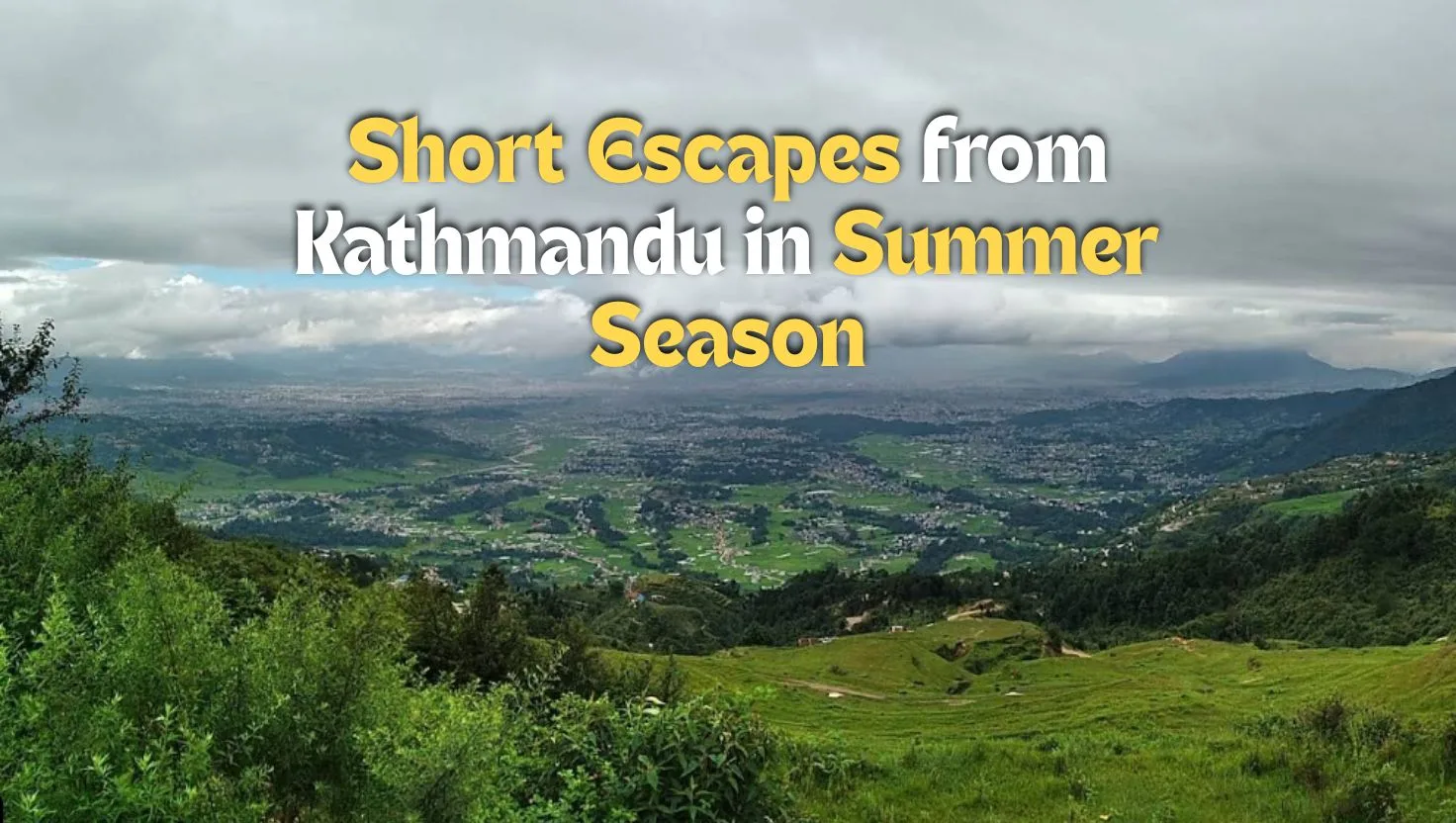
Kathmandu in summer is a lot. Traffic’s insane, pollution’s thick, temps are climbing, and if it’s monsoon season (June through September), rain’s turning streets into rivers half the time. You love the city, sure, but sometimes you just need to bail for a weekend. Good news? You don’t need two weeks off or a massive budget to escape. Nepal’s got ridiculous amounts of quick getaway spots within a few hours of Kathmandu where you can actually breathe, see mountains, chill with friends and family, or just hit reset before Monday ruins everything again.
We’re talking 2 to 3 day trips. Weekend escapes. Places you can hit Friday after work and be back Sunday night without your boss even noticing you left. Whether you’re a tourist trying to squeeze more into your Nepal trip or a local who’s been staring at the same Thamel traffic for too long, these short summer escapes from Kathmandu are exactly what you need.
Why Summer Escapes from Kathmandu Hit Different
Summer in Kathmandu splits into two vibes. April and May, pre monsoon, temps are hot but skies are mostly clear. June through September, monsoon kicks in with heavy rain, humidity that makes you sticky by 9am, and clouds that block mountain views. Either way, getting out of the valley feels like hitting an eject button on stress.
The spots we’re covering are close enough you’re not burning vacation days traveling, but far enough that it actually feels like you left. You’re swapping honking horns for bird sounds, concrete for green hills, dal bhat in a crowded restaurant for meals with actual Himalayan views. And yeah, you can bring friends, family, your significant other, whoever. These aren’t hardcore solo trekking missions. They’re chill getaways where everyone from your grandma to your adventure junkie cousin can have a good time.
Plus summer’s actually perfect for some of these spots. Rain shadow areas dodge monsoon, hill stations get cooler temps than the valley, and jungle safaris in places like Chitwan are lush and green after the rains. You just gotta pick smart based on what you’re chasing.
Pokhara: The Classic Weekend Move
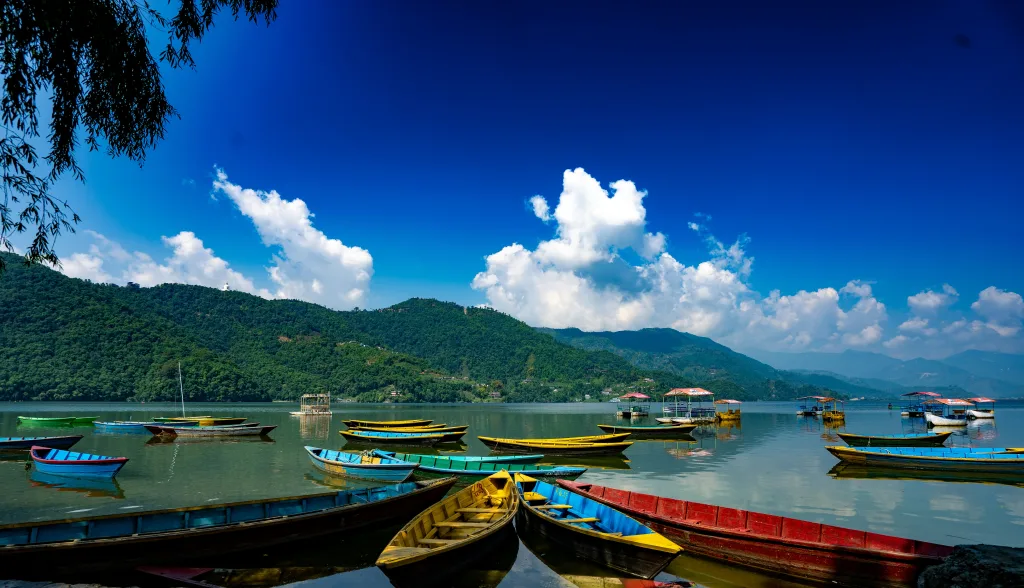
Pokhara’s the obvious one, and there’s a reason everyone goes. It’s Nepal’s second biggest city but way more laid back than Kathmandu. Phewa Lake, mountain views of the Annapurna range smacking you in the face, adventure activities on tap, good food, and a vibe that’s basically “Kathmandu but make it chill.”
Getting there’s easy. You can drive, takes about 6 to 7 hours on winding roads through hills and rivers, or you fly, 25 minutes, done. If you’re doing a weekend trip, flying saves time. If you’ve got an extra day and don’t mind the drive, the road’s actually pretty scenic and you can stop for rafting on Trishuli River if you’re feeling it.
What to actually do in Pokhara for a weekend:
Wake up early, hit Sarangkot for sunrise. It’s about 45 minutes from Lakeside Pokhara, sits at 1,600 meters, and the sunrise view over Annapurna, Dhaulagiri, Machapuchare (Fishtail Mountain) is absolutely stupid good. Mountains glow orange and pink, Phewa Lake’s down below still covered in mist, and you’re standing there with coffee wondering why you don’t do this every weekend.
After sunrise, either paraglide off Sarangkot (Pokhara’s one of the world’s best paragliding spots) or just head back to Lakeside for breakfast. Spend the day however. Rent a boat on Phewa Lake and paddle to Tal Barahi Temple sitting on an island in the middle. Check out Davis Falls, this waterfall that disappears into an underground cave. Visit Gupteshwor Cave right next to it. Hit the International Mountain Museum if you’re into mountaineering history and want AC for an hour.
Evening, walk Lakeside. It’s this strip along Phewa Lake with cafes, bars, restaurants, shops selling trekking gear and hippie clothes. Grab dinner with a lake view, have a beer, watch the sun set behind the mountains. That’s day one.
Day two, you’ve got options. Hike up to World Peace Pagoda, takes about an hour from Lakeside, sits on a hill with panoramic views of the lake, city, and Annapurna range. Or do a short trek to Australian Camp or Dhampus, both are easy day hikes from Pokhara with ridiculous mountain views and traditional Gurung villages. Or just stay lazy, rent a bike, cruise around the valley, check out the Tibetan refugee camps, eat momos till you can’t move.
Pokhara works for everyone. Your parents can chill at a nice hotel with a view. Your friends can go hard with paragliding, bungee jumping (Nepal’s highest bungee is near Pokhara), zip lining, ultra light flights. Kids can paddle boats and feed fish at the lake. It’s the all purpose weekend escape.
Summer heads up: Monsoon (June to September) means afternoon rain most days. Mornings are usually clear for sunrise and activities, then clouds roll in, rain hits, clears by evening. Just plan morning heavy and have indoor backup options.
Chitwan National Park: Jungle Safari Weekend
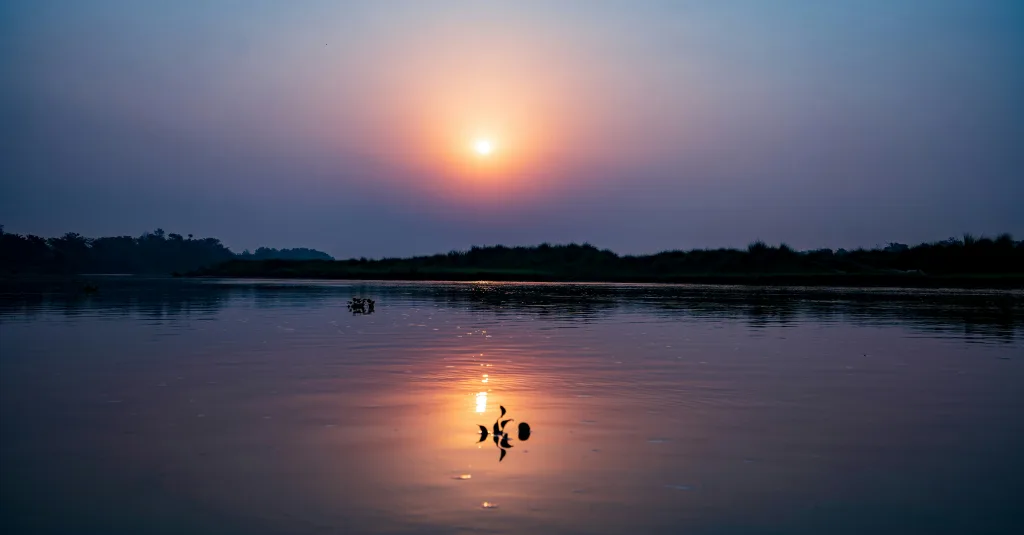
If you want something completely different from mountains and temples, Chitwan National Park is your move. It’s Nepal’s OG national park, UNESCO World Heritage Site, sits in the southern Terai lowlands, and it’s all about wildlife. One horned rhinos, Bengal tigers, elephants, crocodiles, 500 plus bird species, and that jungle vibe you don’t get anywhere else in Nepal.
Drive from Kathmandu takes about 5 to 6 hours depending on traffic and road conditions. You’re heading south toward the Indian border, out of the hills into flat plains, temps get warmer, landscape turns tropical. Or you can fly to Bharatpur Airport, closer to Chitwan, though most people just drive or take a tourist bus.
Chitwan’s set up for 2 night 3 day weekend trips. Most packages include accommodation at jungle lodges or resorts in Sauraha (the main tourist base), all meals, and a bunch of activities. You’re not planning anything, just showing up and following the itinerary.
What a Chitwan weekend looks like:
Day one, arrive afternoon, check into your lodge, maybe take a village walk to a nearby Tharu village. Tharus are the indigenous people of this region, they’ve got their own culture, language, traditional stick dances. Evening, watch a Tharu cultural dance performance. Beats, sticks clacking, traditional costumes, it’s energetic and actually pretty cool.
Day two, early morning jeep safari into Chitwan National Park. You’re in an open top 4×4, bouncing through jungle roads and grasslands, eyes peeled for wildlife. Rhinos are basically guaranteed, you’ll see multiple. Deer everywhere. Crocodiles chilling on riverbanks. If you’re lucky, maybe a sloth bear or leopard. Tigers are rare but people do spot them, so there’s always that hope.
After jeep safari, back to the lodge for breakfast, then canoe ride on the Rapti River. You’re in a traditional dugout canoe, gliding past marsh mugger crocodiles and gharials (those long snouted crocodiles), tons of birds. It’s peaceful and lowkey after the bumpy jeep ride.
Afternoon, jungle walk with a guide. You’re on foot in the national park, which sounds sketch but guides know what they’re doing. You see different stuff on foot than from a jeep, smaller wildlife, birds, plants, plus there’s something about walking through actual jungle that just hits different.
Day three, maybe a morning elephant breeding center visit to see baby elephants, or another activity depending on your package, then drive back to Kathmandu.
Chitwan in summer, especially monsoon, is lush as hell. Everything’s green, rivers are full, animals are active. It’s hot and humid, yeah, but lodges have fans or AC, and honestly the jungle’s supposed to feel tropical. Just bring mosquito repellent and light, breathable clothes.
Who it’s for: Families, couples, friend groups who want something completely different. If someone in your crew isn’t into hiking or high altitude, Chitwan’s perfect because it’s lowland, easy activities, and you’re seeing wildlife instead of mountains.
Nagarkot: Sunrise Views Without the Effort
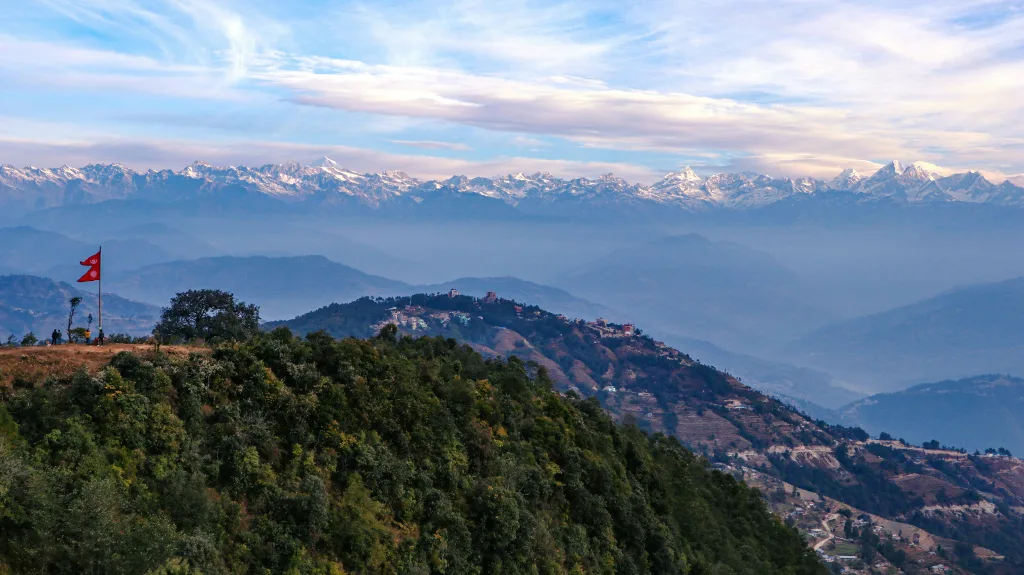
Nagarkot’s the lazy person’s mountain viewpoint, and I mean that as a compliment. It sits on the eastern rim of Kathmandu Valley, about 30 to 45 minutes drive from the city, at 2,175 meters. You go for one reason: sunrise over the Himalayas. On clear days, you can see everything from Langtang to Everest, the whole Himalayan range lighting up golden and pink as the sun comes up.
The move is drive up Friday evening or Saturday morning, check into a hotel or resort (Nagarkot’s got tons, from budget guesthouses to bougie mountain resorts with heated rooms and fancy restaurants), chill for the afternoon, then wake up stupid early for sunrise.
Most hotels have rooftop terraces or balconies facing the mountains. You don’t even have to leave your room to see sunrise if you book right. But if you want the full experience, walk to Nagarkot View Tower, the main viewpoint. There’s a small entry fee, you climb up the tower, and boom, 360 degree Himalayan panorama.
Post sunrise, you’ve got options. Some people just go back to sleep because waking at 5am on a weekend is brutal. Others have breakfast at their hotel then head back to Kathmandu same day. If you’re staying another night, hike from Nagarkot to Changu Narayan temple, takes about 3 to 4 hours, downhill through terraced fields and traditional villages, ends at this UNESCO World Heritage Site temple that’s one of Nepal’s oldest.
Or hike Nagarkot to Dhulikhel, longer trek, 5 to 6 hours along ridge lines with continuous mountain views. You’re walking through pine forests, small villages, farmland, arriving in another hill town (Dhulikhel) by afternoon.
Summer reality check: April and May, mornings are usually clear for sunrise. June through September monsoon, it’s a gamble. Some mornings are crystal clear, others you wake up and it’s just clouds. That’s the risk. But even if you miss sunrise, Nagarkot’s cooler than Kathmandu, has nice walks, good food, and it’s peaceful. Not a total loss.
Who it’s for: Couples wanting a romantic mountain escape. Families who want easy access without hard trekking. Anyone who just needs to get out of Kathmandu for 24 hours and see some mountains.
Dhulikhel: The Culture and View Combo
Dhulikhel’s like Nagarkot’s slightly more interesting cousin. It’s about 30 kilometers east of Kathmandu, 1 and a half to 2 hour drive, sits at 1,550 meters, and it’s got the mountain views plus this whole traditional Newari town vibe that Nagarkot doesn’t really have.
The town itself is old. Newari architecture, brick houses, narrow alleys, temples tucked into corners, locals who’ve been here for generations. You can actually walk around Dhulikhel and feel like you’re in a place with history, not just a hill station built for tourists.
Mountain views are solid. On clear days you see Langtang, Ganesh Himal, Gaurishankar, Jugal, and if you’re really lucky, a peek at Everest. Sunrise and sunset both hit, and there’s multiple viewpoints around town where you can post up and watch mountains do their thing.
What to do in Dhulikhel:
Walk to Kali Temple on the edge of town. There’s a thousand step stone staircase leading up to it, bit of a climb, but at the top you’ve got this massive statue of Gautama Buddha and panoramic mountain views. It’s peaceful up there, prayer flags everywhere, and the view over the valley is worth the leg burn.
Visit Namobuddha, about 10 kilometers from Dhulikhel. It’s one of Buddhism’s most important pilgrimage sites, this monastery perched on a hilltop surrounded by prayer flags and pine forests. The story goes Buddha sacrificed himself here in a past life to feed a starving tigress and her cubs. Heavy stuff, but the place itself is serene as hell. You can walk there from Dhulikhel (takes a few hours) or drive.
Hike around the area. Dhulikhel’s surrounded by terraced farmland and small villages. Just pick a direction and walk. You’ll end up in fields, meet locals working their land, see traditional rural life that hasn’t changed much in decades.
Stay at one of the heritage hotels or mountain resorts. Some of them are converted old Newari houses with carved wooden windows, courtyards, traditional architecture. Others are modern lodges with big windows facing mountains. Either way, waking up to Himalayan views and village sounds instead of Kathmandu traffic is the whole point.
Summer vibe: Same deal as Nagarkot. Pre monsoon is clearer. Monsoon means you might get rained on but everything’s green and the vibe’s quieter because fewer tourists. Dhulikhel also has this chill energy where even if weather’s not perfect, walking around the old town, eating local food, and just slowing down for a day feels good.
Who it’s for: People who want mountain views but also some culture. History nerds. Anyone who’s tired of pure touristy spots and wants something that feels more authentic.
Combining Spots: The Nagarkot to Dhulikhel Weekend
If you’ve got the energy, combining Nagarkot and Dhulikhel into one weekend trip is solid. Drive to Nagarkot Friday evening or Saturday morning, watch sunrise Saturday, then hike to Dhulikhel same day (5 to 6 hours), chill in Dhulikhel Saturday night, explore Sunday morning, drive back to Kathmandu Sunday afternoon.
You hit two different hill towns, get a decent hike in without it being a full trek, see multiple mountain viewpoints, and have time to actually relax instead of just driving and turning around. This is the move for people who want a bit more than just sitting at a resort but don’t want a hardcore trekking itinerary.
Quick Hit: Bhaktapur for the Day
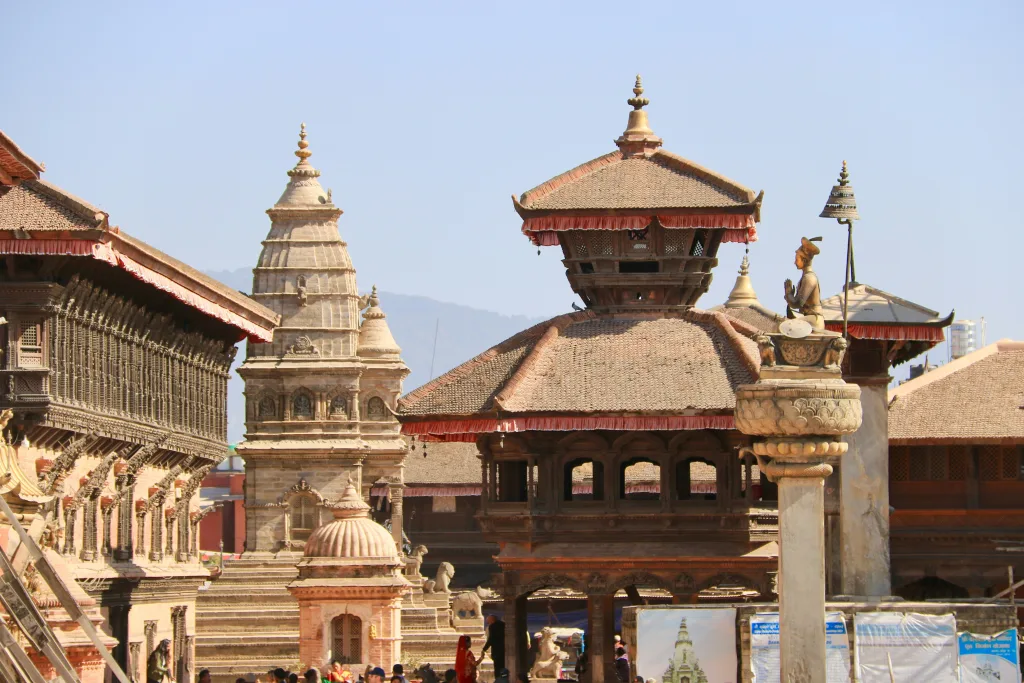
If you literally can’t take a full weekend but need a mental break, Bhaktapur’s 30 minutes from Kathmandu and feels like a different century. It’s one of the three ancient cities in Kathmandu Valley, UNESCO World Heritage Site, full of medieval temples, courtyards, traditional Newari culture.
Spend a morning walking Durbar Square, checking out the pagoda temples, watching potters make clay pots in Potter’s Square, eating ju ju dhau (king yogurt, Bhaktapur’s famous for it), drinking local alcohol if you’re into that. It’s not a mountain escape but it’s a culture escape, and sometimes that’s what you need.
Summer works fine for Bhaktapur. It’s in the valley so same temps as Kathmandu, but the old town’s got shade from buildings, cafes where you can sit with coffee, and it’s way more pedestrian friendly than Thamel’s chaos.
Actually Planning Your Escape: Real Talk
Transportation: For Pokhara and Chitwan, book in advance if flying. Tourist buses are cheap and easy for both. Private car costs more but you leave whenever you want. For Nagarkot and Dhulikhel, taxi or private car from Kathmandu works best. Local buses exist but they’re slow and crowded.
Timing: Summer weekends get busy at popular spots like Nagarkot and Pokhara. Book hotels ahead, especially if you want a place with good mountain views. Chitwan packages usually include everything so just book the whole thing through a company like Blaze Mountain and don’t stress logistics.
Weather gamble: Pre monsoon (April, May) is hotter but clearer for mountain views. Monsoon (June through September) is greener, cooler at higher elevations, but rain and clouds are a coin flip. Check forecasts, but also accept that weather in Nepal does whatever it wants.
Budget: These trips don’t have to be expensive. Nagarkot and Dhulikhel can be done for 3,000 to 8,000 NPR per person depending on hotel choice. Pokhara ranges from budget backpacker (cheap guesthouses, local food) to mid range comfortable. Chitwan packages run about $120 to $250 USD for 2 night 3 day all inclusive depending on lodge quality.
Who to bring: All these spots work for mixed groups. Your adventure friend can paraglide in Pokhara while your chill friend reads by the lake. Families can safari in Chitwan together. Couples can do the romantic sunrise thing in Nagarkot. Solo travelers can meet other people at any of these places. It’s flexible.
Why You Should Actually Do This
Look, Kathmandu’s great. It’s chaotic and cultural and there’s always something happening. But summer in the city, especially monsoon, can wear you down. Traffic, heat, pollution, rain turning streets into puddles, same routes, same faces, same dal bhat spot.
Getting out for even just 2 days resets your brain. You remember Nepal’s not just the Kathmandu Valley. There’s mountains an hour away. There’s jungle where rhinos just walk around. There’s hilltop towns where you can see 8,000 meter peaks from your breakfast table.
These aren’t big commitments. You’re not quitting your job to trek Everest Base Camp. You’re just taking a weekend, getting in a car or on a short flight, and going somewhere that doesn’t have honking and exhaust fumes. Your friends and family are probably itching for the same thing, so grab them, pick a spot, and actually book it instead of talking about it every Friday then doing nothing.
Summer’s happening whether you stay in Kathmandu or not. Might as well spend part of it watching sunrise over the Himalayas, spotting rhinos in the jungle, or eating momos with a view of Phewa Lake. The city will still be there when you get back. The traffic will definitely still be there. But at least you’ll have had 48 hours where it wasn’t.