
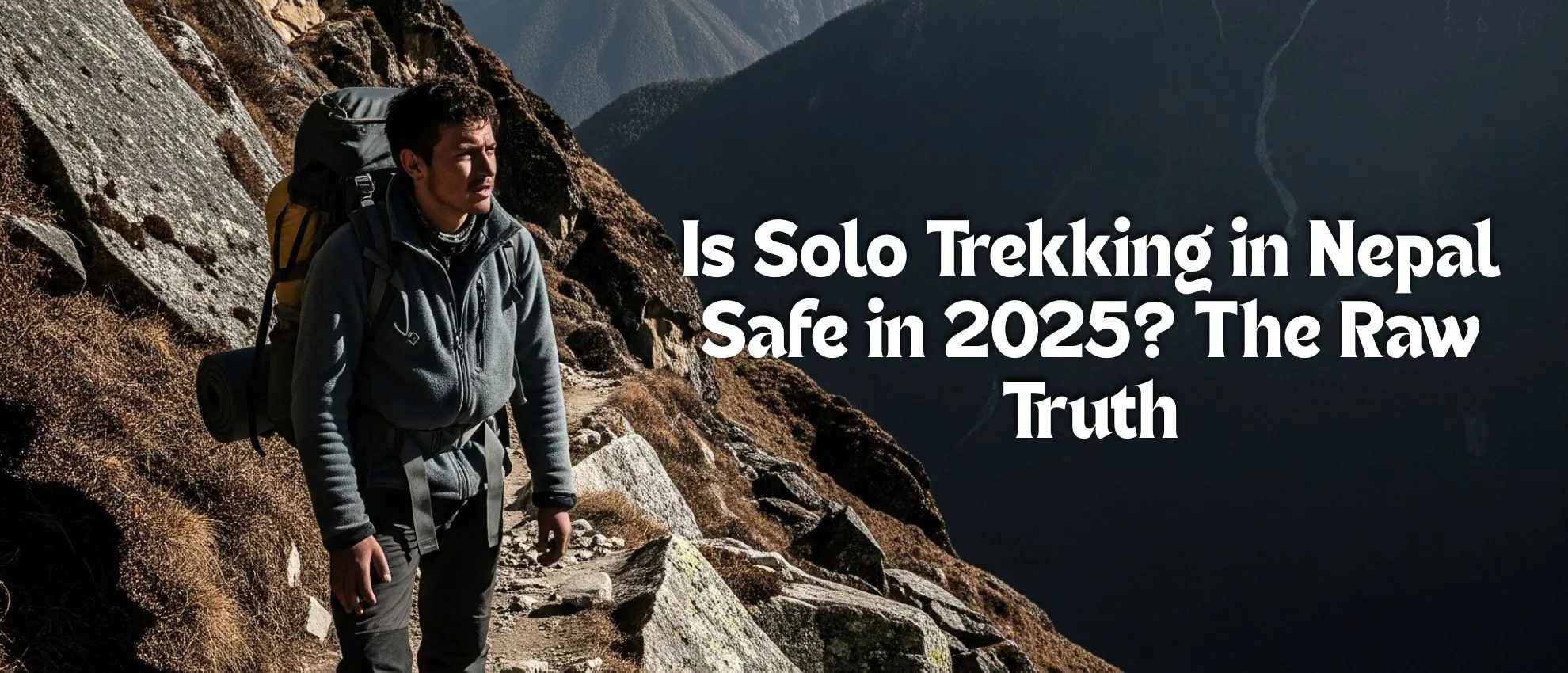
Let’s cut through the noise, can we solo trekking in Nepal?. You’re not here for sugar-coated tips or packaged advice, you’re not asking if Nepal is “safe” like some travel blogger planning a photoshoot. You’re asking because you’re serious about walking into the Himalayas with nothing but your boots, your pack, and a head full of questions only the trail can answer. You’re asking because you want to go solo, and you want to know if Nepal will let you do that.
In 2025, solo trekking in Nepal is still possible. Still powerful. Still one of the most honest things you can do. But the game has changed. Not entirely but enough that you better understand exactly what you’re stepping into.
Nepal Changed the Rules, and You Need to Know Why
Back in 2023, Nepal introduced a regulation that solo trekkers are no longer allowed on certain trails without a licensed guide. This wasn’t random. It came after years of people getting lost, altitude rescues that drained local resources, and way too many avoidable tragedies.
Now, in 2025, those rules are strictly enforced. You can’t just grab a backpack and wander into Everest Base Camp or the Annapurna Circuit without permits, a guide, and check-ins at every major checkpoint.
If you try, you’ll be turned back. No permit, no passage. No guide, no entry. It’s that simple.
Where You Can’t Trek Alone in 2025
If your dream trek involves high altitudes, remote terrain, or popular circuits, you’re going to need a guide. That includes:
- Everest Base Camp
- Annapurna Circuit and Annapurna Base Camp
- Langtang Valley
- Manaslu Base Camp
- Nar Phu Valley
- Upper Mustang
- Tsum Valley
- Dolpo and other restricted areas
Every one of these routes has been flagged for guided travel only not just for safety, but also to preserve the environment, support local economies, and reduce the burden on rescue teams.
Where You Can Still Trek Solo
There are still trails that let you go solo for now. These include:
- Ghorepani–Poon Hill
- Ghandruk Trek
- Australian Camp to Dhampus
- Lower Mardi Himal (only up to Forest Camp unless you’re highly experienced)
- Shivapuri and routes around the Kathmandu Valley
But here’s the catch: even these routes can change. Enforcement is tightening. Local municipalities can implement stricter rules at any time. So if you’re banking your entire trek on walking solo without checking updated policies you’re already making mistake number one.
Solo trekking isn’t just about going alone; it’s about owning everything that happens.
You go solo, you take full responsibility. No one to check your symptoms when the altitude creeps in, no one to call for help when you twist your ankle on a rock-strewn trail. No one to tell you you’re pushing too hard, walking too fast, drinking too little, or ignoring signs your body is giving you.
That sounds like freedom. And it is.
But freedom has teeth. If you’re not ready to feel them, don’t go solo.
Here’s What Solo Trekkers Don’t Talk About
They’ll post the beautiful silence. The early mornings alone with the mountains. The pride of navigating their own way.
What they won’t always tell you is how scary it gets when the fog rolls in and you lose the trail. When you haven’t spoken to another human in two days. When you wake up dizzy and alone, and there’s no one to notice that your lips are turning blue.
Solo trekking isn’t about escaping others it’s about facing yourself. And most people aren’t prepared for that kind of mirror.
Want to Trek Solo in 2025? Here’s How to Be Smart About It
If you’re going to do this, then do it with respect not just for the mountains, but for your own life.
- Pick the right trail. Start with something less intense. Not every trek has to be 5,000m and above the clouds.
- Download offline maps. Not just Google use Maps.me, Gaia, or SwissTopo.
- Tell someone your route. Lodge owners. A friend. Anyone.
- Stay at teahouses. Wild camping sounds fun until you’re rained on in a leech-infested forest.
- Always ask locals for updates. Sometimes a trail exists on a map but doesn’t exist anymore on the ground.
- Check the weather every single morning. Conditions in Nepal shift fast and brutally.
- Carry a power bank, extra cash, and enough water.
- Don’t chase the summit if your gut says turn back. Real trekkers listen.
Guides Aren’t a Sign of Weakness They’re the Reason You’ll Go Further
If you’re still craving that solo vibe but want a safety net, hire a porter-guide. They’re not there to hold your hand. They’re there to have your back. They’ll carry your bag, help with permits, talk to locals, and step in only when things get rough.
You still walk your own path. You just don’t have to risk everything to prove it.
Is It Still Worth Trekking Solo in Nepal in 2025?
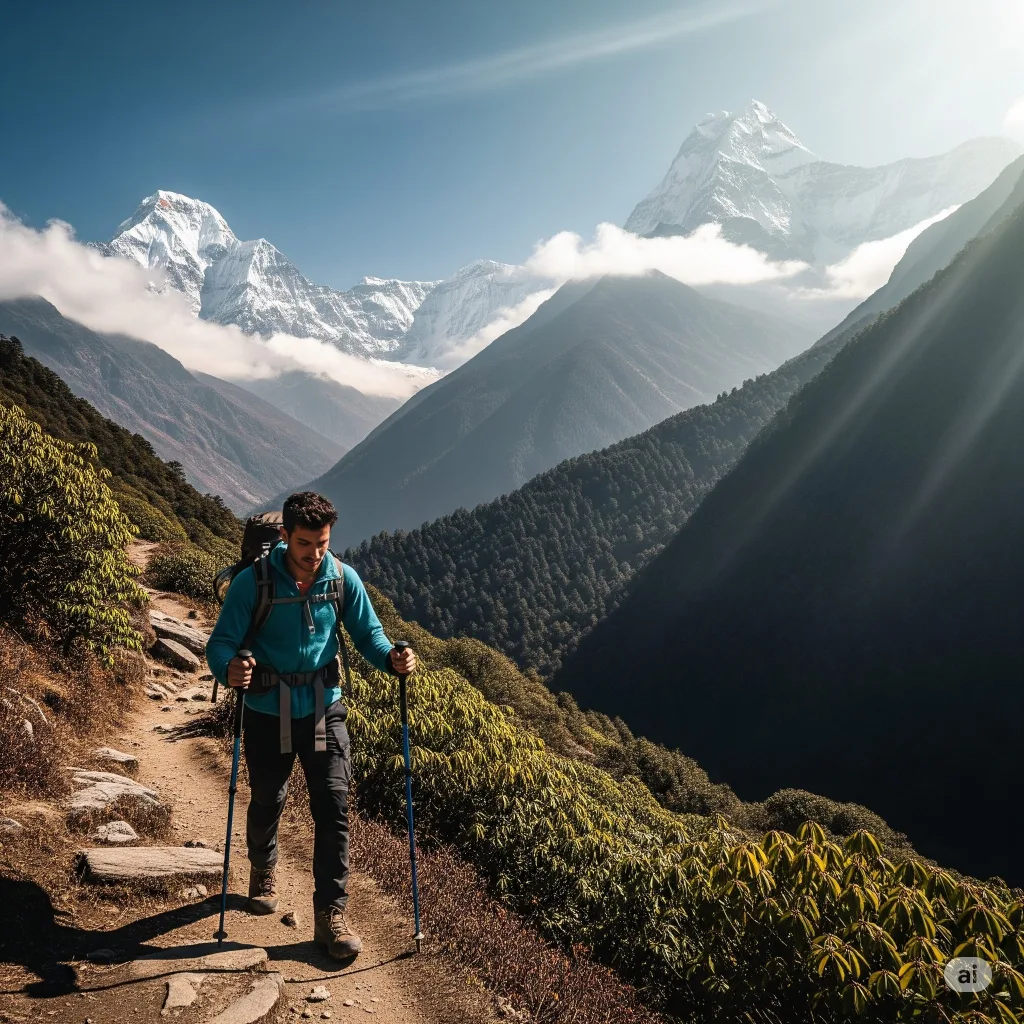
That depends. Are you doing it because you need to prove something? Or are you doing it because you feel called to walk alone and listen to what the trail teaches you?
If it’s the second then yes.
Nepal still has room for you. The Himalayas are still waiting. But they’ll demand that you meet them with humility, respect, and preparation.
Go solo but don’t go stupid. Because out there, mistakes don’t always get second chances.
At Blaze Mountain Treks, We’re Here for Real Trekkers, Not Tourists
We don’t do tourist bus drop-offs and scripted itineraries, we don’t treat you like a customer. We treat you like someone who belongs on the trail.
We’ll help you figure out where you can go solo, where you can’t, and what kind of guide actually adds value to your journey. No hard sell. Just honest advice from people who’ve walked every inch of these trails and know what’s waiting on the other side.